دانلود برچسب: خرید گزارش Chemical Economics Handbook

  • دانلود گزارش Overview of the Specialty Chemicals Industry از Specialty Chemicals Update Program

    دانلود گزارش Overview of the Specialty Chemicals Industry از Specialty Chemicals Update Program

    خرید گزارش Overview of the Specialty Chemicals Industry

    برای دانلود فایل Overview of the Specialty Chemicals Industry مربوط به Chemical Economics Handbook و دریافت نمای کلی در صنایع شیمیایی تخصصی بر روی کلید خرید در انتهای صفحه کلیک کنید. پس از اتصال به درگاه پرداخت و تکمیل مراحل خرید، لینک دانلود ایمیل می شود. این گزارش مربوط به سال 2018 و در فرمت PDF ارسال می شود.

    برای خرید گزارشهای Chemical Economics Handbook کافیست آدرس گزارش از سایت  https://ihsmarkit.com/products/chemical-economics-handbooks.html را برای ما ارسال کنید.هزینه دریافت PDF فایل از سایت نکسانت، اعلام و پس از واریز هزینه ارسال میشود.
    ارائه پی دی اف تمام متن به گزارشهای Nexant شامل: BI, PERP, POPS, PPE.. این گزارشها شامل قیمت مواد شیمیایی و پتروشیمیایی میباشد که قیمتها را در مناطق خاورمیانه ، امریکا، چین، آسیا، اروپا، آفریقا وسطح جهانی مورد بررسی قرار میدهند.

    در صورتی که نیاز به دانلود هر گزارشی از IHS و یا PEP دارید، فقط کافیست ادرس اینترنتی گزارش را از سایت ihsmarkit.com و یا https://global.ihs.com برای ما ارسال کنید (راههای ارتباطی در صفحه تماس با گیگاپیپر ). پس از بررسی، هزینه ان اعلام می شود. پس از واریز نسخه الکترونیکی ارسال می شود.

    برای دریافت PDF گزارش های فنی در زمينه فرآيندهای مواد پتروشيمی، وضعيت صنعت و بازار مواد پتروشيمی با ما مکاتبه کنید.
    دانلود گزارش Overview of the Specialty Chemicals Industry از Chemical Economics Handbook سایت IHS CHEMICAL دانلود گزارش نمای کلی در صنایع شیمیایی تخصصی
    دانلود گزارش Overview of the Specialty Chemicals Industry از Chemical Economics Handbook سایت IHS CHEMICAL دانلود گزارش نمای کلی در صنایع شیمیایی تخصصی

    Overview of the Specialty Chemicals Industry
    Specialty Chemicals Update Program
    Published July 2019

    لینک گزارش از Scup :

    For Download Please Contact Us :ایمیل گیگاپیپر دانلود کتاب مقاله پایان نامه
    Price : 55$

    دانلود رایگان گزارش Overview of the Specialty Chemicals Industry

    برای اطمینان از کیفیت گزارش Overview of the Specialty Chemicals Industry ، چند صفحه ابتدایی ان بصورت رایگان قرار داده شده است.گزارشهای دیگر دانلودی از ihsmarkit.com به همین صورت هستند.

    درباره گزارش Overview of the Specialty Chemicals Industry

    Specialty chemicals are produced by a complex, interlinked industry. In the strictest sense, specialty chemicals are products sold on the basis of their performance or function rather than their composition. They can be single-chemical entities or formulations whose composition sharply influences the performance and processing of the customer’s product. This report covers 29 specialty chemical segments, which are categorized either as market-oriented products (used by a specific industry or market, such as electronic chemicals or oil field chemicals), or functional products (groups of products that serve the same function, such as adhesives, antioxidants, or biocides). There is considerable overlap in this method of characterization. Market-oriented groups often include numerous functional chemicals used by the same market, while functional chemicals typically are used by several different markets. This distinction is made for convenience in discussing strategic aspects of the business segments rather than because of a real difference in the products.

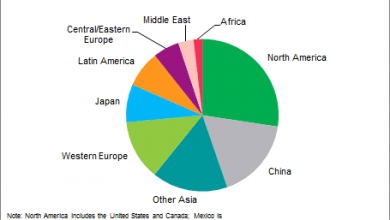
    The following pie chart shows the specialty chemicals market share held by each major region in 2018, on a value basis:

    In 2018, the world’s 5 largest specialty chemicals segments—specialty polymers, industrial and institutional cleaners, electronic chemicals, surfactants, and flavors and fragrances—had a market share of 37%; the 10 largest segments accounted for 63% of total annual specialty chemicals sales. Each specialty chemicals business segment comprises several subsegments, each with individualized product, market, and competitive profiles.

    China was the largest consumer of the following specialty chemicals, accounting for 30–50% of global consumption in 2018: antioxidants, construction, feed additives, printed circuit board and semiconductor packaging, plastics additives, paper chemicals, rubber-processing chemicals, specialty coatings, specialty polymers, textile chemicals, and water management chemicals. The country accounted for 50% of the dollar value of the global textile chemicals market in 2018.

    North America was the leading consumer of biocides, catalysts, corrosion inhibitors, cosmetic chemicals, food additives, industrial and institutional cleaners, lubricating oil additives, oil field chemicals, printing inks, surfactants, and synthetic lubricants. Western Europe was the leading consumer of nutraceuticals and flavors and fragrances. Japan was the largest consumer of imaging chemicals, while Other Asia had the highest consumption value for chemicals used in semiconductor fabrication.

    In addition, emerging markets have higher growth rates than North America, Western Europe, and Japan because they are calculated from a low base, since their per capita consumption of specialty chemicals is still very low compared with that of developed regions.

    In the past, specialty chemical companies sold their products on value. Their products represented only a small portion of the cost structure of their customers’ products. Advances in supply-chain management, strategic sourcing, and eCommerce have increased transparency and customer awareness. As a result, the specialty chemicals industry is becoming more commodity-like in some areas as companies sell certain products on price rather than on performance. The specialty chemicals industry is now trying to improve its margins by implementing price increases to compensate for higher R&D, energy, and raw material costs.

    Some specialty chemical companies are trying to raise barriers to entry into their markets by becoming more service oriented. They are focusing less on products and more on support services and specific customers. Providing services alongside products has long been the way to do business in some specialty chemical sectors, including automotive coatings, fluid catalytic cracking catalysts, pharmaceutical ingredients, and water treatment. However, as more sectors wrestle with slowing growth rates and encroaching commoditization, more specialty chemical companies have increased the service component of their portfolios.

    دانلود گزارش نمای کلی در صنایع شیمیایی تخصصی

    مواد شیمیایی ویژه توسط یک صنعت پیچیده و به هم پیوسته تولید می شوند. به اصطلاح دقیق ، مواد شیمیایی ویژه کالاهایی هستند که براساس عملکرد یا عملکردشان بجای ترکیب آنها فروخته می شوند. آنها می توانند موجودات تک شیمیایی یا فرمول هایی باشند که ترکیب آنها به شدت بر عملکرد و پردازش محصول مشتری تأثیر می گذارد. این گزارش شامل 29 بخش شیمیایی ویژه است ، که یا به عنوان محصولات بازارمحور طبقه بندی می شوند (که توسط یک صنعت خاص یا بازار استفاده می شود ، مانند مواد شیمیایی الکترونیکی یا مواد شیمیایی میدان نفتی) ، یا محصولات کاربردی (گروه هایی از محصولاتی که عملکرد مشابهی دارند ، مانند به عنوان چسب ، آنتی اکسیدان یا بیوکسید). در این روش توصیف ، همپوشانی قابل توجهی وجود دارد. گروههای بازار محور اغلب شامل مواد شیمیایی کاربردی متعددی هستند که در همان بازار مورد استفاده قرار می گیرند ، در حالی که مواد شیمیایی کاربردی معمولاً توسط چندین بازار مختلف استفاده می شوند. این تمایز برای راحتی در بحث در مورد جنبه های استراتژیک بخش های تجاری ایجاد می شود و نه به دلیل تفاوت واقعی در محصولات.

    نمودار پای زیر سهم ویژه بازار مواد شیمیایی را که توسط هر منطقه اصلی در سال 2018 برگزار می شود ، بر اساس ارزش نشان می دهد:

    در سال 2018 ، 5 بخش بزرگ مواد شیمیایی ویژه جهان – پلیمرهای ویژه ، پاک کننده های صنعتی و نهادی ، مواد شیمیایی الکترونیکی ، سورفاکتانتها و طعم دهنده ها و رایحه ها – سهم بازار 37٪ داشتند. 10 بخش بزرگ 63٪ از کل فروش سالانه مواد شیمیایی ویژه را به خود اختصاص داده اند. هر بخش تجاری ویژه مواد شیمیایی دارای چندین بخش فرعی است که هر یک دارای محصول ، بازار و پروفایل های رقابتی هستند.

    چین بزرگترین مصرف کننده مواد شیمیایی خاص زیر است که 30 تا 50٪ از مصرف جهانی را در سال 2018 به خود اختصاص داده است: آنتی اکسیدان ها ، ساخت و ساز ، مواد افزودنی خوراک ، تخته مدار چاپی و بسته بندی های نیمه هادی ، مواد افزودنی پلاستیک ، مواد شیمیایی کاغذ ، مواد شیمیایی فرآوری لاستیک ، پوشش های ویژه ، پلیمرهای ویژه ، مواد شیمیایی نساجی و مواد شیمیایی مدیریت آب. این کشور 50 درصد از ارزش دلار در بازار جهانی مواد شیمیایی نساجی را در سال 2018 به خود اختصاص داده است.

    آمریکای شمالی مصرف کننده پیشرو بیوسیدها ، کاتالیزورها ، مهارکننده های خوردگی ، مواد شیمیایی آرایشی ، مواد افزودنی غذایی ، پاک کننده های صنعتی و نهادی ، روان کننده مواد افزودنی روغن ، مواد شیمیایی موجود در روغن ، جوهرهای چاپی ، سورفاکتانت ها و روان کننده های مصنوعی بود. اروپای غربی پیشروترین مصرف کننده مواد مغذی و طعم دهنده و رایحه بود. ژاپن بزرگترین مصرف کننده مواد شیمیایی تصویربرداری بود ، در حالی که سایر آسیا بیشترین مقدار مصرف را برای مواد شیمیایی مورد استفاده در ساخت نیمه هادی داشت.

    بعلاوه ، بازارهای نوظهور نسبت به آمریکای شمالی ، اروپای غربی و ژاپن نرخ رشد بالاتری دارند زیرا از پایه پایین محاسبه می شوند زیرا سرانه مصرف آنها از مواد شیمیایی ویژه در مقایسه با مناطق توسعه یافته هنوز هم بسیار کم است.

    در گذشته شرکت های شیمیایی ویژه محصولات خود را با ارزش می فروختند. محصولات آنها تنها بخش کمی از ساختار هزینه محصولات مشتریان را نشان می داد. پیشرفت در مدیریت زنجیره تأمین ، منابع استراتژیک و تجارت الکترونیک باعث افزایش شفافیت و آگاهی مشتری شده است. در نتیجه ، صنعت مواد شیمیایی ویژه در بعضی مناطق مانند کالاها بیشتر می شود زیرا شرکت ها محصولات خاص خود را بر اساس قیمت و نه عملکرد می فروشند. صنعت مواد شیمیایی ویژه اکنون در تلاش است با اجرای افزایش قیمت ، حاشیه های خود را بهبود بخشد تا هزینه های تحقیق ، توسعه ، انرژی و مواد اولیه بالاتر را جبران کند.

    برخی از شرکتهای تخصصی شیمیایی در تلاش هستند با دستیابی به خدمات بیشتر ، موانعی را برای ورود به بازارهای خود ایجاد کنند. آنها کمتر روی محصولات تمرکز می کنند و بیشتر روی خدمات پشتیبانی و مشتریان خاص. ارائه خدمات در کنار محصولات از مدتها پیش راهی برای انجام امور تجاری در برخی بخشهای شیمیایی ویژه از جمله پوششهای اتومبیل ، کاتالیزورهای ترک خوردگی سیال ، مواد دارویی و تصفیه آب بوده است. با این حال ، هرچه بخش های بیشتری با کند شدن نرخ رشد و تجاوز به کالاها دست و پنجه نرم می کنند ، شرکت های شیمیایی تخصصی بیشتری ، مؤلفه خدمات سبد خرید خود را افزایش داده اند.

    Download Overview of the Specialty Chemicals Industry

    Table of Contents
    SectionPage Number
    Executive summary6
    Summary7
    Specialty chemical markets by region9
    Specialty chemicals segments by growth rate11
    Abbreviations17
    Introduction19
    Definition of specialty chemicals19
    Segments of the specialty chemicals industry19
    Purpose and scope of this report20
    Overlaps in specialty chemical market segments21
    Research methodology22
    Macroeconomic developments24
    – Crude oil26
    – Exchange rates26
    Trends in selected end-use industries28
    – Automotive28
    – Chemical production30
    – Construction32
    – Electronics34
    – Fibers and textiles35
    – Food37
    – Household and personal care products38
    – Mining39
    – Paper40
    – Thermoplastics41
    Overview of the specialty chemicals industry44
    Industry structure44
    Major players45
    Largest end-use markets48
    Trends and success factors50
    Regional status and outlook for specialty chemicals53
    North America53
    – Status and outlook53
    – General status of the economy57
    – Automotive production58
    – US manufacturing and construction59
    – Mergers and acquisitions60
    – Trends and opportunities63
    Central and South America64
    – Status and outlook64
    – Trends and opportunities68
    Western Europe68
    – Status and outlook68
    – General status of the economy74
    – Mergers and acquisitions75
    – Government regulations80
    – REACH80
    – RoHS/WEEE directives82
    – EU emissions trading system83
    – Circular economy strategy83
    – Biocidal product regulation84
    – Trends and opportunities85
    Central and Eastern Europe86
    – Status and outlook86
    – General status of the economy90
    – Trends and opportunities91
    Middle East and Africa92
    – Status and outlook92
    – General status of the economy95
    – Mergers and acquisitions97
    – Trends and opportunities98
    Japan100
    – Status and outlook100
    – Mergers and acquisitions104
    – Trends and opportunities105
    China106
    – Status and outlook106
    – General status of the economy112
    – Mergers and acquisitions115
    – Trends and opportunities117
    Other Asia117
    – Status and outlook117
    – Mergers and acquisitions123
    – Trends and opportunities123
    Overview of specialty chemicals segments124
    Market-directed specialty chemicals124
    – Construction chemicals124
    – Cosmetic chemicals127
    – Electronic chemicals130
    – Semiconductors and IC process chemicals133
    – Printed circuit board chemicals and semiconductor packaging materials135
    – Feed additives136
    – Food additives140
    – Imaging chemicals and materials142
    – Toner raw materials145
    – Thermal printing chemicals147
    – Industrial and institutional cleaners149
    – Lubricating oil additives152
    – Mining chemicals154
    – Nutraceutical ingredients157
    – Oil field chemicals160
    – Plastics additives163
    – Printing inks165
    – Rubber-processing chemicals168
    – Specialty paper chemicals170
    – Synthetic lubricants173
    – Textile chemicals176
    – Water management chemicals178
    Functional specialty chemicals181
    – Adhesives and sealants181
    – Antioxidants184
    – Biocides186
    – Catalysts190
    – Petroleum refining and chemical process catalysts192
    – Emission control catalysts196
    – Corrosion inhibitors199
    – Flame retardants202
    – Flavors and fragrances205
    – Specialty coatings208
    – High-performance anticorrosion coatings212
    – Thermosetting powder coatings215
    – Radiation curable coatings218
    – Specialty polymers221
    – Engineering thermoplastics224
    – Specialty films227
    – High-performance thermoplastics231
    – Surfactants234
    – Water-soluble polymers236
    Revisions240

  • دانلود گزارش Coatings Thermosetting Powder از ihsmarkit

    دانلود گزارش Coatings Thermosetting Powder از ihsmarkit

    خرید گزارش Coatings Thermosetting Powder

    برای دانلود فایل Coatings Thermosetting Powder مربوط به ihsmarkit و دریافت پی دی اف آلفا الفین های خطی بر روی کلید خرید در انتهای صفحه کلیک کنید. پس از اتصال به درگاه پرداخت و تکمیل مراحل خرید، لینک دانلود ایمیل می شود. این گزارش مربوط به سال 2018 و در فرمت PDF ارسال می شود.

    برای خرید گزارشهای Chemical Economics Handbook کافیست آدرس گزارش از سایت  https://ihsmarkit.com/products/chemical-economics-handbooks.html را برای ما ارسال کنید.هزینه دریافت PDF فایل از سایت نکسانت، اعلام و پس از واریز هزینه ارسال میشود.
    ارائه پی دی اف تمام متن به گزارشهای Nexant شامل: BI, PERP, POPS, PPE.. این گزارشها شامل قیمت مواد شیمیایی و پتروشیمیایی میباشد که قیمتها را در مناطق خاورمیانه ، امریکا، چین، آسیا، اروپا، آفریقا وسطح جهانی مورد بررسی قرار میدهند.

    در صورتی که نیاز به دانلود هر گزارشی از IHS و یا PEP دارید، فقط کافیست ادرس اینترنتی گزارش را از سایت ihsmarkit.com و یا https://global.ihs.com برای ما ارسال کنید (راههای ارتباطی در صفحه تماس با گیگاپیپر ). پس از بررسی، هزینه ان اعلام می شود. پس از واریز نسخه الکترونیکی ارسال می شود.

    برای دریافت PDF گزارش های فنی در زمينه فرآيندهای مواد پتروشيمی، وضعيت صنعت و بازار مواد پتروشيمی با ما مکاتبه کنید.
    دانلود گزارش Coatings Thermosetting Powder از Chemical Economics Handbook سایت IHS CHEMICAL خرید گزارشات از CEH دانلود گزارش پودر حرارتی روکش ها
    دانلود گزارش Coatings Thermosetting Powder از Chemical Economics Handbook سایت IHS CHEMICAL خرید گزارشات از CEH دانلود گزارش پودر حرارتی روکش ها

    Coatings, Thermosetting Powder
    Specialty Chemicals Update Program
    Published March 2018

    لینک گزارش از CEH :

    For Download Please Contact Us :ایمیل گیگاپیپر دانلود کتاب مقاله پایان نامه
    Price : 55$

    دانلود رایگان گزارش Coatings Thermosetting Powder

    برای اطمینان از کیفیت گزارش Coatings Thermosetting Powder، چند صفحه ابتدایی ان بصورت رایگان قرار داده شده است.گزارشهای دیگر دانلودی از ihsmarkit.com به همین صورت هستند.

    درباره گزارش Coatings Thermosetting Powder

    Powder coatings are applied to metal substrates to form highly durable and attractive finishes. They are manufactured and applied without the use of organic solvents; thus, they are highly desirable from an ecological standpoint. The powder coatings industry has endured years of low profitability as the industry increased capacity while demand stagnated in the developed world. Prices have tended to fall as many producers were willing to sell quality powder coatings at low prices. At the same time, users have become more educated and consider many powder coatings to be commodity-like. On the other hand, consumption of powder coatings in less industrialized regions has increased and is expected to continue to increase at a strong rate, with annual growth expected to be about 6–7% in China and 4–5% in other developing nations. There should be some increase in the US market as lower-cost energy supplies will reduce the cost of applying powder coatings, and encourage some end users to relocate their operations from areas with low labor costs.

    The profitability of producing powder coatings varies significantly among products, companies, and regions. Barriers to entry are minimal because of the relatively low capital requirements; small producers can compete successfully with larger producers in many markets. The customers for powder coatings are quite diverse. A select few end-use applications require the resources of a large, multinational organization, a notable example being clear coats for automotive bodies.

    The following pie chart shows world production of thermosetting powder coatings:

    In China, there are over 500 producers, with many being small-scale operations that supply powder coatings for the local market only. If one excludes the Chinese market, there are three large international producers with about 30% of the global market, with the top nine accounting for about 50%.

    There has been some consolidation in the industry in recent years, mainly because powder coatings production has grown more rapidly in areas outside of North America, Western Europe, and Japan—in regions where manufacturers based in these more developed regions have much less of a presence. In China, powder coatings production roughly doubled from 2004 to 2013, with most of the production being by very small enterprises using unsophisticated equipment. China is now the leading powder coatings producer by far. In Europe, there are at least 100 producers with over 80 production sites. In North America, there are an estimated 70 producers.

    Powder coatings are used primarily in the following five major markets:

    General metal finishing (e.g., furniture, shelving, electrical equipment)
    Appliances (e.g., washing machine tops and lids, dryer drums)
    Architectural (e.g., window and door frames)
    Automotive (e.g., wheels, oil filters, engine blocks)
    Functional (e.g., oil and gas transmission pipes)
    Powder coatings compete with other finishing technologies (such as waterborne and high-solids coatings) as pollutionabating alternatives to conventional low-solids, organic solvent–based coatings. Powders are especially attractive since they are made and applied without any solvent. However, powder coatings have certain technical limitations and thus will never totally displace other technologies. Powder coatings currently account for 10% of the US industrial coatings market; the penetration of powder coating technology into its niche markets (e.g., metal furniture, appliances, automotive underbody parts) is about 25% on an aggregate basis. In Western Europe, the figures are 18% and 30%, respectively, and in Japan, 6% and 15%. In China, powder coatings account for about 13% of the industrial coatings market.

    Some of the more important trends and opportunities foreseen for the powder coatings industry are the following:

    Continued consolidation of producers
    Continued rapid growth, especially in less-developed nations
    Intense research efforts to provide powder coatings that can be used in more markets, including wood, plastics, and other nonmetallic substrates. UV-curable powders are being developed for medium-density fiberboard (MDF), which is used in interior kitchen construction, office furniture, roofing, and wall panels; to date, however, its use is limited
    As of early 2018, the major issue facing the global powder coatings industry is dealing with much higher raw material costs, which in aggregate rose by 25% in 2017. The prices for two key inputs—epoxy resin and titanium dioxide—rose by 20% and 50%, respectively. There was a substantial negative impact on profitability because of the difficulty in raising prices.

    دانلود گزارش پودر حرارتی روکش ها


    روکش های پودری روی بسترهای فلزی استفاده می شوند تا به پایان برسد بسیار با دوام و جذاب. آنها بدون استفاده از حلال های آلی تولید و استفاده می شوند. بنابراین ، آنها از نظر اکولوژیکی بسیار مطلوب هستند. صنعت روکش پودر سالها سودآوری پایین را متحمل شده است ، زیرا صنعت در حالی که تقاضا در جهان توسعه یافته رکود کرده ، ظرفیت را افزایش داده است. بسیاری از تولید کنندگان مایل به فروش روکشهای پودری با کیفیت و قیمت پایین بودند که روند نزولی داشته است. در عین حال ، کاربران آموزش بیشتری پیدا کرده اند و بسیاری از پوشش های پودری را مانند کالاها می دانند. از سوی دیگر ، مصرف پوشش های پودری در مناطق کمتر صنعتی افزایش یافته است و انتظار می رود که با سرعت قوی ادامه یابد ، با رشد سالانه در چین در حدود 6-7 و در کشورهای دیگر در حال توسعه 5-5. باید در بازار ایالات متحده مقداری افزایش یابد زیرا منابع انرژی کم هزینه باعث کاهش هزینه های استفاده از روکش های پودری شده و برخی از کاربران نهایی را ترغیب می کند تا عملیات خود را از مناطقی که هزینه کار کم دارند جابجا کنند.

    سودآوری تولید پوشش های پودری در بین محصولات ، شرکت ها و مناطق متفاوت است. موانع ورود به دلیل نیازهای سرمایه نسبتاً کم است. تولیدکنندگان کوچک می توانند در بسیاری از بازارها با تولیدکنندگان بزرگتر با موفقیت رقابت کنند. مشتریان پوشش های پودری بسیار متنوع هستند. چند برنامه کاربردی منتخب ، نیاز به منابع یک سازمان بزرگ و چند ملیتی دارد ، که نمونه بارز آن کت های شفاف برای بدنه های خودرو است.

    نمودار پای زیر تولید جهانی پوششهای پودری گرمازا را نشان می دهد:

    در کشور چین بیش از 500 تولیدکننده وجود دارد که بسیاری از این فعالیت ها در مقیاس کوچک هستند که فقط پوشش محلی پودر را برای بازار محلی تهیه می کنند. اگر یکی از بازار چین را مستثنا کند ، سه تولید کننده بزرگ بین المللی با حدود 30٪ از بازار جهانی وجود دارد که 9 نفر برتر حدود 50٪ را تشکیل می دهند.

    در سالهای اخیر برخی از تحولات در صنعت به وجود آمده است ، عمدتاً به دلیل تولید روکشهای پودری در مناطقی خارج از آمریکای شمالی ، اروپای غربی و ژاپن با سرعت بیشتری رشد کرده است – در مناطقی که تولیدکنندگان مستقر در این مناطق پیشرفته تر حضور کمتری دارند. . در چین ، تولید پوشش های پودری تقریباً از سال 2004 تا 2013 دو برابر شده است ، که بیشتر تولیدات توسط شرکت های بسیار کوچک با استفاده از تجهیزات پیشرفته انجام می شود. در حال حاضر چین پیشروترین تولید کننده پوشش های پودر است. در اروپا حداقل 100 تولیدکننده با بیش از 80 سایت تولید وجود دارد. در آمریکای شمالی حدود 70 تولیدکننده وجود دارد.

    پوشش های پودری در درجه اول در پنج بازار اصلی زیر استفاده می شوند:

    تمام کردن فلزات عمومی (به عنوان مثال ، مبلمان ، قفسه بندی ، تجهیزات الکتریکی)
    لوازم خانگی (مثلاً درپوش و درب های ماشین لباسشویی ، درام های خشک کن)
    معماری (به عنوان مثال ، قاب پنجره و درب)
    خودرو (به عنوان مثال چرخ ، فیلتر روغن ، بلوک موتور)
    عملکردی (به عنوان مثال ، لوله های انتقال نفت و گاز)
    پوشش های پودری با سایر فن آوری های نهایی (مانند پوشش های جامد در آب و مواد جامد) به عنوان جایگزین های آلاینده ای برای روکش های کم مواد جامد معمولی و مبتنی بر حلال ، با یکدیگر رقابت می کنند. پودرها از آنجایی که بدون حلال ساخته می شوند و به کار می روند جذابیت خاصی دارند. با این حال ، پوشش های پودری محدودیت های فنی خاصی دارند و بنابراین هرگز فناوری های دیگر را کاملاً جابجا نمی کنند. پوشش های پودری در حال حاضر 10٪ از بازار پوشش های صنعتی ایالات متحده را تشکیل می دهند. نفوذ فن آوری پوشش پودر به بازارهای طاقچه آن (به عنوان مثال ، مبلمان فلزی ، لوازم ، قطعات خودروهای زیرپوش) تقریباً 25٪ بطور کلی است. در اروپای غربی این آمار به ترتیب 18٪ و 30٪ و در ژاپن 6٪ و 15٪ است. در چین ، پوشش های پودری حدود 13٪ از بازار پوشش های صنعتی را تشکیل می دهند.

    برخی از روندها و فرصتهای مهم پیش بینی شده برای صنعت پوشش پودری موارد زیر است:

    ادغام مداوم تولید کنندگان
    ادامه رشد سریع ، به ویژه در کشورهای کمتر توسعه یافته
    تلاش های تحقیقاتی شدید برای تهیه پوشش های پودری است که می تواند در بازارهای بیشتری از جمله چوب ، پلاستیک و سایر بسترهای غیر فلزی مورد استفاده قرار گیرد. پودرهای قابل درمان با اشعه ماوراء بنفش برای تخته فیبر با چگالی متوسط ​​(MDF) تولید می شوند ، که در ساخت آشپزخانه داخلی ، مبلمان اداری ، سقف و پانل های دیواری استفاده می شود. تا به امروز ، با این حال ، استفاده از آن محدود است
    از اوایل سال 2018 ، عمده ترین مسئله صنعت جهانی پوشش پودر پرداختن به هزینه های بسیار بالاتر مواد اولیه است که در کل در سال 2017 25٪ افزایش یافته است. قیمت های دو ورودی کلیدی یعنی رزین اپوکسی و دی اکسید تیتانیوم 20٪ افزایش یافته است. و به ترتیب 50٪ به دلیل مشکل در افزایش قیمت ، تأثیر منفی قابل توجهی بر سودآوری داشته است.

    Download Coatings Thermosetting Powder

    Table of Contents
    SectionPage Number
    Executive summary4
    Summary5
    Introduction9
    Powder coating technology13
    Raw materials13
    Manufacturing16
    Application18
    Overview of the thermosetting powder coatings industry19
    Structure of the industry19
    Suppliers of raw materials19
    Formulators of powder coatings26
    Producers of powder coatings in major world regions26
    Mergers and acquisitions41
    Profiles of major producers of powder coatings42
    US-based producers42
    PPG42
    Protech44
    Europe-based producers44
    Akzo Nobel44
    Axalta47
    Jotun48
    TIGER Drylac50
    Japan-based producers51
    Japan Powder Coating Manufacturing51
    Nippon Paint Industrial Coatings52
    Operating characteristics52
    Research and development52
    Raw materials52
    Formulation56
    Application59
    Marketing60
    Cost structure and profitability61
    Powder coating manufacturing costs61
    Application costs62
    Government regulations63
    Future trends and opportunities66
    Critical factors for success69
    Market overview71
    End-use markets78
    Current markets78
    General metal finishing80
    Appliances83
    Architectural aluminum90
    Automotive95
    Under-the-hood parts96
    Exterior trim parts97
    OEM primer/surfacers and other undercoats98
    Base coats100
    Clear coats for OEMs101
    Functional103
    New markets105
    Coil coatings105
    Containers106
    High-performance maintenance coatings107
    High-temperature applications107
    In-mold coatings108
    Plastics108
    Prepregs109
    Wood furniture109
    Other112
    Prices113
    Raw materials113
    Powder coatings114

  • خرید گزارش Paint and Coatings Industry Overview از Chemical Economics Handbook

    خرید گزارش Paint and Coatings Industry Overview از Chemical Economics Handbook

    خرید گزارش Paint and Coatings Industry Overview

    برای دانلود فایل Paint and Coatings Industry Overview مربوط به Chemical Economics Handbook و دریافت پی دی اف بررسی اجمالی صنعت رنگ و روکش بر روی کلید خرید در انتهای صفحه کلیک کنید. پس از اتصال به درگاه پرداخت و تکمیل مراحل خرید، لینک دانلود ایمیل می شود. این گزارش مربوط به سال 2019 و در فرمت PDF ارسال می شود.

    برای خرید گزارشهای Chemical Economics Handbook کافیست آدرس گزارش از سایت  https://ihsmarkit.com/products/chemical-economics-handbooks.html را برای ما ارسال کنید.هزینه دریافت PDF فایل از سایت نکسانت، اعلام و پس از واریز هزینه ارسال میشود.
    ارائه پی دی اف تمام متن به گزارشهای Nexant شامل: BI, PERP, POPS, PPE.. این گزارشها شامل قیمت مواد شیمیایی و پتروشیمیایی میباشد که قیمتها را در مناطق خاورمیانه ، امریکا، چین، آسیا، اروپا، آفریقا وسطح جهانی مورد بررسی قرار میدهند.

    در صورتی که نیاز به دانلود هر گزارشی از IHS و یا PEP دارید، فقط کافیست ادرس اینترنتی گزارش را از سایت ihsmarkit.com و یا https://global.ihs.com برای ما ارسال کنید (راههای ارتباطی در صفحه تماس با گیگاپیپر ). پس از بررسی، هزینه ان اعلام می شود. پس از واریز نسخه الکترونیکی ارسال می شود.

    برای دریافت PDF گزارش های فنی در زمينه فرآيندهای مواد پتروشيمی، وضعيت صنعت و بازار مواد پتروشيمی با ما مکاتبه کنید.
    دانلود گزارش Paint and Coatings Industry Overview از Chemical Economics Handbook سایت IHS CHEMICAL دانلود گزارش بررسی اجمالی صنعت رنگ و روکش
    دانلود گزارش Paint and Coatings Industry Overview از Chemical Economics Handbook سایت IHS CHEMICAL دانلود گزارش بررسی اجمالی صنعت رنگ و روکش

    Paint and Coatings Industry Overview
    Chemical Economics Handbook
    Published April 2019

    لینک گزارش از CEH :

    For Download Please Contact Us :ایمیل گیگاپیپر دانلود کتاب مقاله پایان نامه
    Price : 55$

    دانلود رایگان گزارش Paint and Coatings Industry Overview

    برای اطمینان از کیفیت گزارش Paint and Coatings Industry Overview، چند صفحه ابتدایی ان بصورت رایگان قرار داده شده است.گزارشهای دیگر دانلودی از ihsmarkit.com به همین صورت هستند.

    درباره گزارش Paint and Coatings Industry Overview

    The coatings industry is one of the most heavily regulated industries in the world, so producers have been forced to adopt low-solvent and solventless technologies in the past 40 years, and will continue to do so. The number of coatings producers is large, but most are regional producers, with only 10 or so large multinationals; however, most of the large multinationals have expanded operations in fast-growing areas like China and India. The most noteworthy trend has been consolidation, especially among the largest producers.

    The following pie chart shows world production of paints and coatings:

    Production and consumption are nearly equal in each country, as trade is limited to relatively small quantities of highvalue product. Demand in Asia continues to rise faster than elsewhere in the world, and the region now accounts for 50–55% of global consumption on a volume basis. Generally, coatings grow in tandem with the economy, so growth will continue to focus on the developing world.

    Coatings provide two primary functions that are of considerable economic importance—decoration and protection. About 55% of the coatings produced worldwide are used to decorate and protect new construction as well as to maintain existing structures, including residential homes and apartments, public buildings, and plants and factories. Another 35% of the coatings are used to decorate and/or protect industrial products. Without coatings, product lives might be shortened drastically and many products would not even be marketable. Most of the remaining coatings, called “special purpose,” are used for miscellaneous applications such as traffic paints, vehicle refinishing, high-performance coatings for industrial plants and equipment, and protection of marine structures and vessels.

    The coatings industry in the United States, Western Europe, and Japan is mature and generally reflects the health of the economy, especially housing, construction, and transportation. Overall demand from 2018 to 2023 will increase at average annual rates of 2% in the United States and 1.5–2.0% in Western Europe, with little to no growth expected in Japan.

    In emerging countries, coatings are growing at a much faster rate. The best prospects for growth are in China (5–6% average annual growth), India (6%), Poland (3–4%), and Saudi Arabia (4.0–4.5%). Total global growth should be about 4% per year. On a value basis, it is likely that growth will be even higher as a result of the increased production of relatively higher-value coatings. Most of the major multinational coatings producers have production in China. The multinational producers should gain even more presence in the developing world as living standards increase and per capita consumption of coatings rises.

    The major change that has taken place in the coatings industry during the last 40 years has been the adoption of new coating technologies. These new coating technologies include waterborne (thermosetting emulsion, colloidal dispersion, water-soluble) coatings, high-solids coatings, two-component systems, powder coatings, and radiation-curable coatings. Through the next five years, air pollution regulations will continue to be a driving force behind the adoption of new coating technologies; however, consumer preference is having a larger effect. For the architectural coatings market, waterbornes will likely continue to grow as consumers demand coatings that are free from odors and potentially hazardous raw materials.

    In general, environmental regulations are becoming more stringent in all regions to limit emissions of volatile organic compounds (VOCs) and hazardous air pollutants (HAPs), not only in the industrialized world, but also in developing countries like China. Energy conservation and rising solvent and raw material costs are also contributing factors; raw material costs account for 50–60% of the total production costs for coatings. The coatings industry is one of the larger consumers of solvents, which are mostly derived from petrochemical feedstocks and refinery operations. The coatings industry also uses a considerable quantity of nonpetrochemical feedstocks, such as pigments and additives, which are not very dependent on crude oil and gas prices. The nonpetrochemical portion of the feedstocks is approximately one-third, on a volume basis.

    One area of interest is nanotechnology, with tens of thousands of patents issued already just for the coatings industry. Very small ceramic or metallic particles can be added to paint formulations to modify specific properties (e.g., scratch, mar, wear, corrosion, and UV resistance) in highly specialized applications. The average size of nanoparticles is 10–70 nanometers, consisting of less than 6.5 million atoms. At these sizes, the ratio of surface area to mass becomes significant, giving the particles unique properties. For example, at 2 nanometers, the conductivity of metal particles changes and at 20 nanometers, the transparency of ceramic particles changes. At 20 nanometers, particles of gold turn red and their plasticity disappears.

    دانلود گزارش بررسی اجمالی صنعت رنگ و روکش


    صنعت روکش یکی از صنایع بسیار سنگین و مرتب در جهان است ، بنابراین تولیدکنندگان در 40 سال گذشته مجبور شده اند فن آوری های کم حل و حلال را اتخاذ کنند و این کار را ادامه خواهند داد. تعداد تولید کنندگان پوشش بسیار زیاد است ، اما بیشتر آنها تولیدکننده منطقه هستند و تنها 10 یا چند ملیت بزرگ دارند. با این حال ، بسیاری از چند ملیتی بزرگ عملیات را در مناطقی با رشد سریع مانند چین و هند گسترش داده اند. قابل توجه ترین روند ادغام ، خصوصاً در بین بزرگترین تولید کنندگان است.

    نمودار پای زیر تولید رنگ و روکش جهانی را نشان می دهد:

    تولید و مصرف تقریباً در هر کشور مساوی است ، زیرا تجارت محدود به مقادیر نسبتاً کمی از محصول پر ارزش است. تقاضا در آسیا سریعتر از سایر نقاط جهان افزایش می یابد ، و این منطقه در حال حاضر 50 تا 55٪ از مصرف جهانی را به صورت حجم تشکیل می دهد. به طور کلی ، پوشش ها با اقتصاد همگام می شوند ، بنابراین رشد تمرکز خود را بر جهان در حال توسعه ادامه خواهد داد.

    روکش ها دو عملکرد اصلی را ارائه می دهند که از اهمیت اقتصادی قابل توجهی برخوردارند – تزئینات و محافظت. حدود 55٪ از روکش های تولید شده در سراسر جهان برای تزئین و محافظت از ساخت و سازهای جدید و همچنین برای حفظ سازه های موجود از جمله خانه های مسکونی و آپارتمان ها ، ساختمانهای عمومی و گیاهان و کارخانه ها استفاده می شود. 35٪ دیگر از روکش ها برای تزئین و / یا محافظت از محصولات صنعتی استفاده می شود. بدون پوشش ، عمر محصولات ممکن است به شدت کاهش یابد و بسیاری از محصولات حتی قابل فروش هم نباشند. بیشتر پوشش های باقیمانده به نام “هدف ویژه” برای مصارف مختلف مانند رنگ ترافیکی ، پالایش خودرو ، پوشش های با کارایی بالا برای کارخانه ها و تجهیزات صنعتی و محافظت از سازه های دریایی و کشتی ها استفاده می شوند.

    صنعت روکش در ایالات متحده ، اروپای غربی و ژاپن بالغ است و به طور کلی بازتاب سلامت اقتصاد به ویژه مسکن ، ساخت و ساز و حمل و نقل است. تقاضای کلی از سال 2018 تا 2023 با متوسط ​​نرخ سالانه 2٪ در ایالات متحده و 1.5-2.0٪ در اروپای غربی افزایش می یابد ، با رشد اندکی یا بدون رشد در ژاپن انتظار می رود.

    در کشورهای در حال ظهور ، پوشش ها با سرعت بسیار بیشتری رشد می کنند. بهترین چشم انداز برای رشد در چین (متوسط ​​رشد سالانه 5-6٪) ، هند (6٪) ، لهستان (4-4٪) و عربستان سعودی (4/4 تا 5/5 درصد) است. رشد کل جهانی باید در حدود 4٪ در سال باشد. بر مبنای ارزش ، احتمالاً به دلیل افزایش تولید روکشهای با ارزش نسبتاً بالاتر ، رشد حتی بیشتر خواهد شد. بیشتر تولید کنندگان عمده پوشش های چند ملیتی در چین تولید دارند. با افزایش استانداردهای زندگی و افزایش سرانه پوشش پوشش ، تولیدکنندگان چند ملیتی باید در جهان در حال توسعه حضور بیشتری کسب کنند.

    تغییر عمده ای که در 40 سال گذشته در صنعت پوشش رخ داده است ، پذیرش فن آوری های جدید پوشش است. این فن آوری های جدید پوشش شامل پوشش های ضد آب (پوشش امولسیون گرمایی ، پراکندگی کلوئیدی ، محلول در آب) ، پوشش های جامد بالا ، سیستم های دو جزء ، روکش های پودری و روکش های قابل اشعه است. طی پنج سال آینده ، مقررات مربوط به آلودگی هوا به عنوان محرک اصلی اتخاذ فناوریهای جدید پوشش خواهد بود. با این حال ، اولویت مصرف کننده تأثیر بیشتری دارد. برای بازار پوشش های معماری ، احتمالاً با توجه به اینکه مصرف کنندگان خواستار پوشش هایی هستند که عاری از بو و مواد خام بالقوه خطرناک نباشند ، رشد می یابد.

    به طور کلی ، مقررات زیست محیطی در همه مناطق سختگیرتر می شوند تا انتشار آلاینده های آلی فرار (VOC) و آلاینده های هوا خطرناک (HAPs) محدود شود ، نه تنها در جهان صنعتی بلکه در کشورهای در حال توسعه مانند چین. صرفه جویی در مصرف انرژی و بالا رفتن هزینه های حلال و مواد اولیه نیز عوامل مؤثر هستند. هزینه های مواد اولیه 50-60 of از کل هزینه های تولید پوشش ها را تشکیل می دهند. صنعت روکش یکی از مصرف کنندگان بزرگ حلالها است که بیشتر از منابع خوراکی پتروشیمی و عملیات پالایشگاه حاصل می شود. در صنعت پوشش نیز از مقدار قابل توجهی از خوراکهای غیرپتروشیمی مانند رنگدانه ها و مواد افزودنی استفاده می شود که به قیمت نفت خام و بنزین بسیار وابسته نیستند. بخش غیر پتروشیمیایی مواد خوراکی تقریباً یک سوم و به صورت حجمی است.

    یکی از مناطق مورد علاقه ، فناوری نانو است که ده ها هزار اختراع ثبت شده در حال حاضر فقط برای صنعت پوشش ارائه می شود. ذرات سرامیکی یا فلزی بسیار کوچک را می توان به فرمول های رنگی اضافه کرد تا خصوصیات خاصی (به عنوان مثال ، خراش ، مار ، ساییدگی ، خوردگی و مقاومت در برابر اشعه ماوراء بنفش) در برنامه های بسیار تخصصی اصلاح شود. اندازه متوسط ​​نانوذرات 10-70 نانومتر است که کمتر از 6.5 میلیون اتم تشکیل شده است. در این اندازه ها ، نسبت سطح سطح به جرم قابل توجه می شود و به ذرات خاصیت منحصر به فردی می بخشد. به عنوان مثال ، در 2 نانومتر ، هدایت ذرات فلزی تغییر می کند و در 20 نانومتر شفافیت سرامیک را نشان می دهد

    Download Paint and Coatings Industry Overview

    Contents

    Executive summary8
    Summary9
    Industry status15
    Introduction27
    Manufacturing processes28
    Technology30
    Environmental issues34
    Biorenewable raw materials44
    Supply and demand by region47
    United States47
    Raw materials47
    Producing companies48
    Production50
    Consumption51
    Architectural coatings52
    Product finishes59
    Powder coatings59
    Automotive60
    Wood62
    Metal containers64
    Coil coatings65
    Agricultural, construction, and equipment (ACE)66
    Special-purpose coatings67
    High-performance maintenance and marine paints67
    Vehicle refinishes69
    Highway and traffic markings70
    Price71
    Trade75
    Canada76
    Mexico82
    Central and South America88
    Brazil89
    Other South America and Central America93
    Argentina93
    Chile94
    Colombia94
    Peru94
    Uruguay95
    Venezuela95
    Central America95
    Europe95
    Raw materials95
    Producing companies96
    Production98
    Consumption99
    Western Europe102
    Salient statistics102
    Finland104
    France105
    Germany108
    Italy109
    Netherlands112
    Norway114
    Spain114
    Sweden116
    Switzerland116
    United Kingdom117
    Consumption119
    Architectural coatings119
    Product finishes123
    Wood furniture, flooring, and fixtures124
    Automotive OEM125
    Powder coatings126
    Coil coatings127
    Metal containers128
    Special-purpose coatings128
    Anticorrosion coatings128
    Vehicle refinishes129
    Traffic paints130
    Price131
    Trade138
    Central and Eastern Europe140
    Salient statistics140
    Czech Republic141
    Hungary142
    Poland143
    Romania144
    Slovakia144
    Slovenia145
    Consumption145
    Architectural coatings145
    Product finishes147
    Wood furniture, flooring, and fixtures147
    Automotive OEM147
    Powder coatings148
    Coil coatings148
    Anticorrosion coatings149
    Commonwealth of Independent States (CIS)149
    Russia149
    Producing companies149
    Consumption150
    Architectural coatings152
    Automotive152
    Wood coatings153
    Anticorrosion coatings154
    Powder coatings154
    Coil coatings154
    Trade155
    Other CIS countries155
    Azerbaijan155
    Belarus155
    Georgia156
    Kazakhstan156
    Ukraine156
    Middle East158
    Bahrain158
    Iran158
    Israel159
    Jordan160
    Lebanon160
    Oman160
    Qatar160
    Saudi Arabia160
    Turkey162
    United Arab Emirates165
    Yemen166
    Africa166
    Algeria166
    Angola167
    Cameroon167
    Egypt167
    Ethiopia168
    Ghana168
    Kenya168
    Libya169
    Morocco169
    Mozambique170
    Namibia170
    Nigeria170
    South Africa171
    Tanzania173
    Tunisia173
    Uganda174
    Zambia174
    Zimbabwe174
    Japan175
    Raw materials175
    Producing companies175
    Salient statistics180
    Consumption183
    Architectural186
    Automotive OEM187
    Primer188
    Primer-surfacer188
    Basecoat189
    Clear coat189
    Bumper coating and interior coating189
    Functional189
    Automotive refinish190
    Metal products190
    Can coatings191
    Powder coatings191
    Marine191
    Heavy-duty maintenance coatings192
    Machinery/railroads192
    Wood finishes193
    Other193
    Price193
    Trade198
    China199
    Raw materials199
    Producing companies200
    Salient statistics208
    Consumption210
    Architectural212
    Industrial213
    Protective/marine/container213
    Wood finishes215
    Powder coatings215
    Automotive216
    Automotive refinishing218
    Coil coatings219
    Metal containers219
    High-speed rail220
    Highway and traffic markings221
    Trade221
    India221
    Producing companies221
    Salient statistics227
    Consumption228
    South Korea230
    Producing companies230
    Salient statistics232
    Consumption235
    Price236
    Taiwan237
    Other Asia238
    Indonesia241
    Malaysia242
    Philippines242
    Singapore243
    Thailand243
    Vietnam246
    Miscellaneous246
    Bangladesh246
    Myanmar246
    Pakistan247
    Sri Lanka247
    Rest of Asia247
    Oceania247
    Additional resources252
    Revisions253


  • خرید گزارش Waxes از Chemical Economics Handbook

    خرید گزارش Waxes از Chemical Economics Handbook

    خرید گزارش Chemical Economics Handbook

    برای دانلود فایل Linear Alpha-Olefins مربوط به Chemical Economics Handbook و دریافت پی دی اف آلفا الفین های خطی بر روی کلید خرید در انتهای صفحه کلیک کنید. پس از اتصال به درگاه پرداخت و تکمیل مراحل خرید، لینک دانلود ایمیل می شود. این گزارش مربوط به سال 2015 و در فرمت PDF ارسال می شود.

    برای خرید گزارشهای Chemical Economics Handbook کافیست آدرس گزارش از سایت  https://ihsmarkit.com/products/chemical-economics-handbooks.html را برای ما ارسال کنید.هزینه دریافت PDF فایل از سایت نکسانت، اعلام و پس از واریز هزینه ارسال میشود.
    ارائه پی دی اف تمام متن به گزارشهای Nexant شامل: BI, PERP, POPS, PPE.. این گزارشها شامل قیمت مواد شیمیایی و پتروشیمیایی میباشد که قیمتها را در مناطق خاورمیانه ، امریکا، چین، آسیا، اروپا، آفریقا وسطح جهانی مورد بررسی قرار میدهند.

    در صورتی که نیاز به دانلود هر گزارشی از IHS و یا PEP دارید، فقط کافیست ادرس اینترنتی گزارش را از سایت ihsmarkit.com و یا https://global.ihs.com برای ما ارسال کنید (راههای ارتباطی در صفحه تماس با گیگاپیپر ). پس از بررسی، هزینه ان اعلام می شود. پس از واریز نسخه الکترونیکی ارسال می شود.

    برای دریافت PDF گزارش های فنی در زمينه فرآيندهای مواد پتروشيمی، وضعيت صنعت و بازار مواد پتروشيمی با ما مکاتبه کنید.

    Waxes

    Chemical Economics Handbook

    لینک گزارش از CEH :

    For Download Please Contact Us :ایمیل گیگاپیپر دانلود کتاب مقاله پایان نامه
    Price : 15$

    دانلود رایگان گزارش Chemical Economics Handbook

    برای اطمینان از کیفیت گزارش Chemical Economics Handbook، چند صفحه ابتدایی ان بصورت رایگان قرار داده شده است.گزارشهای دیگر دانلودی از ihsmarkit.com به همین صورت هستند.

    درباره گزارش Chemical Economics Handbook

    The group of waxes profiled in this report is a composite of 10 of the more significant wax types commercially available today. A generally accepted definition of the term wax does not exist, primarily because of the large number of products with waxlike properties and the chemical complexity of individual wax types. Selection of the 10 wax types surveyed is based largely on commercial importance and volumes consumed.

    Globally, the most-consumed wax types are petroleum waxes (categorized under mineral waxes), with about 75% of total wax consumed. This is followed by synthetic waxes such as polyolefin waxes and Fischer-Tropsch waxes, which account for about 20% of the total. The remainder of waxes consumed are vegetable and animal waxes.

    The following pie chart shows world consumption of waxes:

    Waxes are used in a wide variety of applications and are important contributors in many household and industrial products. Their many uses include paper coatings, candles, textile and leather products, polishes, adhesives, fruit and vegetable coatings, cosmetics, medicinals, inks, lubricants, rubber compounding, and plastics compounding. These applications cover a broad marketing spectrum from commodity-type markets, such as paper coatings, to more specialty-type markets, such as cosmetics. Waxes are typically processed and blended to meet specific performance requirements.

    China is the leading petroleum wax producer and exporter in the world, and this is expected to continue. The United States, Europe, and China together accounted for about 80% of total petroleum wax consumption in 2015. Consumption growth will be driven by China, along with Central and Eastern Europe, the United States, Africa, and the Middle East. Western Europe will maintain high volumes, but will grow only moderately. Japan will experience a decline in consumption of petroleum wax over the next few years.

    Growth in world consumption annually is expected to be about 2.5%, driven by China, Central and Eastern Europe, and the Middle East. The high-volume markets of the United States and Western Europe will experience moderate growth of about 2% and 1.0%, respectively. Japan will decline at a rate of about 0.3% per year.

    China’s growth in the consumption of wax will rely on domestic GDP growth. Japan’s declining wax consumption has followed the decline in its manufacturing industry. Other regional growth, such as in the Middle East, will occur as a result of access to crude oil for petroleum wax, or to gas-to-liquid (GTL) technologies for synthetic wax. US and Western European growth will be limited by domestic supply.

    In many regions, use of candles will continue to account for a large part of consumption. Use of waxes for candles will continue to grow at a steady rate across regions. Other consumer goods applications such as cosmetics and personal care items will also increase globally.

    Consumption in packaging applications will continue to decline, as substitute materials such as plastics will be used in the United States, Europe, and Japan. In addition, the development of recyclable alternatives has increased the amount of corrugated packaging that can be recycled, and has aided the decline of wax usage. Limited petroleum wax supply in the United States and Europe, as well as food legislation in Europe, may also lead to replacement of waxes.

    This report focuses on naturally occurring and synthetic waxes that are commercially significant. The discussion is divided into sections on mineral waxes (montan, ozokerite and ceresin), petroleum waxes (paraffin, microcrystalline, petrolatum and slack), synthetic waxes (polyethylene and Fischer-Tropsch), vegetable waxes (carnauba, candelilla, Japan, ouricury, jojoba and rice), and animal and insect waxes (beeswax and wool grease/lanolin). Modified naturally occurring waxes are also discussed briefly.

    دانلود گزارش آلفا الفین های خطی

    تعریف اصطلاح موم وجود ندارد ، در درجه اول به دلیل تعداد زیادی محصول با خاصیت موم و پیچیدگی شیمیایی انواع موم است. انتخاب 10 نوع موم مورد بررسی ، عمدتا بر اهمیت تجاری و حجم مصرفی استوار است.

    در سطح جهان ، پرمصرف ترین نوع موم ها ، واکس های نفتی (طبقه بندی شده تحت واکس های معدنی) هستند که حدود 75٪ از کل موم ها مصرف می شوند. این مورد پس از واکس های مصنوعی مانند واکس های پلی الیفین و واکس های فیشر-تروپش وجود دارد که حدود 20٪ از کل را تشکیل می دهد. باقیمانده واکسهای مصرفی مومهای گیاهی و حیوانی است.

    نمودار پای زیر مصرف جهانی موم ها را نشان می دهد:

    مومها در طیف گسترده ای از کاربردها مورد استفاده قرار می گیرند و در بسیاری از محصولات خانگی و صنعتی نقش مهمی دارند. کاربردهای بسیاری از آنها شامل رومیزی های کاغذی ، شمع ها ، پارچه و محصولات چرمی ، جلا دادن ، چسب ، پوشش های میوه و سبزیجات ، مواد آرایشی ، دارویی ، جوهر ، روان کننده ها ، ترکیب لاستیک و ترکیب پلاستیک است. این برنامه ها طیف گسترده ای از بازاریابی را از بازارهایی از جنس کالاها ، مانند روکش های کاغذی ، گرفته تا بازارهایی با نوع خاص تر ، مانند مواد آرایشی ، پوشش می دهند. مومها معمولاً برای برآورده کردن نیازهای خاص عملکرد پردازش و آمیخته می شوند.

    چین پیشرو در زمینه تولید و صادر کننده موم نفت در جهان است و انتظار می رود این روند ادامه یابد. در سال 2015 ، ایالات متحده ، اروپا و چین حدود 80٪ از کل مصرف موم نفت را تشکیل می دادند. رشد مصرف توسط چین و به همراه اروپای مرکزی و شرقی ، ایالات متحده ، آفریقا و خاورمیانه انجام می شود. اروپای غربی حجم بالایی را حفظ خواهد کرد ، اما فقط در حد متوسط ​​رشد خواهد کرد. ژاپن طی چند سال آینده کاهش مصرف موم نفتی را تجربه خواهد کرد.

    پیش بینی می شود رشد مصرف جهانی سالانه حدود 2.5٪ باشد که توسط چین ، اروپای مرکزی و شرقی و خاورمیانه رانده می شود. بازارهای پر حجم ایالات متحده و اروپای غربی به ترتیب حدود متوسط ​​2٪ و 1.0٪ رشد را تجربه خواهند کرد. ژاپن با نرخ حدود 0.3٪ در سال کاهش می یابد.

    رشد چین در مصرف موم متکی به رشد تولید ناخالص داخلی داخلی خواهد بود. کاهش مصرف موم ژاپن به دنبال کاهش صنعت تولید این کشور بوده است. رشد منطقه ای دیگر ، مانند خاورمیانه ، در نتیجه دسترسی به نفت خام برای موم نفتی یا فن آوری های گاز به مایع (GTL) برای موم مصنوعی اتفاق می افتد. رشد ایالات متحده و اروپای غربی محدود به عرضه داخلی خواهد بود.

    در بسیاری از مناطق ، استفاده از شمع ها بخش عمده ای از مصرف را به خود اختصاص می دهد. استفاده از موم ها برای شمع ها با سرعت ثابت در سراسر مناطق ادامه خواهد یافت. سایر کاربردهای کالاهای مصرفی مانند لوازم آرایشی و لوازم شخصی نیز در سطح جهان افزایش می یابد.

    مصرف برنامه های بسته بندی همچنان رو به کاهش خواهد بود ، زیرا مواد جایگزین مانند پلاستیک در ایالات متحده ، اروپا و ژاپن استفاده می شود. علاوه بر این ، توسعه گزینه های قابل بازیافت ، میزان بسته بندی های راه راه قابل بازیافت را افزایش داده و به کاهش مصرف موم کمک کرده است. عرضه محدود موم نفتی در ایالات متحده و اروپا و همچنین مقررات مربوط به مواد غذایی در اروپا نیز ممکن است منجر به جایگزینی واکس ها شود.

    این گزارش به مومهای طبیعی و مصنوعی که از نظر تجاری دارای اهمیت هستند تمرکز دارد. بحث به بخش هایی درباره واکس های معدنی (مونتان ، اوزوکریت و Ceresin) ، واکس های نفتی (پارافین ، میکرو کریستالی ، بنزین و اسلایک) ، واکس های مصنوعی (پلی اتیلن و فیشر-ترسپش) ، واکس های گیاهی (کارناوبا ، candelilla ، ژاپن ، گیاهان دارویی ، و غیره) تقسیم می شود. جوجوبا و برنج) و موم حیوانات و حشرات (موم زنبور عسل و گریس پشم / لانولین). واکسهای طبیعی تغییر یافته نیز مختصراً مورد بحث قرار می گیرند

    Download Linear Alpha-Olefins Report

    Table of Contents
    SectionPage Number
    Executive summary5
    Summary6
    Introduction10
    Manufacturing processes11
    Ethylene oligomerization11
    Chevron Phillips Chemical’s ethylene oligomerization (Ziegler process)12
    INEOS’s ethylene oligomerization (modified Ziegler process)13
    Shell’s ethylene oligomerization (Shell higher olefins process—SHOP)14
    Idemitsu’s ethylene oligomerization process15
    Vista’s Alfene® process15
    Exxon’s ethylene oligomerization process15
    DuPont’s Versipol™ process15
    SABIC/Linde alpha-SABLIN™ process15
    Ethylene tetramerization16
    Ethylene trimerization16
    Ethylene dimerization16
    Other alpha-olefin synthesis routes16
    Sasol’s purification process16
    Paraffin wax cracking17
    Dehydration of alcohols17
    Isomerization of internal olefins17
    Metathesis of natural oils17
    Supply and demand by region18
    North America18
    Producing companies18
    Salient statistics19
    Consumption20
    Polyethylene comonomers22
    Linear low-density polyethylene (LLDPE) resins23
    High-density polyethylene (HDPE) resins24
    Elastomers and plastomers25
    Oxo alcohols25
    Detergent alcohols25
    Plasticizer alcohols27
    Polyalphaolefins27
    Oil field drilling fluids30
    Other lubricant additives31
    Linear alkylbenzene31
    Surfactants32
    Alkenylsuccinic anhydrides32
    Synthetic fatty acids (C7-C9)33
    Alkyldimethylamines and dialkylmethylamines34
    Polypropylene comonomer36
    Chlorinated olefins36
    Linear mercaptans36
    Aluminum alkyls37
    Alkyldiphenylether disulfonates37
    Other37
    Price38
    Trade38
    Central and South America39
    Salient statistics39
    Consumption40
    Western Europe41
    Producing companies41
    Salient statistics42
    Consumption42
    Polyethylene comonomers44
    LLDPE/HDPE44
    Plastomers and elastomers45
    Polyalphaolefins45
    Oxo alcohols46
    Detergent oxo alcohols46
    Plasticizer alcohols47
    Polybutene-147
    Alkenylsuccinic anhydride48
    Linear alkylbenzene48
    alpha-Olefin sulfonates/surfactants48
    Lube oil additives48
    Other49
    Price49
    Trade50
    Central and Eastern Europe50
    Producing companies50
    Salient statistics51
    Consumption51
    Middle East52
    Producing companies52
    Salient statistics54
    Consumption54
    Africa55
    Producing companies55
    Salient statistics56
    Consumption57
    Japan57
    Producing companies57
    Salient statistics59
    Consumption60
    Polyethylene comonomers60
    Oxo alcohols61
    Plasticizer alcohols61
    Detergent alcohols61
    alpha-Olefin sulfonates62
    Other62
    Price62
    Trade62
    China64
    Producing companies64
    Salient statistics65
    Consumption65
    Polyethylene comonomers66
    alpha-Olefin sulfonates67
    Polyalphaolefins67
    Other68
    Other Asia68
    Producing companies68
    Salient statistics69
    India69
    Other Northeast Asia70
    Southeast Asia70
    Trade71
    Other Northeast Asia71
    Southeast Asia71
    Bibliography72

  • دانلود گزارش Surfactants سال 2018 از IHS CHEMICAL

    دانلود گزارش Surfactants سال 2018 از IHS CHEMICAL

    خرید گزارش Surfactants

    برای دانلود فایل Surfactants مربوط به Chemical Economics Handbook و دریافت پی دی اف سورفکتانت‌ها یا مواد فعال سطحی بر روی کلید خرید در انتهای صفحه کلیک کنید. پس از اتصال به درگاه پرداخت و تکمیل مراحل خرید، لینک دانلود ایمیل می شود. این گزارش مربوط به سال 2018 و در فرمت PDF ارسال می شود.

    برای خرید گزارشهای Chemical Economics Handbook کافیست آدرس گزارش از سایت  https://ihsmarkit.com/products/chemical-economics-handbooks.html را برای ما ارسال کنید.هزینه دریافت PDF فایل از سایت نکسانت، اعلام و پس از واریز هزینه ارسال میشود.
    ارائه پی دی اف تمام متن به گزارشهای Nexant شامل: BI, PERP, POPS, PPE.. این گزارشها شامل قیمت مواد شیمیایی و پتروشیمیایی میباشد که قیمتها را در مناطق خاورمیانه ، امریکا، چین، آسیا، اروپا، آفریقا وسطح جهانی مورد بررسی قرار میدهند.

    در صورتی که نیاز به دانلود هر گزارشی از IHS و یا PEP دارید، فقط کافیست ادرس اینترنتی گزارش را از سایت ihsmarkit.com و یا https://global.ihs.com برای ما ارسال کنید (راههای ارتباطی در صفحه تماس با گیگاپیپر ). پس از بررسی، هزینه ان اعلام می شود. پس از واریز نسخه الکترونیکی ارسال می شود.

    برای دریافت PDF گزارش های فنی در زمينه فرآيندهای مواد پتروشيمی، وضعيت صنعت و بازار مواد پتروشيمی با ما مکاتبه کنید.
    دانلود گزارش Surfactants از Chemical Economics Handbook سایت IHS CHEMICAL خرید گزارشات از CEH دانلود گزارش سورفکتانت‌ها یا مواد فعال سطحی
    دانلود گزارش Surfactants از Chemical Economics Handbook سایت IHS CHEMICAL خرید گزارشات از CEH دانلود گزارش سورفکتانت‌ها یا مواد فعال سطحی

    Surfactants
    Specialty Chemicals Update Program

    لینک گزارش از ihsmarkit:

    For Download Please Contact Us :ایمیل گیگاپیپر دانلود کتاب مقاله پایان نامه
    Price :95$

    دانلود رایگان گزارش Surfactants

    برای اطمینان از کیفیت گزارش Surfactants، چند صفحه ابتدایی ان بصورت رایگان قرار داده شده است.گزارشهای دیگر دانلودی از ihsmarkit.com به همین صورت هستند.

    www.gigapaper.ir/Free-Preview-Ebook/Free download IHS CHEMICAL – Linear alpha-Olefins – Chemical Economics Handbook.pdf

    درباره گزارش Surfactants

    Published December 2018

    This report gives an overall assessment of the worldwide surfactants business. It provides an up-to-date view of the surfactants industry, products, markets, market participants, and relevant issues. The surfactants industry is considered complex because of factors such as a broad-range definition of the term surfactants; a large number of suppliers (more than 500 worldwide); numerous product chemistries (more than 3,500), intermediates, and blends; a combination of low- and high-profit products and businesses; a wide range of applications and customer base; variable captive production and merchant markets; and interproducer business relationships and sales.

    Growth for surfactants will be driven predominantly by Asian markets, where emerging markets such as India and Vietnam will continue to expand at rates above the regional average. China will continue to show healthy growth rates of about 4% per year, although this is a more modest rate compared with growth over the last five years. Markets such as the United States, Western Europe, and Japan are predicted to show growth rates in the range of 1.2–1.6% per year, indicative of their maturity, economic outlook, and demographics. The focus in mature markets will remain on product interchangeability based on raw material cost development, legislation, and continued customer and corporate focus on sustainability and the environmental impact of surfactant usage.

    دانلود گزارش سورفکتانت‌ها یا مواد فعال سطحی

    دسامبر 2018 منتشر شد

    این گزارش ارزیابی کلی از تجارت جهانی سورفکتانت ها در سراسر جهان ارائه می دهد. این نمایش یک به روز از صنعت سورفاکتانت ، محصولات ، بازارها ، شرکت کنندگان در بازار و موضوعات مربوط را ارائه می دهد. صنعت سورفاکتانت به دلیل عواملی مانند تعریف گسترده ای از اصطلاح سورفاکتانتها پیچیده تلقی می شود. تعداد زیادی از تأمین کنندگان (بیش از 500 مورد در سراسر جهان). مواد شیمیایی بی شماری محصول (بیش از 3500) ، واسطه ها و مخلوط ها. ترکیبی از محصولات و مشاغل کم سود و پر درآمد؛ طیف گسترده ای از برنامه ها و پایگاه مشتری؛ تولید اسیر متغیر و بازارهای تجاری؛ و روابط تجاری و فروش محصولات بازرگانی.

    رشد سورفاکتانت ها عمدتاً توسط بازارهای آسیا رونق می گیرد ، جایی که بازارهای نوظهور مانند هند و ویتنام همچنان با نرخ های بالاتر از میانگین منطقه ای گسترش می یابند. چین همچنان نرخ رشد سالم در حدود 4٪ در سال را نشان خواهد داد ، اگرچه این نرخ در مقایسه با رشد در طی پنج سال گذشته بسیار متوسط ​​است. پیش بینی می شود بازارهایی مانند ایالات متحده ، اروپای غربی و ژاپن نرخ رشد را در دامنه 1.2 تا 6/6٪ در سال نشان می دهند که نشانگر بلوغ ، چشم انداز اقتصادی و جمعیتی آنها است. تمرکز در بازارهای بالغ بر تعویض محصول بر اساس توسعه هزینه مواد اولیه ، قانونگذاری و تمرکز مداوم مشتری و شرکتها بر پایداری و تأثیرات زیست محیطی استفاده از سورفاکتانت باقی خواهد ماند.

    Download Surfactants

    Contents

    Executive summary10
    Summary11
    Introduction15
    Abbreviations18
    Overview of the surfactants industry20
    North America20
    Industry structure20
    Producing companies26
    Company profile—Stepan Company27
    Operating characteristics32
    Introduction32
    Research and development32
    Manufacturing33
    Marketing34
    Profitability and cost structure36
    Government regulations38
    Trends and opportunities39
    Critical factors for success41
    Latin America42
    Industry structure42
    Producing companies43
    Western Europe44
    Industry structure44
    Suppliers45
    Distributors45
    Associations and interest groups46
    Corporate activities48
    Producing companies54
    Company profiles63
    Operating characteristics64
    Research and development64
    Manufacturing66
    Marketing66
    Profitability and cost structure67
    Government regulations69
    Trends and opportunities71
    Critical factors for success73
    Central and Eastern Europe74
    Industry structure74
    Producing companies75
    Middle East77
    Industry structure77
    Producing companies55
    Africa79
    Industry structure79
    Producing companies59
    China80
    Industry structure81
    Producing companies83
    Company profiles89
    BASF-YPC Company Limited89
    Hunan Resun-Auway Industrial Co., Ltd.90
    Liaoyang Huaxing Chemical Group Corporation90
    Sinolight Chemicals Co., Ltd.90
    Solvay (Zhangjiagang) Specialty Chemicals Co., Ltd.90
    Tianjin Tianzhi Fine Chemical Co., Ltd.91
    Zhejiang Zanyu Technology Co., Ltd.91
    Operating characteristics91
    Introduction91
    Research and development92
    Manufacturing93
    Sulfonation93
    Ethoxylation86
    Marketing97
    Profitability and cost structure73
    Government regulations98
    Trends and opportunities 100
    Critical factors for success 101
    Japan and Other Asia 102
    Industry structure 102
    Producing companies 106
    Company profiles 111
    Kao Corporation 111
    Lion Corporation 113
    Toho Chemical Industry Co., Ltd.115
    Operating characteristics 115
    Introduction 115
    Research and development 115
    Manufacturing 116
    Marketing 118
    Profitability and cost structure118
    Government regulations 121
    Trends and opportunities 122
    Critical factors for success125
    Surfactant markets by product type 127
    Products and functions 127
    Amphoteric surfactants 128
    Anionic surfactants 129
    Cationic surfactants 131
    Nonionic surfactants132
    North America 133
    Consumption and markets 133
    Overview 133
    Amphoteric surfactants 135
    Anionic surfactants 136
    Cationic surfactants 139
    Nonionic surfactants141
    Market participants 144
    Amphoteric surfactants 144
    Anionic surfactants 144
    Cationic surfactants 146
    Nonionic surfactants 148
    Prices 150
    Future trends and strategic issues 151
    Latin America 153
    Western Europe 153
    Consumption and markets 153
    Overview 156
    Amphoteric surfactants 156
    Anionic surfactants 156
    Cationic surfactants 156
    Nonionic surfactants163
    Market participants 165
    Prices 166
    Future trends and strategic issues167
    Central and Eastern Europe 167
    Consumption, markets, and trends 167
    Market participants 168
    Prices168
    Middle East 169
    Consumption, markets, and trends 169
    Market participants 170
    Prices 170
    Africa 171
    Consumption, markets, and trends 171
    Market participants 172
    Prices172
    China 173
    Consumption and markets 173
    Overview 173
    Amphoteric surfactants 174
    Anionic surfactants 175
    Cationic surfactants 176
    Nonionic surfactants177
    Market participants 178
    Amphoteric surfactants 178
    Anionic surfactants 179
    Cationic surfactants 180
    Nonionic surfactants 181
    Prices 182
    Japan and Other Asia 183
    Consumption and markets 183
    Overview 183
    Amphoteric surfactants 185
    Anionic surfactants 186
    Linear alkylbenzene sulfonates 187
    Alcohol ether sulfates 188
    alpha-Sulfonated methyl esters 188
    Naphthalene sulfonates 188
    Phosphates 188
    Sulfosuccinates 189
    Other sulfonates and sulfates 189
    Other189
    Cationic surfactants 189
    Nonionic surfactants 191
    Alcohol ethoxylates 192
    EO/PO additives 192
    Alkylphenol ethoxylates 192
    Nonethoxylated fatty acid esters 193
    Ethoxylated fatty acid esters 193
    Fatty alkanolamides 193
    Other 194
    Surfactants consumption in Other Asian countries194
    Market participants 195
    Amphoteric surfactants 195
    Alkylamido betaines 195
    Alkyl dimethyl betaines 196
    Imidazoline-derived amphoterics 196
    Other 197
    Anionic surfactants 197
    Acyl sarcosinates 197
    Alkyl phenyl ether sulfates 197
    Branched alkylbenzene sulfonates 198
    Linear alkylbenzene sulfonates, alcohol sulfonates, and alcohol ether sulfates 198
    N-Acyl methyl taurates 199
    Naphthalene sulfonateformaldehyde condensates and naphthalene sulfonates 200
    alpha-Olefin sulfonates 200
    Polyoxyethylene alkyl ether phosphate 201
    Sulfosuccinates 201
    Other202
    Cationic surfactants 202
    Fatty amine oxides 202
    Fatty amines and their salts 203
    Quaternary ammonium salts 203
    Quaternized imidazolines204
    Nonionic surfactants 204
    Alcohol ethoxylates 204
    Alkylphenol ethoxylates 205
    Fatty alkanolamides 206
    Monoglycerol fatty acid esters 207
    Polyethylene glycol atty acid esters and polypropylene glycol fatty acid esters 208
    Sorbitan fatty acid esters and ethoxylated sorbitan esters 209
    Other 210
    Prices210
    Surfactant markets by market 213
    North America 213
    Overview 213
    Home and personal care 214
    Household detergents 214
    Personal care products 215
    Introduction 215
    Surfactant consumption 216
    Market participants 217
    Household fabric softeners 218
    Introduction 218
    Surfactants for fabric softeners 219
    Consumption 221
    Market participants 221
    Industrial, institutional, and commercial applications 222
    I&I cleaners 223
    Food 224
    Oil field, lubricant, and related 225
    Emulsion polymerization 226
    Agricultural products 229
    Fiber and textile industry 231
    Other 234
    Construction 234
    Mining 235
    Paper 235
    Metal cleaning and processing 235
    Fire extinguishers 235
    Western Europe 235
    Overview 235
    Home and personal care 236
    Household detergents 236
    Personal care products 237
    Household fabric softeners 240
    Industrial, institutional, and commercial applications 243
    Industrial and institutional (I&I) cleaners and washing 244
    Construction 245
    Emulsion polymerization 245
    Agricultural products 245
    Paper industry 246
    Oil field and mining 247
    Food 247
    Fiber and textile industry 248
    Other industrial applications 248
    Fire extinguishing 248
    Metalworking 248
    Pharmaceutical 249
    Photographic 249
    China 249
    Overview 249
    Home and personal care 250
    Household detergents 250
    Personal care products 250
    Fabric softeners 251
    Industrial, institutional, and commercial applications 251
    Japan and Other Asia 252
    Overview 252
    Home and personal care 253
    Household detergents 253
    Personal care products 253
    Household fabric softeners 254
    Industrial, institutional, and commercial applications 255
    Civil engineering and building 255
    Fiber and textile industry 256
    Plastics and rubber 257
    Pulp and paper 257
    Food 258
    Metals and machinery 258
    Commercial laundries 258
    Inks and coatings 259
    Agricultural products 259
    Other 259
    Revisions 260

  • خرید گزارش IHS CHEMICAL – Linear alpha-Olefins – Chemical Economics Handbook

    خرید گزارش IHS CHEMICAL – Linear alpha-Olefins – Chemical Economics Handbook

    خرید گزارش Linear Alpha-Olefins

    برای دانلود فایل Linear Alpha-Olefins مربوط به Chemical Economics Handbook و دریافت پی دی اف آلفا الفین های خطی بر روی کلید خرید در انتهای صفحه کلیک کنید. پس از اتصال به درگاه پرداخت و تکمیل مراحل خرید، لینک دانلود ایمیل می شود. این گزارش مربوط به سال 2017 و در فرمت PDF ارسال می شود.

    برای خرید گزارشهای Chemical Economics Handbook کافیست آدرس گزارش از سایت  https://ihsmarkit.com/products/chemical-economics-handbooks.html را برای ما ارسال کنید.هزینه دریافت PDF فایل از سایت نکسانت، اعلام و پس از واریز هزینه ارسال میشود.
    ارائه پی دی اف تمام متن به گزارشهای Nexant شامل: BI, PERP, POPS, PPE.. این گزارشها شامل قیمت مواد شیمیایی و پتروشیمیایی میباشد که قیمتها را در مناطق خاورمیانه ، امریکا، چین، آسیا، اروپا، آفریقا وسطح جهانی مورد بررسی قرار میدهند.

    در صورتی که نیاز به دانلود هر گزارشی از IHS و یا PEP دارید، فقط کافیست ادرس اینترنتی گزارش را از سایت ihsmarkit.com و یا https://global.ihs.com برای ما ارسال کنید (راههای ارتباطی در صفحه تماس با گیگاپیپر ). پس از بررسی، هزینه ان اعلام می شود. پس از واریز نسخه الکترونیکی ارسال می شود.

    برای دریافت PDF گزارش های فنی در زمينه فرآيندهای مواد پتروشيمی، وضعيت صنعت و بازار مواد پتروشيمی با ما مکاتبه کنید.

    Linear Alpha-Olefins

    Chemical Economics Handbook

    Published March 2017

    لینک گزارش از CEH :

    For Download Please Contact Us :ایمیل گیگاپیپر دانلود کتاب مقاله پایان نامه
    Price : 15$

    دانلود رایگان گزارش Linear Alpha-Olefins

    برای اطمینان از کیفیت گزارش Linear Alpha-Olefins، چند صفحه ابتدایی ان بصورت رایگان قرار داده شده است.گزارشهای دیگر دانلودی از ihsmarkit.com به همین صورت هستند.

    www.gigapaper.ir/Free-Preview-Ebook/Free download IHS CHEMICAL – Linear alpha-Olefins – Chemical Economics Handbook.pdf

    درباره گزارش Linear Alpha Olefins

    This report covers supply and demand for linear alpha-olefins (LAOs) with carbon chain-lengths of four (butene-1) and higher. Most of the current commercial LAO plants produce a broad range of even-numbered alpha-olefins based on ethylene oligomerization. However, on-purpose technology for the production of butene-1, hexene-1, and octene-1 (included and increasingly important) will continue to be vital in meeting the polyethylene comonomer supply gap that will continue to grow given the divergence in growth rates among polyethylene comonomers (the major LAO consuming market), polyalphaolefins, and more specialty applications. Butene-1 that is produced from raffinate is also included.

    دانلود گزارش آلفا الفین های خطی

    آلفا-اولفین های خطی از مهم ترین محصولات صنعت پتروشیمی هستند که کاربردهای فراوانی در صنایع شوینده، روان کننده و پلاستیک دارند.

    این گزارش ، میزان عرضه و تقاضا برای آلفا الفین های خطی (LAO) با زنجیره کربن به طول چهار (بوتن -1) و بالاتر را پوشش می دهد. بسیاری از گیاهان تجاری فعلی LAO طیف گسترده ای از آلفا الفین های حتی عددی را بر اساس الیگومریزاسیون اتیلن تولید می کنند. با این حال ، فناوری هدفمند برای تولید بوتن-1 ، هگزن-1 و اوکتن-1 (شامل و به طور فزاینده ای اهمیت دارد) در برطرف کردن شکاف عرضه comometer پلی اتیلن که با توجه به واگرایی در رشد ، همچنان به رشد خود ادامه خواهد داد. نرخ در میان اقتصاددانان پلی اتیلن (بازار عمده مصرف LAO) ، پلی آلفاولفین ها و برنامه های کاربردی بیشتر. بوتن -1 که از رافینات تولید می شود نیز شامل می شود.

    Download Linear Alpha-Olefins Report

    Table of Contents
    SectionPage Number
    Executive summary5
    Summary6
    Introduction10
    Manufacturing processes11
    Ethylene oligomerization11
    Chevron Phillips Chemical’s ethylene oligomerization (Ziegler process)12
    INEOS’s ethylene oligomerization (modified Ziegler process)13
    Shell’s ethylene oligomerization (Shell higher olefins process—SHOP)14
    Idemitsu’s ethylene oligomerization process15
    Vista’s Alfene® process15
    Exxon’s ethylene oligomerization process15
    DuPont’s Versipol™ process15
    SABIC/Linde alpha-SABLIN™ process15
    Ethylene tetramerization16
    Ethylene trimerization16
    Ethylene dimerization16
    Other alpha-olefin synthesis routes16
    Sasol’s purification process16
    Paraffin wax cracking17
    Dehydration of alcohols17
    Isomerization of internal olefins17
    Metathesis of natural oils17
    Supply and demand by region18
    North America18
    Producing companies18
    Salient statistics19
    Consumption20
    Polyethylene comonomers22
    Linear low-density polyethylene (LLDPE) resins23
    High-density polyethylene (HDPE) resins24
    Elastomers and plastomers25
    Oxo alcohols25
    Detergent alcohols25
    Plasticizer alcohols27
    Polyalphaolefins27
    Oil field drilling fluids30
    Other lubricant additives31
    Linear alkylbenzene31
    Surfactants32
    Alkenylsuccinic anhydrides32
    Synthetic fatty acids (C7-C9)33
    Alkyldimethylamines and dialkylmethylamines34
    Polypropylene comonomer36
    Chlorinated olefins36
    Linear mercaptans36
    Aluminum alkyls37
    Alkyldiphenylether disulfonates37
    Other37
    Price38
    Trade38
    Central and South America39
    Salient statistics39
    Consumption40
    Western Europe41
    Producing companies41
    Salient statistics42
    Consumption42
    Polyethylene comonomers44
    LLDPE/HDPE44
    Plastomers and elastomers45
    Polyalphaolefins45
    Oxo alcohols46
    Detergent oxo alcohols46
    Plasticizer alcohols47
    Polybutene-147
    Alkenylsuccinic anhydride48
    Linear alkylbenzene48
    alpha-Olefin sulfonates/surfactants48
    Lube oil additives48
    Other49
    Price49
    Trade50
    Central and Eastern Europe50
    Producing companies50
    Salient statistics51
    Consumption51
    Middle East52
    Producing companies52
    Salient statistics54
    Consumption54
    Africa55
    Producing companies55
    Salient statistics56
    Consumption57
    Japan57
    Producing companies57
    Salient statistics59
    Consumption60
    Polyethylene comonomers60
    Oxo alcohols61
    Plasticizer alcohols61
    Detergent alcohols61
    alpha-Olefin sulfonates62
    Other62
    Price62
    Trade62
    China64
    Producing companies64
    Salient statistics65
    Consumption65
    Polyethylene comonomers66
    alpha-Olefin sulfonates67
    Polyalphaolefins67
    Other68
    Other Asia68
    Producing companies68
    Salient statistics69
    India69
    Other Northeast Asia70
    Southeast Asia70
    Trade71
    Other Northeast Asia71
    Southeast Asia71
    Bibliography72