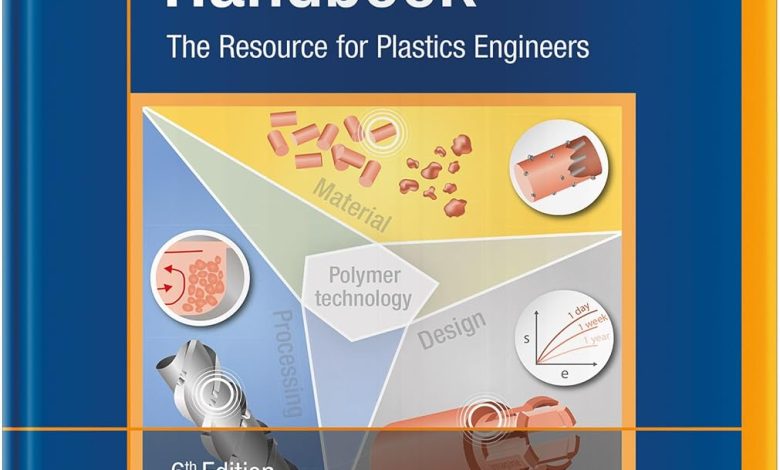
دانلود کتاب Plastics Handbook The Resource for Plastics Engineers Edition: 6
خرید ایبوک Plastics Technology Introduction and Fundamentals
برای دانلود ایبوک Plastics Handbook The Resource for Plastics Engineers Edition: 6th Edition و خرید کتاب هندبوک پلاستیکها، منبعی برای مهندسان پلاستیک، ویرایش ششم سال 2026 بر روی کلید خرید در انتهای صفحه کلیک کنید. پس از اتصال به درگاه پرداخت هزینه و تکمیل مراحل خرید، لینک دانلود کتاب ایمیل می شود.این ایبوک در فرمت PDF اورجینال و به زبان انگلیسی ارسال می شود.نسخه الکترونیکی کتاب قابلیت کپی برداری copy و Paste دارد.
در صورتی که نیاز به پی دی اف هر کتابی از انتشارات hanser دارید با گیگاپیپر مکاتبه کنید.
خرید کتاب Plastics Technology Introduction and Fundamentals
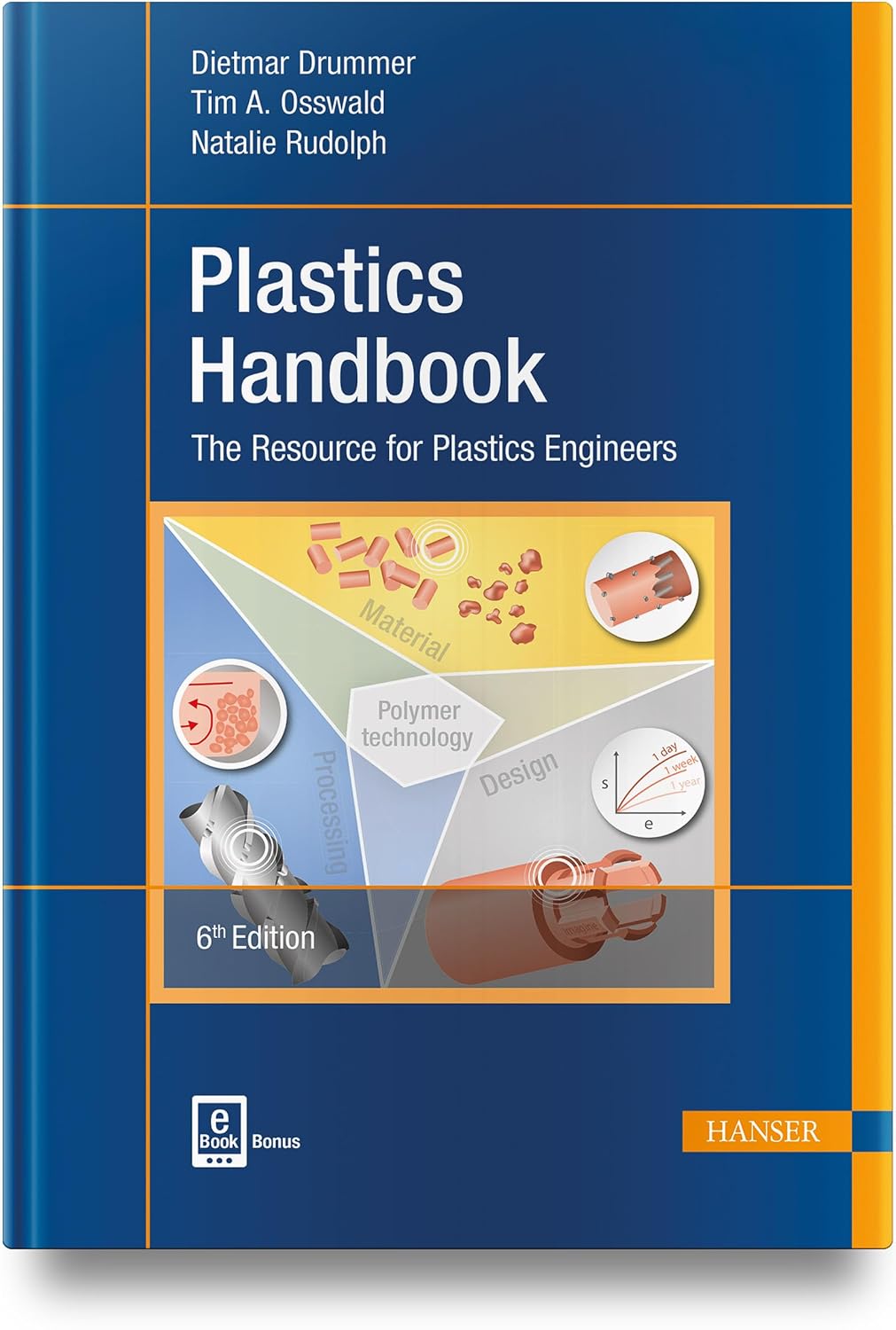
Plastics Handbook
The Resource for Plastics Engineers
Edition: 6. Edition
Dietmar Drummer, Tim A. Osswald, Natalie Rudolph and Erwin Baur
eISBN: 978-1-56990-373-5
Print ISBN: 978-1-56990-176-2
© 2026 Carl Hanser Verlag GmbH & Co. KG
Publisher : Hanser Publications Publication date : April 17, 2026 Edition : 6th Language : English Print length : 888 pages ISBN-10 : 1569901767 ISBN-13 : 978-1569901762
Send email to download :
Price : 25$
https://www.hanser-elibrary.com/doi/book/10.3139/9781569903735

https://www.amazon.com/Plastics-Handbook-9781569901762-Tim-Osswald/dp/1569901767
دانلود رایگان کتاب Plastics Handbook
The Plastics Handbook provides a compact yet comprehensive overview of plastics engineering. It covers material properties, machines, processing, and applications, supporting study, teaching, and the practice-oriented use of new materials and technologies.
Content
The handbook explains fundamental relationships in plastics engineering and summarizes key information in a clear format. Topics include the economic importance of plastics, their classification and composition, the influence of processing on material properties, and options for modifying plastic materials.
Further areas of focus include material properties and testing methods, processing technologies, and plastic materials. The content is supplemented by chapters on additives, fillers, and fibers as well as by an overview of important material parameters.
The 6th edition has been comprehensively updated and expanded. A new chapter on material- and production-oriented design and simulation has been added. Updated and new sections also cover topics such as biodegradation, microplastics, injection molds, extrusion, foaming, compression molding, additive manufacturing, fiber production, rotational molding, joining, circular economy, biopolymers, silicone elastomers, additives, and fillers.
Learning Objectives
- Understand the fundamentals of plastics engineering and key relationships
- Classify material properties, testing methods, and processing methods
- Become familiar with current developments such as additive manufacturing, biopolymers, and the circular economy
- Understand design and simulation approaches for material- and production-oriented applications
Target Audience
Suitable for students, instructors, and engineers in plastics engineering, materials engineering, mechanical engineering, and production. The work can be used both as an introduction to the field and as a reference work for study and practice.
Notes
The topics covered range from basic definitions and abbreviations in plastics engineering to current issues in materials development, processing, and application. The handbook is therefore suitable both for targeted research on individual topics and for accompanying use during study.
دانلود ایبوک مقدمه و اصول فناوری پلاستیک
کتاب راهنمای پلاستیک، مروری فشرده اما جامع بر مهندسی پلاستیک ارائه میدهد. این کتاب، خواص مواد، ماشینآلات، پردازش و کاربردها را پوشش میدهد و از مطالعه، تدریس و استفاده عملی از مواد و فناوریهای جدید پشتیبانی میکند.
محتوا
این کتاب، روابط اساسی در مهندسی پلاستیک را توضیح میدهد و اطلاعات کلیدی را در قالبی واضح خلاصه میکند. مباحث شامل اهمیت اقتصادی پلاستیکها، طبقهبندی و ترکیب آنها، تأثیر پردازش بر خواص مواد و گزینههای اصلاح مواد پلاستیکی است.
حوزههای تمرکز بیشتر شامل خواص مواد و روشهای آزمایش، فناوریهای پردازش و مواد پلاستیکی است. محتوا با فصلهایی در مورد افزودنیها، پرکنندهها و الیاف و همچنین مروری بر پارامترهای مهم مواد تکمیل شده است.
ویرایش ششم به طور جامع بهروزرسانی و گسترش یافته است. فصل جدیدی در مورد طراحی و شبیهسازی مبتنی بر مواد و تولید اضافه شده است. بخشهای بهروز شده و جدید همچنین موضوعاتی مانند تجزیه زیستی، میکروپلاستیکها، قالبهای تزریقی، اکستروژن، فومسازی، قالبگیری فشاری، تولید افزایشی، تولید الیاف، قالبگیری چرخشی، اتصال، اقتصاد چرخشی، بیوپلیمرها، الاستومرهای سیلیکونی، افزودنیها و پرکنندهها را پوشش میدهند.
اهداف یادگیری
درک اصول مهندسی پلاستیک و روابط کلیدی
طبقهبندی خواص مواد، روشهای آزمایش و روشهای پردازش
آشنایی با پیشرفتهای فعلی مانند تولید افزایشی، بیوپلیمرها و اقتصاد چرخشی
درک رویکردهای طراحی و شبیهسازی برای کاربردهای مواد محور و تولید محور
مخاطب هدف
مناسب برای دانشجویان، مدرسان و مهندسان مهندسی پلاستیک، مهندسی مواد، مهندسی مکانیک و تولید. این اثر میتواند هم به عنوان مقدمهای بر این حوزه و هم به عنوان یک مرجع برای مطالعه و تمرین مورد استفاده قرار گیرد.
یادداشتها
موضوعات تحت پوشش از تعاریف و اختصارات اساسی در مهندسی پلاستیک گرفته تا مسائل جاری در توسعه، پردازش و کاربرد مواد را شامل میشود. بنابراین، این کتابچه راهنما هم برای تحقیقات هدفمند در مورد موضوعات منفرد و هم برای استفاده همراه در طول مطالعه مناسب است.
فهرست مطالب ایبوک Plastics Technology
Preface…………………………………………………………………………………………. V
- Common Abbreviations and Acronyms in Plastics Technology 1
- Alphabetical List of Plastics Name Abbreviations, Chemical Notation………………. 2
- Common Units, ISO- and US-Units…………………………………………………………………….. 12
- Introduction……………………………………………………………………….. 17
- Economic Significance of Plastics……………………………………………………………………… 17
- Classification of Plastics…………………………………………………………………………………….. 19
- Composition of Plastics……………………………………………………………………………………… 22
- Chemical Structure (Constitution and Configuration of
Macromolecules)…………………………………………………………………………………… 22
- Conformation…………………………………………………………………………. 23
- Configuration…………………………………………………………………………. 24
- Constitution……………………………………………………………………………. 25
- Major Plastic Material Groups………………………………………………. 30
- Morphological Structure (Conformation and Aggregation of Macromolecules) 31
- Different Classes of Plastic Materials……………………………………… 37
- Effects of Processing on Material Properties……………………………………………………… 40
- Residual Stress………………………………………………………………………………………. 40
- Molecular Orientation…………………………………………………………………………….. 41
- Crystallization Behavior………………………………………………………………………… 43
- Modifications of Plastic Materials…………………………………………………………………….. 44
- Copolymers and Polymer Blends………………………………………………………….. 44
- Plastic Composites………………………………………………………………………………… 46
- Material Properties and Testing Methods………………………………. 49
- Significance of Characteristic Values………………………………………………………………… 50
- Processing Characteristics…………………………………………………………………………………. 56
- Rheological Behavior…………………………………………………………………………….. 56
- Flow Behavior, Viscosity……………………………………………………….. 56
- Viscosity Models……………………………………………………………………. 61
- Melt Volume Flow Rate (MVR) and Melt Mass Flow Rate
- Rheological Behavior…………………………………………………………………………….. 56
(MFR)…………………………………………………………………………………….. 63
- Solidification Behavior………………………………………………………………………….. 64
- Sealing Time………………………………………………………………………….. 64
- Shrinkage……………………………………………………………………………… 64
- Warpage……………………………………………………………………………….. 70
- Tolerances…………………………………………………………………………….. 71
- Filler Orientation…………………………………………………………………… 71
- Testing of Particulate Solids…………………………………………………………………. 72
- Determination of Particle Size Distribution………………………….. 73
- Mechanics of Particulate Solids……………………………………………. 73
- Adhesive Forces and Flowability………………………………………….. 74
- Flowability and the Yield Locus……………………………………………. 77
- Mechanical Properties……………………………………………………………………………………….. 78
- Short-Term Behavior……………………………………………………………………………… 79
- Accelerated Tensile Test………………………………………………………… 79
- Short-Term Bend Test……………………………………………………………. 81
- Compression Test………………………………………………………………….. 83
- Indentation Test, Hardness Measurements…………………………… 83
- Impact Behavior……………………………………………………………………………………. 85
- Characteristics……………………………………………………………………… 85
- Impact, Flexural, and Tensile Tests According to CAMPUS 86
- Static Long-Term Behavior…………………………………………………………………… 88
- Tensile Creep Tests……………………………………………………………….. 88
- Internal Pressure Creep Rupture Tests for Pipes………………….. 92
- Short-Term Behavior……………………………………………………………………………… 79
- Dynamic Long-Term Behavior………………………………………………………………. 93
- Moduli and Poisson’s Ratio……………………………………………………………………. 95
- Density………………………………………………………………………………………………….. 98
- Thermal Properties……………………………………………………………………………………………. 99
- Permissible Service Temperatures………………………………………………………… 99
- Effect of Short-Term Temperature Influence………………………… 99
- Effect of Long-Term Temperature Influence……………………….. 106
- Specific Heat Capacity, Specific Enthalpy, Heat Value………………………… 107
- Thermal Conductivity…………………………………………………………………………. 109
- Thermal Effusivity………………………………………………………………………………. 112
- Thermal Diffusivity…………………………………………………………………………….. 113
- Coefficient of Thermal Expansion………………………………………………………. 114
- Permissible Service Temperatures………………………………………………………… 99
- Electrical Properties…………………………………………………………………………………………. 121
- Electrical Insulation Properties…………………………………………………………… 123
- Volume Resistivity/Conductivity…………………………………………. 123
- Surface Resistivity……………………………………………………………….. 125
- Electromagnetic Shielding…………………………………………………… 126
- Dielectric Properties…………………………………………………………………………….. 127
- Dielectric Strength……………………………………………………………….. 127
- Long-Term Dielectric Strength…………………………………………….. 129
- Tracking Index…………………………………………………………………….. 130
- Arc Resistance………………………………………………………………………. 131
- Electrolytic Corrosion………………………………………………………….. 131
- Dielectric Behavior……………………………………………………………………………… 131
- Electrostatic Behavior…………………………………………………………………………. 133
- Conductive Plastics……………………………………………………………………………… 133
- Electrical Insulation Properties…………………………………………………………… 123
- Optical Behavior……………………………………………………………………………………………….. 135
- Transparency……………………………………………………………………………………… 135
- Gloss, Reflection, and Haze…………………………………………………………………. 136
- Color……………………………………………………………………………………………………. 137
- Fundamentals……………………………………………………………………… 137
- Colorimetry………………………………………………………………………….. 137
- Index of Refraction, Birefringence………………………………………………………. 139
- Surface Texture…………………………………………………………………………………… 142
| 3.7 | Resistance to Environmental Influences . . . . . . . . . . . . . . . . . . . . . . . . . . . . . . | 143 |
| 3.7.1 Water, Moisture . . . . . . . . . . . . . . . . . . . . . . . . . . . . . . . . . . . . . . . . . . . . . | 145 | |
| 3.7.2 Chemical Resistance . . . . . . . . . . . . . . . . . . . . . . . . . . . . . . . . . . . . . . . . . | 150 | |
| 3.7.3 Stress Cracking Resistance . . . . . . . . . . . . . . . . . . . . . . . . . . . . . . . . . . . . | 150 | |
| 3.7.4 Weathering . . . . . . . . . . . . . . . . . . . . . . . . . . . . . . . . . . . . . . . . . . . . . . . . . | 153 | |
| 3.7.5 High-Energy Radiation . . . . . . . . . . . . . . . . . . . . . . . . . . . . . . . . . . . . . . . | 153 | |
| 3.7.6 Resistance to Organisms . . . . . . . . . . . . . . . . . . . . . . . . . . . . . . . . . . . . . . | 154 | |
| 3.7.7 Migration and Permeation . . . . . . . . . . . . . . . . . . . . . . . . . . . . . . . . . . . . | 154 | |
| 3.7.7.1 Water Vapor Permeability . . . . . . . . . . . . . . . . . . . . . . . . . . . | 155 | |
| 3.7.7.2 Gas Permeability . . . . . . . . . . . . . . . . . . . . . . . . . . . . . . . . . . . | 158 | |
| 3.7.7.3 Water Vapor Diffusion Resistance . . . . . . . . . . . . . . . . . . . . | 162 | |
| 3.7.8 Fire Behavior . . . . . . . . . . . . . . . . . . . . . . . . . . . . . . . . . . . . . . . . . . . . . . . . | 162 | |
| 3.8 | Biodegradation . . . . . . . . . . . . . . . . . . . . . . . . . . . . . . . . . . . . . . . . . . . . . . . . . . . . . | 165 |
| 3.9 | Friction and Wear Behavior . . . . . . . . . . . . . . . . . . . . . . . . . . . . . . . . . . . . . . . . . | 167 |
| 3.9.1 Friction . . . . . . . . . . . . . . . . . . . . . . . . . . . . . . . . . . . . . . . . . . . . . . . . . . . . . | 167 | |
| 3.9.1.1 Friction Mechanisms . . . . . . . . . . . . . . . . . . . . . . . . . . . . . . . . | 167 | |
| 3.9.1.2 Stick-Slip Effect . . . . . . . . . . . . . . . . . . . . . . . . . . . . . . . . . . . . | 168 | |
| 3.9.2 Wear . . . . . . . . . . . . . . . . . . . . . . . . . . . . . . . . . . . . . . . . . . . . . . . . . . . . . . . | 169 | |
| 3.9.3 Specimens and Testing Systems . . . . . . . . . . . . . . . . . . . . . . . . . . . . . . . | 170 | |
| 3.9.4 Tribological Properties of Thermoplastics . . . . . . . . . . . . . . . . . . . . . . | 171 | |
| 3.10 | Analytical Evaluations . . . . . . . . . . . . . . . . . . . . . . . . . . . . . . . . . . . . . . . . . . . . . . | 175 |
| 3.10.1 Infrared (IR) and Raman Spectroscopy . . . . . . . . . . . . . . . . . . . . . . . . . | 175 | |
| 3.10.2 Nuclear Magnetic Resonance (NMR) . . . . . . . . . . . . . . . . . . . . . . . . . . . | 176 | |
| 3.10.3 Dynamic-Mechanical Spectroscopy (DMA) . . . . . . . . . . . . . . . . . . . . . | 176 | |
| 3.10.4 Dielectric Spectroscopy (DEA) . . . . . . . . . . . . . . . . . . . . . . . . . . . . . . . . . | 177 | |
| 3.10.5 Differential Thermal Analysis (DTA) and Differential Calorimetry (DSC) . . . . . . . . . . . . . . . . . . . . . . . . . . . . . . . . . . . . . . . . . . . . . . . . . . . . . . . | 179 | |
| 3.10.6 Thermogravimetric Analysis (TGA) . . . . . . . . . . . . . . . . . . . . . . . . . . . . | 180 | |
| 3.10.7 Dilatometry, Thermomechanical Analysis (TMA), Specific Volume (pvT) . . . . . . . . . . . . . . . . . . . . . . . . . . . . . . . . . . . . . . . . . . . . . . . . . . . . . . . | 181 | |
| 3.10.8 Thermal Conductivity . . . . . . . . . . . . . . . . . . . . . . . . . . . . . . . . . . . . . . . . | 184 | |
| 3.10.9 Solution Viscosimetry . . . . . . . . . . . . . . . . . . . . . . . . . . . . . . . . . . . . . . . . | 185 | |
| 3.10.10 Chromatography . . . . . . . . . . . . . . . . . . . . . . . . . . . . . . . . . . . . . . . . . . . . | 186 | |
| 3.11 | Microplastics: Characterization and Separation Methods . . . . . . . . . . . . . . . | 187 |
| 3.11.1 Introduction . . . . . . . . . . . . . . . . . . . . . . . . . . . . . . . . . . . . . . . . . . . . . . . . | 187 |
- Characterization of Microplastics……………………………………………………….. 188
- Microplastic Separation Methods……………………………………………………….. 190
- Plastic Processing Technologies……………………………………………. 193
- Compounding………………………………………………………………………………………………….. 194
- Mixing Processes………………………………………………………………………………….. 195
- Mixing Devices…………………………………………………………………….. 197
- Screw-Type Mixers for Viscous Materials…………………………… 199
- Other Mixers for Viscous Materials…………………………………….. 205
- Pelletizers……………………………………………………………………………………………. 208
- Mills, Granulators, or Pulverizers……………………………………………………….. 210
- Dryers………………………………………………………………………………………………….. 211
- Compounding of Thermosetting Materials………………………………………….. 214
- Compounding of Recycled Materials…………………………………………………… 214
- Mixing Processes………………………………………………………………………………….. 195
- Extrusion…………………………………………………………………………………………………………. 214
- Extruder Designs………………………………………………………………………………… 215
- Single-Screw Extruder…………………………………………………………. 215
- Cylinder Types: Smooth Bore and Grooved Liner………………. 218
- Screw Concepts: Three-Zone, Barrier Screw……………………….. 219
- Degassing Extruder……………………………………………………………… 220
- Cascade or Tandem Extruder………………………………………………. 221
- High-Speed Extruder (Adiabatic Extruder)………………………….. 221
- Planetary Roller Extruder……………………………………………………. 221
- Twin-Screw Extruder…………………………………………………………… 222
- Additional Equipment for Extruders………………………………………………….. 228
- Extrusion Dies and Subsequent Devices…………………………………………….. 228
- Pipes and Symmetrical Hollow Profiles………………………………. 228
- Solid Profiles………………………………………………………………………… 229
- Hollow Chamber Profiles……………………………………………………… 229
- Sheathing…………………………………………………………………………….. 230
- Sheets and Flat Films…………………………………………………………… 230
- Blown (Tubular) Film………………………………………………………….. 232
- Foamed Semi-Finished Products and Profiles…………………….. 233
- Monofilaments, Tapes, Fibers………………………………………………. 235
- Co- and Multi-Layer Extruded Products………………………………. 235
- Multi-Layer Films………………………………………………………………… 237
- Extruder Designs………………………………………………………………………………… 215
- Compounding………………………………………………………………………………………………….. 194
- Calendered Films………………………………………………………………………………… 240
- Extrusion Blow Molding of Hollow Parts with Variable
Cross Sections………………………………………………………………………………………. 244
- Injection Molding…………………………………………………………………………………………… 245
- The Injection Molding Process……………………………………………………………. 246
- Design of Injection Molding Machines……………………………………………….. 251
- Clamping Unit………………………………………………………………………. 251
- All-Electric Injection Molding Machines……………………………… 252
- Plasticizing Unit…………………………………………………………………… 252
- Injection Molding – General Information…………………………………………… 255
- Cleaning of Screws and Barrels…………………………………………………………… 258
- Special Injection Molding Processes…………………………………………………… 258
- Injection Compression Molding………………………………………….. 259
- Powder Injection Molding…………………………………………………… 259
- Micro-Injection Molding……………………………………………………… 260
- Injection Molding with Multiple Injection Units………………… 260
- Fluid Injection Technology………………………………………………….. 264
- Foam Injection Molding………………………………………………………. 266
- Injection Molding of Liquid Silicone Rubber………………………. 266
- Injection Molding with Inserts……………………………………………. 268
- Injection Blow Molding……………………………………………………………………… 270
- Stretch Blow Molding…………………………………………………………. 270
- Molds……………………………………………………………………………………………………………….. 271
- General Introduction to Mold Design…………………………………………………. 271
- Molding Tool Steels and Treatment Methods…………………………………….. 272
- Injection Molds and Sprue Types……………………………………………………….. 274
- Cooling Systems…………………………………………………………………………………… 279
- Demolding Systems…………………………………………………………………………….. 283
- Mold Standards……………………………………………………………………………………. 285
- Foaming…………………………………………………………………………………………………………… 286
- Foaming Principles……………………………………………………………………………… 286
- Particle Foams…………………………………………………………………………………….. 288
- Classification……………………………………………………………………….. 288
- Expandable Particle Foams…………………………………………………. 288
- Expanded Particle Foams…………………………………………………….. 289
- Casting…………………………………………………………………………………………………………….. 290
- Polyurethane (PUR) Processing Technology…………………………………………………….. 291
- General Principles……………………………………………………………………………….. 291
- Manufacturing Steps…………………………………………………………………………… 292
- Low- and High-Pressure Machines………………………………………. 295
- Spraying Machines……………………………………………………………….. 298
- Production Line Layouts…………………………………………………….. 298
- Continuous Manufacturing…………………………………………………. 298
- Batch Manufacturing…………………………………………………………… 300
- Manufacturing of Fiber-Reinforced Components………………. 302
- Cleaning………………………………………………………………………………. 302
- Manufacturing of Fiber-Reinforced Plastics……………………………………………………. 302
- Short-Fiber Reinforced Composites……………………………………………………. 304
- Injection Molding……………………………………………………………….. 304
- Bulk Molding Compounds…………………………………………………… 304
- Long-Fiber Reinforced Composites…………………………………………………….. 306
- Sheet Molding Compound……………………………………………………. 306
- Glass Mat-Reinforced Thermoplastics………………………………….. 308
- Long Fiber-Reinforced Thermoplastics……………………………….. 310
- Low Volume Liquid Composite Molding……………………………………………… 311
- Manual Techniques……………………………………………………………… 311
- Vacuum-Assisted Resin Infusion…………………………………………… 311
- High Volume Liquid Composite Molding……………………………………………. 312
- Resin Transfer Molding………………………………………………………. 312
- Vacuum Assisted Resin Transfer Molding…………………………… 313
- Compression Resin Transfer Molding………………………………… 314
- Structural Reaction Injection Molding……………………………….. 314
- Filament Winding……………………………………………………………………………….. 314
- Pultrusion…………………………………………………………………………………………… 317
- Prepreg Layup…………………………………………………………………………………….. 318
- Prepregging…………………………………………………………………………. 318
- Automated Tape Layup……………………………………………………….. 319
- Short-Fiber Reinforced Composites……………………………………………………. 304
- Compression Molding……………………………………………………………………………………… 320
- Laminating…………………………………………………………………………………………. 320
- Polyurethane (PUR) Processing Technology…………………………………………………….. 291
| 4.9.2 Extrusion Molding . . . . . . . . . . . . . . . . . . . . . . . . . . . . . . . . . . . . . . . . . . . | 321 | |
| 4.9.3 Transfer Molding . . . . . . . . . . . . . . . . . . . . . . . . . . . . . . . . . . . . . . . . . . . . | 322 | |
| 4.10 | Additive Manufacturing Processes . . . . . . . . . . . . . . . . . . . . . . . . . . . . . . . . . . . | 323 |
| 4.10.1 Liquid Materials . . . . . . . . . . . . . . . . . . . . . . . . . . . . . . . . . . . . . . . . . . . . . | 327 | |
| 4.10.1.1 Stereolithography . . . . . . . . . . . . . . . . . . . . . . . . . . . . . . . . . . . | 328 | |
| 4.10.1.2 Digital Light Processing (DLP) . . . . . . . . . . . . . . . . . . . . . . . . | 329 | |
| 4.10.1.3 UV-Assisted Direct Ink Writing (DIW) . . . . . . . . . . . . . . . . . | 330 | |
| 4.10.1.4 Material Jetting (MJ) . . . . . . . . . . . . . . . . . . . . . . . . . . . . . . . . | 330 | |
| 4.10.2 Powder-Based Processes . . . . . . . . . . . . . . . . . . . . . . . . . . . . . . . . . . . . . . | 331 | |
| 4.10.2.1 Laser Sintering (LS) . . . . . . . . . . . . . . . . . . . . . . . . . . . . . . . . . | 331 | |
| 4.10.2.2 High-Speed Sintering (HSS) . . . . . . . . . . . . . . . . . . . . . . . . . . | 332 | |
| 4.10.2.3 3D Printing (3DP) . . . . . . . . . . . . . . . . . . . . . . . . . . . . . . . . . . . | 332 | |
| 4.10.2.4 Processes under Development . . . . . . . . . . . . . . . . . . . . . . . | 333 | |
| 4.10.3 Filament/Granulate-Based Processes . . . . . . . . . . . . . . . . . . . . . . . . . . | 333 | |
| 4.10.3.1 Fused Filament Fabrication (FFF) . . . . . . . . . . . . . . . . . . . . | 335 | |
| 4.10.3.2 Pellet-Based Strand Placement Process . . . . . . . . . . . . . . . . | 335 | |
| 4.10.3.3 Variants . . . . . . . . . . . . . . . . . . . . . . . . . . . . . . . . . . . . . . . . . . . . | 336 | |
| 4.11 | Fiber Production . . . . . . . . . . . . . . . . . . . . . . . . . . . . . . . . . . . . . . . . . . . . . . . . . . . | 336 |
| 4.11.1 Textile Definitions . . . . . . . . . . . . . . . . . . . . . . . . . . . . . . . . . . . . . . . . . . . | 337 | |
| 4.11.2 Fiber Spinning from the Melt . . . . . . . . . . . . . . . . . . . . . . . . . . . . . . . . . | 338 | |
| 4.11.2.1 Classic Fiber Spinning . . . . . . . . . . . . . . . . . . . . . . . . . . . . . . . | 338 | |
| 4.11.2.2 Meltblown Process . . . . . . . . . . . . . . . . . . . . . . . . . . . . . . . . . . | 341 | |
| 4.11.2.3 From Single Fiber to Processed Nonwoven . . . . . . . . . . . . | 342 | |
| 4.11.2.4 SMS Nonwovens . . . . . . . . . . . . . . . . . . . . . . . . . . . . . . . . . . . . | 344 | |
| 4.11.2.5 Special Nozzle Geometries and Their Applications . . . . . | 348 | |
| 4.11.3 Special Fiber Production Processes . . . . . . . . . . . . . . . . . . . . . . . . . . . . | 349 | |
| 4.11.3.1 Melt Electrospinning . . . . . . . . . . . . . . . . . . . . . . . . . . . . . . . . | 350 | |
| 4.11.3.2 Solution Electrospinning . . . . . . . . . . . . . . . . . . . . . . . . . . . . | 351 | |
| 4.11.4 Additives for Fiber Spinning . . . . . . . . . . . . . . . . . . . . . . . . . . . . . . . . . . | 351 | |
| 4.11.5 Relevant Polymer Parameters for Fiber Spinning . . . . . . . . . . . . . . . | 352 | |
| 4.11.6 Process Instabilities . . . . . . . . . . . . . . . . . . . . . . . . . . . . . . . . . . . . . . . . . . | 354 | |
| 4.11.7 Simple Correlations in the Fiber Spinning Process for the Practitioner . . . . . . . . . . . . . . . . . . . . . . . . . . . . . . . . . . . . . . . . . . . . . . . . . | 355 | |
| 4.12 | Rotational Molding . . . . . . . . . . . . . . . . . . . . . . . . . . . . . . . . . . . . . . . . . . . . . . . . . | 356 |
| 4.13 | Secondary Shaping . . . . . . . . . . . . . . . . . . . . . . . . . . . . . . . . . . . . . . . . . . . . . . . . . | 359 |
| 4.13.1 Bending . . . . . . . . . . . . . . . . . . . . . . . . . . . . . . . . . . . . . . . . . . . . . . . . . . . . . | 360 | |
| 4.13.2 Mechanical Forming . . . . . . . . . . . . . . . . . . . . . . . . . . . . . . . . . . . . . . . . . | 361 | |
| 4.13.3 Pressure Forming . . . . . . . . . . . . . . . . . . . . . . . . . . . . . . . . . . . . . . . . . . . . | 363 | |
| 4.14 | Plastics Joining . . . . . . . . . . . . . . . . . . . . . . . . . . . . . . . . . . . . . . . . . . . . . . . . . . . . . | 365 |
| 4.14.1 Classification of Manufacturing Processes . . . . . . . . . . . . . . . . . . . . . . | 365 | |
| 4.14.2 Classification of Plastic Welding Processes . . . . . . . . . . . . . . . . . . . . . | 366 | |
| 4.14.3 Welding . . . . . . . . . . . . . . . . . . . . . . . . . . . . . . . . . . . . . . . . . . . . . . . . . . . . . | 367 | |
| 4.14.4 Series Welding Processes . . . . . . . . . . . . . . . . . . . . . . . . . . . . . . . . . . . . . | 368 | |
| 4.14.4.1 Sequential Butt Welding Processes . . . . . . . . . . . . . . . . . . . | 368 | |
| 4.14.4.2 Friction Welding Processes . . . . . . . . . . . . . . . . . . . . . . . . . . | 374 | |
| 4.14.4.3 Ultrasonic Welding . . . . . . . . . . . . . . . . . . . . . . . . . . . . . . . . . . | 379 | |
| 4.14.4.4 Laser Transmission Welding . . . . . . . . . . . . . . . . . . . . . . . . . | 382 | |
| 4.14.5 Welding of Semi-finished Products . . . . . . . . . . . . . . . . . . . . . . . . . . . . | 384 | |
| 4.14.5.1 Direct Hot Plate Welding . . . . . . . . . . . . . . . . . . . . . . . . . . . . | 384 | |
| 4.14.5.2 Indirect Hot Plate Welding . . . . . . . . . . . . . . . . . . . . . . . . . . . | 387 | |
| 4.14.5.3 Convective Welding Processes . . . . . . . . . . . . . . . . . . . . . . . | 388 | |
| 4.14.6 Welding with an Alternating Electromagnetic Field . . . . . . . . . . . . . | 391 | |
| 4.14.6.1 High-Frequency Welding . . . . . . . . . . . . . . . . . . . . . . . . . . . . | 391 | |
| 4.14.6.2 Induction Welding . . . . . . . . . . . . . . . . . . . . . . . . . . . . . . . . . . | 392 | |
| 4.14.6.3 Microwave Welding . . . . . . . . . . . . . . . . . . . . . . . . . . . . . . . . . | 393 | |
| 4.14.7 Glueing . . . . . . . . . . . . . . . . . . . . . . . . . . . . . . . . . . . . . . . . . . . . . . . . . . . . . | 393 | |
| 4.14.8 Screws, Rivets, Snaps . . . . . . . . . . . . . . . . . . . . . . . . . . . . . . . . . . . . . . . . . | 395 | |
| 4.15 | Surface Treatments . . . . . . . . . . . . . . . . . . . . . . . . . . . . . . . . . . . . . . . . . . . . . . . . . | 396 |
| 4.15.1 Pre-Treatment of Surfaces . . . . . . . . . . . . . . . . . . . . . . . . . . . . . . . . . . . . | 396 | |
| 4.15.1.1 Wet Chemical Treatments . . . . . . . . . . . . . . . . . . . . . . . . . . . | 396 | |
| 4.15.1.2 Vapor Phase Treatment . . . . . . . . . . . . . . . . . . . . . . . . . . . . . . | 397 | |
| 4.15.1.3 Flame Oxidation . . . . . . . . . . . . . . . . . . . . . . . . . . . . . . . . . . . . | 397 | |
| 4.15.1.4 Radiation Treatment . . . . . . . . . . . . . . . . . . . . . . . . . . . . . . . . | 397 | |
| 4.15.1.5 Corona Treatment . . . . . . . . . . . . . . . . . . . . . . . . . . . . . . . . . . | 397 | |
| 4.15.1.6 Plasma Treatment . . . . . . . . . . . . . . . . . . . . . . . . . . . . . . . . . . | 397 | |
| 4.15.1.7 Mechanical Pre-Treatment . . . . . . . . . . . . . . . . . . . . . . . . . . . | 398 | |
| 4.15.2 Polishing . . . . . . . . . . . . . . . . . . . . . . . . . . . . . . . . . . . . . . . . . . . . . . . . . . . . | 399 | |
| 4.15.3 Coating . . . . . . . . . . . . . . . . . . . . . . . . . . . . . . . . . . . . . . . . . . . . . . . . . . . . . | 399 | |
| 4.15.4 Printing, Labeling, Decorating . . . . . . . . . . . . . . . . . . . . . . . . . . . . . . . . | 401 |
- Embossing, Hot-Embossing/Stamping………………………………………………….. 402
- Flock-Coating/Flocking…………………………………………………………………………. 402
- Metallization of Film…………………………………………………………………………… 403
- Metallization of Molded Components………………………………………………… 404
- SiOx-Coating of Films…………………………………………………………………………… 405
- Rubbing………………………………………………………………………………………………. 405
- Fluorination, Gas-Phase Fluorination…………………………………………………. 405
- Plasma Polymerization/Chemical Vapor Deposition (CVD)……………….. 406
- Thermal Spraying……………………………………………………………………………….. 407
- Other Treatment Processes………………………………………………………………………………. 407
- Machining……………………………………………………………………………………………. 407
- Cutting, Machining……………………………………………………………………………… 409
- Radiation Crosslinking……………………………………………………………………….. 410
- Heat Treatment……………………………………………………………………………………. 411
- Elimination of Electrostatic Charges………………………………………………….. 412
- Circular Economy – Recycling…………………………………………………………………………. 412
- Mechanical Recycling…………………………………………………………………………. 413
- Chemical Recycling…………………………………………………………………………….. 415
- Material- and Production-Oriented Design and Simulation…….. 417
- Systematic Design of Plastic Products…………………………………………………………….. 418
- Requirement Lists and Specifications…………………………………………………. 419
- Design Catalogs…………………………………………………………………………………… 420
- Material Selection…………………………………………………………………………………………….. 421
- Production-Oriented Design……………………………………………………………………………. 424
- Selection of the Manufacturing Process………………………………………………. 424
- Design………………………………………………………………………………………………….. 424
- Designing with Fiber-Reinforced Plastics……………………………………………………….. 426
- Fiber Length Distribution……………………………………………………………………. 427
- Fiber Orientation Distribution……………………………………………………………. 428
- Fiber Density Distribution…………………………………………………………………… 435
- Fiber–Matrix Adhesion……………………………………………………………………….. 438
- Microstructure–Property Relationship……………………………………………….. 438
- Computer-Aided Design…………………………………………………………………………………… 442
- Structural Simulation Using the Finite Element Method…………………… 443
- Systematic Design of Plastic Products…………………………………………………………….. 418
- Process Simulation………………………………………………………………………………. 446
- Mold Filling Simulation………………………………………………………… 447
- Prediction of Shrinkage and Warpage………………………………… 448
- Orientation Predictions……………………………………………………….. 449
- Modeling of Discontinuous Fiber-Reinforced Materials for
FEM Implementation…………………………………………………………………………… 451
- Material-Compatible Design……………………………………………………………………………. 459
- Part Dimensioning Calculation…………………………………………………………… 459
- Dimensioning Parameters…………………………………………………………………… 460
- Dimensioning Calculations…………………………………………………………………… 463
- Empirically Supported Dimensioning Calculation……………………………… 463
- Component Tests on Prototypes and Models……………………………………… 464
- Functional Elements………………………………………………………………………………………… 464
- Living Hinges………………………………………………………………………………………. 465
- Snap-Fit Connections…………………………………………………………………………… 465
- Screw Connections………………………………………………………………………………. 468
- Rivets…………………………………………………………………………………………………… 471
- Welded Joints……………………………………………………………………………………….. 471
- Press Fits……………………………………………………………………………………………… 471
- Plastic Materials………………………………………………………………. 473
- General Remarks……………………………………………………………………………………………… 473
- Polyolefins (PO), Polyolefin Derivatives and Copolymers……………………………….. 473
- Polyethylene Standard Homo- and Copolymers (PE-LD, PE-HD,
PE-HD-HMW, PE-HD-UHMW, and PE-LLD)…………………………………………. 474
- Polymerization, Chemical Constitution………………………………. 474
- Processing…………………………………………………………………………… 476
- Post-Processing Treatment……………………………………………………. 477
- Properties……………………………………………………………………………. 477
- Applications…………………………………………………………………………. 481
- Polyethylene Derivatives (PE-X)………………………………………………………….. 483
- Chlorinated and Chloro-Sulfonated PE (PE-C, CSM)…………………………… 484
- Ethylene Copolymers (PE-ULD, EVAC, EVAL, EEA, EB, EBA, EMA,
EAA, E/P, EIM, COC, ECB, ETFE)…………………………………………………………… 485
- Ultra-Light Polyethylene (PE-ULD, PE-VLD)………………………… 492
- Ethylene Vinyl Acetate Copolymers (EVAC)……………………….. 492
- Ethylene Vinyl Alcohol Copolymers (EVAL)……………………….. 494
- Ethylene Acrylic Copolymers (EEA, EBA, EAA, EAMA,
EMA)……………………………………………………………………………………. 495
- PE α-Olefin Copolymers (PEα-PO-(M))………………………………… 495
- Cycloolefin Copolymers (COC, COP)……………………………………. 495
- Ionomers (EIM)…………………………………………………………………… 496
- Ethylene Copolymer Bitumen Blends (ECB, ECB/TPO)……….. 497
- Polypropylene Homopolymers (PP, PP-H)………………………………………….. 497
- Chemical Constitution, Polymerization………………………………… 497
- Processing…………………………………………………………………………… 498
- PP Foams (PP-E)…………………………………………………………………… 499
- Post-Processing Treatments………………………………………………….. 499
- Properties……………………………………………………………………………. 500
- Applications………………………………………………………………………… 504
- Polypropylene Copolymers and Derivatives, Blends (PP-C, PP-B,
EPDM, PP+EPDM)………………………………………………………………………………… 504
- Chlorinated PP (PP-C)………………………………………………………….. 504
- PP Copolymers (PP-B)………………………………………………………….. 505
- Ethylene-Propylene (Diene) Copolymers (EPDM)……………….. 505
- PP+EPDM Elastomer Blends………………………………………………… 506
- Polypropylene Blends………………………………………………………….. 506
- Polypropylene, Special Grades……………………………………………………………. 507
- Polybutene (PB, PIB)……………………………………………………………………………. 508
- Polybutene-1 (PB)………………………………………………………………… 509
- Polyisobutene (PIB)……………………………………………………………… 510
- Higher Poly-(α-Olefins) (PMP, PDCPD)………………………………………………… 511
- Poly-4-Methylpentene-1 (PMP)…………………………………………….. 511
- Polydicyclopentadiene (PDCPD)………………………………………… 512
- Styrene Polymers…………………………………………………………………………………………….. 513
- Polystyrene, Homopolymers (PS, PMS)………………………………………………. 513
- Polystyrene, PS; Poly-p-Methylstyrene (PPMS);
- Polystyrene, Homopolymers (PS, PMS)………………………………………………. 513
Poly-α-Methylstyrene (PMS)………………………………………………… 513
- Polystyrene, Copolymers, Blends………………………………………………………… 514
- Chemical Composition………………………………………………………… 514
| 6.3.2.2 Processing . . . . . . . . . . . . . . . . . . . . . . . . . . . . . . . . . . . . . . . . . | 515 | |
| 6.3.2.3 Properties . . . . . . . . . . . . . . . . . . . . . . . . . . . . . . . . . . . . . . . . . . | 515 | |
| 6.3.3 Polystyrene Foams (PS-E, XPS) . . . . . . . . . . . . . . . . . . . . . . . . . . . . . . . . | 524 | |
| 6.4 | Vinyl Polymers . . . . . . . . . . . . . . . . . . . . . . . . . . . . . . . . . . . . . . . . . . . . . . . . . . . . . | 525 |
| 6.4.1 Rigid Polyvinyl Chloride Homopolymers (PVC-U) . . . . . . . . . . . . . . . | 525 | |
| 6.4.1.1 Chemical Composition . . . . . . . . . . . . . . . . . . . . . . . . . . . . . . | 525 | |
| 6.4.1.2 Delivery Forms, Processing . . . . . . . . . . . . . . . . . . . . . . . . . . | 525 | |
| 6.4.1.3 Identification . . . . . . . . . . . . . . . . . . . . . . . . . . . . . . . . . . . . . . . | 527 | |
| 6.4.1.4 Properties and Applications . . . . . . . . . . . . . . . . . . . . . . . . . | 528 | |
| 6.4.2 Plasticized Polyvinyl Chloride (PVC-P) . . . . . . . . . . . . . . . . . . . . . . . . . | 532 | |
| 6.4.2.1 Chemical Composition . . . . . . . . . . . . . . . . . . . . . . . . . . . . . . | 532 | |
| 6.4.2.2 Delivery Forms, Processing . . . . . . . . . . . . . . . . . . . . . . . . . . | 532 | |
| 6.4.2.3 Plasticizers . . . . . . . . . . . . . . . . . . . . . . . . . . . . . . . . . . . . . . . . . | 532 | |
| 6.4.2.4 Properties and Applications . . . . . . . . . . . . . . . . . . . . . . . . . | 536 | |
| 6.4.3 Polyvinyl Chloride: Copolymers and Blends . . . . . . . . . . . . . . . . . . . . | 537 | |
| 6.4.4 Polyvinyl Chloride: Pastes, Plastisols, Organosol, Foams . . . . . . . . . | 539 | |
| 6.4.4.1 Pastes, Plastisols, Organosol . . . . . . . . . . . . . . . . . . . . . . . . . | 539 | |
| 6.4.4.2 Foams . . . . . . . . . . . . . . . . . . . . . . . . . . . . . . . . . . . . . . . . . . . . . | 539 |
- Vinyl Polymers, Other Homo- and Copolymers (PVDC, PVAC,
PVAL, PVME, PVFM, PVB, PVK, PVP)………………………………………………….. 540
- Polyvinylidene Chloride (PVDC)………………………………………… 540
- Polyvinyl Acetate (PVAC)……………………………………………………. 540
- Polyvinyl Alcohol (PVAL)……………………………………………………. 540
- Polyvinyl Methyl Ether (PVME)…………………………………………… 541
- Polyvinyl Butyral, Polyvinyl Formal (PVB, PVFM)………………. 541
- Polyvinyl Carbazole (PVK)………………………………………………….. 541
- Polyvinyl Pyrrolidone and Copolymers (PVP)……………………. 542
- Fluoro Polymers……………………………………………………………………………………………….. 542
- Fluoro Homopolymers (PTFE, PVDF, PVF, PCTFE)……………………………… 542
- Polytetrafluoroethylenes (PTFE)…………………………………………. 545
- Polyvinylidene Fluoride (PVDF)…………………………………………. 547
- Polyvinyl Fluoride (PVF)……………………………………………………… 547
- Polychlorotrifluoroethylene (PCTFE)…………………………………. 548
- Fluoro-Copolymers and Elastomers (ECTFE, ETFE, FEP, TFEP, PFA,
- Fluoro Homopolymers (PTFE, PVDF, PVF, PCTFE)……………………………… 542
AF, PTFEAF, TFEHFPVDF (THV, TFB), [FKM, FPM, FFKM])…………………. 548
- Ethylene Chlorotrifluoroethylene Copolymers (ECTFE) . 549
- Ethylene Tetrafluoroethylene Copolymers (ETFE)……………… 549
- Polyfluoroethylene Propylene (FEP); Tetrafluoroethylene Hexafluoropropylene Copolymers (TFEP) 549
- Perfluoropropyl Vinyl Ether Copolymer, Perfluoroalkoxy
(PFA)……………………………………………………………………………………. 550
- PTFE Copolymers with AF (PTFEAF)…………………………………… 550
- Tetrafluoroethylene Hexafluoropropylene Vinylidene Fluoride Terpolymers (TFEHFPVDF (THV, TFB))…………………………………………………………………………………….. 551
- Other Fluoro Copolymers…………………………………………………….. 551
- Polyacrylic- and Methacrylic Polymers……………………………………………………………. 551
- Polyacrylates, Homo- and Copolymers (PAA, PAN, PMA, PBA)………….. 551
- Polyacrylonitrile (PAN)………………………………………………………. 551
- Polyacrylates, Special Products…………………………………………… 552
- Polymethacrylates, Homo- and Copolymers (PMMA, AMMA,
- Polyacrylates, Homo- and Copolymers (PAA, PAN, PMA, PBA)………….. 551
MABS, MBS)…………………………………………………………………………………………. 552
- Polymethylmethacrylate (PMMA)………………………………………. 552
- Methyl Methacrylate Copolymers (AMMA)………………………… 556
- Methyl Methacrylate Acrylonitrile Butadiene Styrene Copolymers (MABS); Methacrylate Butadiene Styrene Copolymers (MBS)…………………………………………………. 557
- Polymethacrylates, Modifications and Blends (PMMI, PMMA-HI,
MMA-EML Copolymers, PMMA+ABS)…………………………………………………. 557
- Polymethacrylmethylimide (PMMI)……………………………………. 557
- Impact Resistant PMMA (PMMA-HI)…………………………………… 558
- Methyl Methacrylate Exo-Methylene Lactone
Copolymers (MMA-EML-Copol., MMAEML)……………………….. 559
- PMMA+ABS…………………………………………………………………………. 559
- Polyoxymethylenes (Polyacetal, Polyformaldehyde) (POM)………………………….. 559
- Polyoxymethylene Homo- and Copolymers (POM-H, POM-C)……………. 559
- Polyoxymethylene, Modifications and Blends (POM+TPU)……………….. 569
- Polyamides (PA)………………………………………………………………………………………………. 571
- Polyamides, Homopolymers (AB and AA/BB Polymers);
- Polyoxymethylenes (Polyacetal, Polyformaldehyde) (POM)………………………….. 559
(PA 6, 11, 12, 46, 66, 69, 610, 612 (PA 7, 8, 9, 1313, 613))……………………… 571
- Chemical Composition…………………………………………………………. 572
- Properties…………………………………………………………………………….. 580
- Processing…………………………………………………………………………….. 582
- Applications…………………………………………………………………………. 585
- Modifications……………………………………………………………………………………….. 588
- Copolyamides………………………………………………………………………………………. 593
- Semi-Aromatic, Semi-Crystalline Copolyamides (Polyphthalamides, PPA) 596
- Semi-Aromatic, Amorphous Copolyamides………………………….. 596
- Elastomeric Block Copolyamides (Polyether Block
Amides, PEBA)…………………………………………………………………….. 597
- Cast Polyamides (PA6-C, PA12-C)………………………………………………………… 598
- Polyamides for Reaction Injection Molding (PA-RIM)………………………… 598
- Aromatic Polyamides, Aramids…………………………………………………………… 598
- Aromatic (Saturated) Polyesters……………………………………………………………………….. 599
- Polycarbonates (PC)……………………………………………………………………………. 599
- Polycarbonates Based on Bisphenol A (PC)………………………… 599
- Polycarbonate Copolymers………………………………………………….. 605
- Blends…………………………………………………………………………………… 606
- Polyesters of Terephthalic Acid, Block Copolymers……………………………. 608
- Polyethylene Terephthalate (PET)………………………………………. 608
- Polybutylene Terephthalate (PBT)………………………………………. 614
- Cyclic Polybutylene Terephthalates (CBT)…………………………. 615
- Polytrimethylene Terephthalates (PTT)……………………………… 616
- Thermoplastic Polyester Elastomers (TPC)………………………… 616
- Polyterephthalate Blends (PET+: PBT, MBS, PMMA, PSU, Elastomer) 616
- Polyesters of Aromatic Diols and Carboxylic Acids
- Polycarbonates (PC)……………………………………………………………………………. 599
(PAR, PBN, PEN)………………………………………………………………………………….. 616
- Polyarylates (PAR)………………………………………………………………. 616
- Polybutylene Naphthalates (PBN)………………………………………. 618
- Polyethylene Naphthalates (PEN)………………………………………. 618
- Aromatic Polysulfides and Polysulfones (PPS, PSU, PES, PPSU)……………………… 619
- Polyphenylene Sulfides (PPS)……………………………………………………………… 619
- Polyaryl Ether Sulfones (PAES, PSU, PSU+ABS, PES, PPSU)………………… 622
- Aromatic Polyethers, Polyphenylene Ethers, and Blends (PPE)…………………….. 625
- Aliphatic Polyesters (Polyglycols) (PEOX, PPOX, PTHF)………………………………….. 628
- Poly(aryl)ether Ketones and Aliphatic Polyketones………………………………………… 628
- Poly(aryl)ether Ketones (Aromatic Polyether Ketones)
(PAEK; PEK; PEEK; PEKEEK; PEKK)…………………………………………………….. 628
- Aliphatic Polyketones (PK)………………………………………………………………….. 633
- Chemical Constitution…………………………………………………………. 633
- Processing…………………………………………………………………………… 633
- Properties and Applications………………………………………………… 633
- Aromatic Polyimides (PI)…………………………………………………………………………………. 634
- Thermosetting Polyimides (PI, PBMI, PBI, PBO, and Others)………………. 635
- Polyimides (PI)…………………………………………………………………….. 635
- Polybismaleinimides (PBMI)………………………………………………. 641
- Polybenzimidazoles (PBI)…………………………………………………….. 641
- Polytriazines……………………………………………………………………….. 641
- Thermoplastic Polyimides (PAI, PEI, PISO, PMI, PMMI, PESI, PARI) 642
- Polyamide Imides (PAI)………………………………………………………. 642
- Polyetherimides (PEI)………………………………………………………….. 642
- Polyimide Sulfones (PISO)………………………………………………….. 643
- Polymethacrylimides (PMI, Rigid Foams)……………………………. 643
- Polymethacrylate Methylimides (PMMI)……………………………. 644
- Polyesterimides (PESI)………………………………………………………… 645
- Thermosetting Polyimides (PI, PBMI, PBI, PBO, and Others)………………. 635
- Self-Reinforcing Liquid Crystalline Polymers (LCP)………………………………………. 645
- Chemical Constitution…………………………………………………………………………. 645
- Processing…………………………………………………………………………………………… 646
- Properties……………………………………………………………………………………………. 646
- Applications………………………………………………………………………………………… 647
- Ladder Polymers: Two-Dimensional Polyaromates and -Heterocyclenes 647
- Polyurethanes (PUR)………………………………………………………………………………………. 650
- Fundamentals…………………………………………………………………………………….. 650
- Chemical Constitution…………………………………………………………. 651
- Manufacture of the Polymer……………………………………………….. 652
- Flammability………………………………………………………………………. 654
- Raw Material Handling, Safety……………………………………………. 654
- Environmental Protection, Safety, and Recycling……………….. 654
- Raw Materials and Additives……………………………………………………………… 655
- Di- and Polyisocyanates………………………………………………………… 655
- Fundamentals…………………………………………………………………………………….. 650
- Polyols, Polyamines…………………………………………………………….. 656
- Crosslinking Agents and Chain Extenders……………………………. 657
- Additives……………………………………………………………………………… 657
- PUR Polymers……………………………………………………………………………………… 659
- Flexible Foams (PUR-F)……………………………………………………….. 660
- Rigid Foams (PUR-R)……………………………………………………………. 663
- Integral Foams (PUR-I)………………………………………………………… 663
- Solid PUR Polymers, PUR-S………………………………………………….. 666
- Biopolymers and Derivatives…………………………………………………………………………… 667
- Cellulose and Starch Derivatives: CA, CTA, CP, CAP, CAB, CN, EC,
MC, CMC, CH, VF, PSAC……………………………………………………………………….. 673
- Chemical Constitution…………………………………………………………. 673
- Processing…………………………………………………………………………… 674
- Properties and Applications………………………………………………… 675
- Polyhydroxy Fatty Acids / Polyhydroxyalkanoates (PHAs)……………….. 679
- Casein Polymers, Casein Formaldehyde (CS, CSF), Artificial Horn 679
- Polylactides, Polylactic Acids (PLAs)…………………………………………………… 679
- Electrically Conductive/Luminescent Polymers………………………………………………. 680
- Chemical Constitution…………………………………………………………………………. 680
- Properties and Applications……………………………………………………………….. 682
- Thermoplastic Elastomers (TPE)…………………………………………………………………….. 683
- Physical Constitution…………………………………………………………………………… 685
- Chemical Constitution, Properties, Applications………………………………… 685
- Copolyamides (TPA)…………………………………………………………….. 687
- Copolyesters (TPC)……………………………………………………………….. 687
- Polyolefin Elastomers (TPO)……………………………………………….. 688
- Polystyrene Elastomers (TPS)……………………………………………… 688
- Polyurethane Elastomers (TPU)…………………………………………. 689
- Polyolefin Blends with Crosslinked Rubber (TPV)……………… 690
- Other TPEs, TPZs…………………………………………………………………. 690
- Thermosets, Curable Resins, Formaldehyde Molding Resins (PF, RF, CF,
XF, FF, MF, UF, MUF, MUPF), Other Resins (UP, VE (PHA), EP, PDAP, SI)………….. 690
- Chemical Constitution…………………………………………………………………………. 691
- Formaldehyde Molding Resins (PF, RF, CF, XF, FF, MF,
UF, MUF, MUPF)……………………………………………………………………. 691
- Unsaturated Polyester Resins (UP)……………………………………… 693
- Vinyl Ester Resins (VE); Phenyl Acrylate Resins; Vinyl
Ester Urethanes (VU)………………………………………………………….. 693
- Epoxy Resins (EP)……………………………………………………………….. 694
- Diallyl Phthalate Resins, Allyl Esters (PDAP)…………………….. 696
- Silicone Resins (Si)………………………………………………………………. 696
- Processing, Forms of Delivery……………………………………………………………… 696
- Properties…………………………………………………………………………………………….. 699
- General Properties………………………………………………………………… 699
- Phenoplastic Molding Compounds (PF, CF, RF, XF)……………… 699
- Aminoplastic Molding Compounds (UF, MF)………………………. 702
- Melamine Phenolic Molding Compounds (MPF)………………… 702
- Melamine Polyester Resin Molding Compounds
(MF+UP)……………………………………………………………………………….. 702
- Polyester Resin Molding Compounds (UP)…………………………. 703
- Vinyl Ester Molding Compounds (VE)………………………………… 703
- Epoxy Resin Molding Compounds (EP)………………………………. 703
- Diallyl Phthalate Molding Compounds (PDAP)………………….. 706
- Silicone Resin Molding Compounds (SI)…………………………….. 706
- Applications…………………………………………………………………………………………. 706
- Phenoplastic Molding Compounds (PF, RF, CF, XF, FF)………… 706
- Aminoplastic Molding Compounds (MF, UF, MPF)………………. 707
- Unsaturated Polyester Resin Molding Compounds (UP) 707
- Epoxide Resin Molding Compounds (EP)…………………………… 709
- Diallyl Phthalate Molding Compounds (PDAP)………………….. 710
- Silicone Molding Compounds (SI)………………………………………. 710
- Curable Casting and Laminating Resins………………………………………………………….. 710
- Phenoplastics (PF, CF, RF, XF)………………………………………………………………. 710
- Phenolic- (PF), Cresol- (CF), Resorcinol- (RF), Xylenol- Formaldehyde Resins (XF) 710
- Aminoplastics (UF, MF)……………………………………………………………………….. 711
- Urea (UF), Melamine Formaldehyde Resins (MF)……………….. 711
- Furan Resins (FF)………………………………………………………………………………… 712
- Unsaturated Polyester Resins (UP)…………………………………………………….. 712
- Vinyl Ester Resins (VE); Phenacrylate Resins……………………………………… 716
- Phenoplastics (PF, CF, RF, XF)………………………………………………………………. 710
- Epoxy Resins (EP)……………………………………………………………………………….. 716
- Dicyclopentadiene Resins (DCPD)……………………………………………………… 717
- Diallyl Phthalate Resins (PDAP)…………………………………………………………. 717
- Hydrocarbon Resins……………………………………………………………………………. 718
- Elastomers………………………………………………………………………………………………………. 718
- General Description…………………………………………………………………………….. 718
- General Properties………………………………………………………………………………. 719
- R-Elastomers (NR, IR, BR, CR, SBR, NBR, NCR, IIR, PNR, SIR,
TOR, HNBR)…………………………………………………………………………………………. 722
- M-Elastomers (EPM, EPDM, AECM, EAM, CSM, CM, ACM, ABR,
ANM, FKM, FPM, FFKM)………………………………………………………………………. 725
- O-Elastomers (CO, ECO, ETER, PO)………………………………………………………. 727
- Silicone Elastomers……………………………………………………………………………… 728
- T-Elastomers (TM, ET, TCF)………………………………………………………………….. 737
- U-Elastomers (AFMU, EU, AU)…………………………………………………………….. 738
- Polyphosphazenes (PNF, FZ, PZ)…………………………………………………………. 738
- Other Rubbers……………………………………………………………………………………… 739
- Additives, Fillers, and Fibers……………………………………………….. 741
- Additives………………………………………………………………………………………………………….. 741
- Slip and Anti-blocking Agents, Release Agents…………………………………… 742
- Stabilizers……………………………………………………………………………………………. 744
- Antioxidants………………………………………………………………………… 744
- UV Stabilizers……………………………………………………………………….. 745
- Heat Stabilizers…………………………………………………………………….. 746
- Foam Stabilizers………………………………………………………………….. 746
- Static Inhibitors, Antistatic Agents…………………………………………………….. 746
- Flame Retardants………………………………………………………………………………… 747
- Colorants……………………………………………………………………………………………… 750
- Pigments for Special Effects………………………………………………… 753
- Fluorescent Colorants………………………………………………………….. 754
- Additives for Laser Labeling……………………………………………………………….. 754
- Impact Modifiers and Plasticizers……………………………………………………….. 755
- Bonding Agents……………………………………………………………………………………. 755
- Blowing Agents and Kickers………………………………………………………………… 756
- Additives………………………………………………………………………………………………………….. 741
- Nucleating Agents……………………………………………………………………………….. 758
- Anti-bacterial Agents, Fungicides………………………………………………………… 759
- Fillers………………………………………………………………………………………………………………. 760
- Inorganic Fillers………………………………………………………………………………….. 764
- Carbon Black……………………………………………………………………….. 764
- Calcium Carbonate (CaCO3)………………………………………………… 764
- Talc/Talcum…………………………………………………………………………. 765
- Silica…………………………………………………………………………………….. 766
- Aluminum Trihydrate…………………………………………………………… 766
- Kaolin…………………………………………………………………………………… 766
- Mica……………………………………………………………………………………… 766
- Wollastonite………………………………………………………………………… 767
- Solid and Hollow Micro-Spheres………………………………………….. 767
- Nano-fillers………………………………………………………………………………………….. 768
- Layered Silica………………………………………………………………………. 769
- Carbon Particles…………………………………………………………………… 769
- Nanotubes……………………………………………………………………………. 769
- Fillers for Magnetic, Thermal, and Electrical Properties……… 770
- Inorganic Fillers………………………………………………………………………………….. 764
- Fibers……………………………………………………………………………………………………………….. 772
- Reinforcing Fibers……………………………………………………………………………….. 773
- Synthetic, Inorganic Fibers, Glass Fibers (GF)……………………. 775
- Natural, Organic Reinforcing Fibers……………………………………. 778
- Synthetic, Organic Reinforcing Fibers, Carbon
- Reinforcing Fibers……………………………………………………………………………….. 773
Fibers (CF), Aramid Fibers (AF), and Others………………………. 780
- Fibers, Yarns, Bristles, Tapes……………………………………………………………….. 787
- Material Properties………………………………………………………….. 793
- Processing Characteristics and Tolerances……………………………………………………… 793
- Overview of Mechanical, Thermal, and General Electrical Properties…………… 804
- Electrical Characteristics………………………………………………………………………………… 815
- Optical Characteristics………………………………………………………………………………………. 816
- Resistance to Environmental Influences…………………………………………………………. 819
- Water, Humidity………………………………………………………………………………….. 819
- Chemical Resistance…………………………………………………………………………….. 821
- Stress Cracking Resistance………………………………………………………………….. 825
- Environmental Influences………………………………………………………………….. 827
- Migration and Permeation…………………………………………………………………… 829
- Flammability of Plastic Materials……………………………………………………….. 834
- Friction and Wear Behavior…………………………………………………………………………….. 836
Index………………………………………………………………………………………. 841