برچسب: خرید کتاب کیندل از Amazon

  • خرید کیندل امازون How to Flourish as a Psychotherapist

    خرید کیندل امازون How to Flourish as a Psychotherapist

    دانلود کتاب How to Flourish as a Psychotherapist

    برای خرید کیندل How to Flourish as a Psychotherapist که در آرشیو گیگاپیپر موجود است با ما مکاتبه کنید. پس از واریز هزینه ایبوک How to Flourish as a Psychotherapist به فرمتهای epub , azw و PDF تبدیل شده ارسال می شود.

    خرید کیندل How to Flourish as a Psychotherapist

    How to Flourish as a Psychotherapist by [Kahr, Brett] گیگاپیپرHow to Flourish as a Psychotherapist Kindle Edition
    by Brett Kahr

    File Size: 2741 KB
    Print Length: 280 pages
    Publisher: Phoenix Publishing House; 1 edition (November 16, 2018)
    Publication Date: November 16, 2018
    Sold by: Amazon Digital
    Language: English

    دانلود کیندل امازون How to Flourish as a Psychotherapist

    How do you develop a truly rich and rewarding career in psychotherapy? How can you find joy in such painful work? How do you develop your skills in the field? How can you conquer your creative inhibitions? In short, how do you flourish as a psychotherapist? Brett Kahr answers these questions, and so many more, in his brilliant new book, painting a frank portrait of the life of the psychotherapist. Taking the reader through the life cycle of the therapist, he offers lots of practical advice, from assessing one’s suitability for the career, to managing one’s finances, to preparing for death. Kahr has produced a must-read, gripping account of how you can thrive in every respect in this complex and rewarding career.How to Flourish as a Psychotherapist should be required reading for every therapist, anyone considering taking up the career, and everyone who has ever wondered what kind of person becomes a therapist.

    درباره کتاب چگونه به عنوان یک روانشناس درمان شود

    چطور یک حرفه ای واقعا غنی و پرطرفدار در روان درمانی ایجاد می کنید؟ چگونه شادی را در چنین کاری دردناک پیدا می کنید؟ چگونه مهارت های خود را در این زمینه توسعه می دهید؟ چگونه می توان مانع های خلاقیت خود را تسخیر کرد؟ به طور خلاصه، چگونه به عنوان یک روان درمانگر رشد می کنید؟ برت کهر به این سوالات پاسخ می دهد و بسیاری دیگر در کتاب جدید درخشان خود نقاشی زیبایی از زندگی روان درمانگر را نقاشی می کند. با در نظر گرفتن خواننده از طریق چرخه عمر درمانگر، وی از ارائه ارزیابی مناسب بودن شغلی برای مدیریت امور مالی و آماده شدن برای مرگ، از مشاوره های عملی زیادی می کند. Kahr یک حساب کاربری باید بخواند و درک کند که چگونه می تواند در هر جهت در این حرفه پیچیده و پرطرفدار رشد کند. چگونه برای شناختن به عنوان یک رواندرمانی نیاز به خواندن برای هر درمانگر، هر کسی با توجه به پیگیری حرفه، و هر کسی که تا کنون فکر کرده اید چه نوع شخص درمانگر می شود.

    Bibliographic information How to Flourish as a Psychotherapist

    Title How to Flourish as a Psychotherapist
    Author Brett Kahr
    Publisher Phoenix Publishing House, 2018
    ISBN 1912691035, 9781912691036
    Length 238 pages
    Subjects
    Psychology
    › Psychotherapy
    › General Psychology / Psychotherapy / Counseling
    Psychology / Psychotherapy / General
    Self-Help / Personal Growth / Success

    دانلود کتاب رایگان How to Flourish as a Psychotherapist

    جهت اطمینان از کیفیت نسخه الکترونیکی How to Flourish as a Psychotherapist چند صفحه از ان بصورت رایگان آورده شده است. پس از واریز هزینه متن کامل کتاب در قالب هر سه فرمت ارسال می شود.

    Free Download Ebook How to Flourish as a Psychotherapist

    خرید کیندل امازون How to Flourish as a Psychotherapist دانلود ایبوک Brett Kahr در فرمت epub , azw و PDF ایبوک روانشناسی کتاب روان درمانی ایبوک روان شناسی بالینی خرید کتاب کیندل از Amazon دانلود کیندل خرید کتاب کیندل از آمازون گیگاپیپر
    خرید کیندل امازون How to Flourish as a Psychotherapist دانلود ایبوک Brett Kahr در فرمت epub , azw و PDF ایبوک روانشناسی کتاب روان درمانی ایبوک روان شناسی بالینی خرید کتاب کیندل از Amazon دانلود کیندل خرید کتاب کیندل از آمازون
    خرید کیندل امازون How to Flourish as a Psychotherapist دانلود ایبوک Brett Kahr در فرمت epub , azw و PDF ایبوک روانشناسی خرید از Amazon کیندل خرید کتاب کیندل گیگاپیپر
    خرید کیندل امازون How to Flourish as a Psychotherapist دانلود ایبوک Brett Kahr در فرمت epub , azw و PDF ایبوک روانشناسی خرید از Amazon کیندل خرید کتاب کیندل


  • خرید کتاب کیندل از Amazon

    خرید کتاب کیندل از Amazon

    خرید کتاب کیندل از Amazon

    برای خرید کتاب کیندل از Amazon حتما از نرم افزارهای تغییر IP استفاده کنید. حتما در مورد کتابهای آمازون مشاهده کرده اید که امکان خرید کتاب در فرمتهای موقع Format وجود دارد. از بین گزینه های موجود زیر کدام فرمت باید انتخاب شود؟

    Hardcover
    Kindle Edition
    Audio, CD, Audiobook, Unabridged

    در صورت انتخاب نسخه چاپی یا Hardcover نیاز به پست کتاب است که البته به دلیل تحریمها کتاب به ایران پست نمی شود. البته هستند سایتهایی که می توانید نسخه چاپی کتاب را سفارش دهید و انها کتاب را به ادرس مثلا دبی ثبت می کنند و سپس از دبی به ایران دوباره پست می کنند. ولی هزینه دلاری کتاب + پست + کارمزد بسیار زیاد می شود. امکان ارسال کتاب و کالای شما از طریق پست عادی ، DHL و پست TNT بسیار هزینه بر است. کتاب،مجله و محصول فرهنگی که مغایرتی با قوانین گمرکی و فرهنگی کشورمان داشته باشد، امکان دارد درگمرک برگشت بخورد.   راه حل چیست؟

    هزینه زیاد خرید کتاب کیندل از Amazon

    انتخاب گزینه ی Kindle Edition که یک فرمت الکترونیکی است و امکان تبدیل به PDF هم دارد. با این وجود برای پرداخت هزینه کیندل کتابهای امازون کارت خرید و یا مسترکارت و Visa نداریم. درثانی هزینه خرید کتاب کیندل از Amazon هم زیاد است. برای حل مشکل خرید کتاب کیندل از Amazon ، می توانید مشخصات کتاب مورد نظر خود را برای ما ارسال کنید، تا ما با هزینه ای بسیار کمتر نسخه کیندل و PDF تبدیل شده ان را برایتان ارسال کنیم. پس از ارسال مشخصات کتاب کیندل از Amazon ، هزینه ان به شما اعلام می شود و پس از واریز هزینه کتاب ارسال می شود.

    خرید pdf از Amazon، خرید pdf از آمازون، خرید pdf کتاب خارجی، خرید ارزان کتاب از آمازون، خرید از سایت‌های خارجی، خرید ایبوک از آمازون، خرید کتاب آنلاین از سایت های خارجی، خرید کتاب از Amazon، خرید کتاب از آمازون، خرید کتاب از خارج کشور، خرید کتاب از طریق اینترنت، خرید کتاب الکترونیک از آمازون، خرید کتاب اورجینال، خرید کتاب خارجی افست، خرید کتاب دست دوم از Amazon، خرید کتاب زبان اصلی، خرید کتاب کیندل از Amazon، خرید کتاب کیندل از آمازون، خرید کتاب لاتین، دانلود کتاب های Amazon، دانلود کتاب های آمازون، فروشگاه کتاب های خارجی
    خرید کتاب کیندل از Amazon خرید pdf از Amazon، خرید pdf از آمازون، خرید ارزان کتاب از آمازون، خرید ایبوک از آمازون، خرید کتاب از Amazon، خرید کتاب از آمازون

    جستجو در کتاب های کیندل Amazon

    برای جستجو در کتابهای کیندل Kindle Book در آمازون، به ادرس زیر مراجعه کنید.

    https://www.amazon.com/s/ref=nb_sb_noss?url=search-alias%3Ddigital-text&field-keywords=ebook

    طریقه سفارش و خرید کتاب از آمازون Amazon

    در صورتی که فقط نیاز به خرید کتاب از آمازون Amazon دارید، می‌توان بجای خرید کتاب فیزیکی نسخه الکترونیکی ( کیندل Kindle) تهیه کرد. برای ارسال مشخصات کتاب، می توانید از طریق فرم زیر، تلگرام، واتس آپ و ایمیل ما اقدام کنید.

    کلمات کلیدی : خرید pdf از Amazon، خرید pdf از آمازون، خرید pdf کتاب خارجی، خرید ارزان کتاب از آمازون، خرید از سایت‌های خارجی، خرید ایبوک از آمازون، ،  خرید کتاب زبان اصلی، خرید کتاب کیندل از Amazon، خرید کتاب کیندل از آمازون، خرید کتاب لاتین
    خرید کتاب آنلاین از سایت های خارجی، خرید کتاب از Amazon، خرید کتاب از آمازون، خرید کتاب از خارج کشور،خرید کتاب از طریق اینترنت، خرید کتاب الکترونیک از آمازون، خرید کتاب اورجینال، خرید کتاب خارجی افست، خرید کتاب دست دوم از Amazon، دانلود کتاب های Amazon، دانلود کتاب های آمازون، فروشگاه کتاب های خارجی

    فرم درخواست خرید کتاب کیندل از Amazon


    • دانلود کتاب Applied Statistics: From Bivariate Through Multivariate 2nd

      دانلود کتاب Applied Statistics: From Bivariate Through Multivariate 2nd

      دانلود کتاب Applied Statistics: From Bivariate 2nd

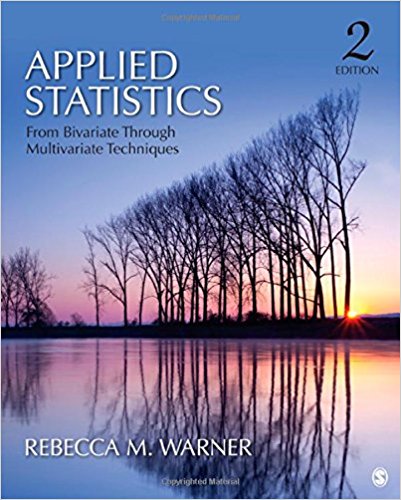
      برای خرید و دانلود کتاب Applied Statistics: From Bivariate Through Multivariate Techniques با گیگاپیپر مکاتبه کنید. نسخه Epub و پی دی اف PDF تیدبل شده ان در گیگاپیپر موجود است و به محض واریز ارسال می شود. چند صفحه نمونه از کتاب “آمار کاربردی: از دو بعد از طریق چند متغیره” در انتهای پست اورده شده است.

      دانلود کتاب Applied Statistics: From Bivariate Through Multivariate Techniques دانلود ایبوک با فرمت EPUB Author Rebecca M. Warner 141299134X, 9781412991346 گیگاپیپر گیگاپیپر
      دانلود کتاب Applied Statistics: From Bivariate Through Multivariate Techniques دانلود ایبوک با فرمت EPUB Rebecca M. Warner 141299134X, 9781412991346

      Applied Statistics : From Bivariate Through Multivariate Techniques

      Author: Rebecca (Becky) M (Margaret) Warner
      Publisher: Thousand Oaks : SAGE Publications, 2012
      Edition/Format: eBook : Document : English

      Summary:
      Rebecca M. Warner’s Applied Statistics: From Bivariate Through Multivariate Techniques, Second Edition provides a clear introduction to widely used topics in bivariate and multivariate statistics, including multiple regression, discriminant analysis, MANOVA, factor analysis, and binary logistic regression. The approach is applied and does not require formal mathematics; equations are accompanied by verbal explanations. Students are asked to think about the meaning of equations. Each chapter presents a complete empirical research example to illustrate the application of a specific method.


      درباره نویسنده کتاب Rebecca (Becky) M (Margaret) Warner

      About the author (2012)

      Rebecca M. Warner received a B.A. from Carnegie-Mellon University in Social Relations in 1973 and a Ph.D. in Social Psychology from Harvard in 1978. She has taught statistics for more than 25 years: from Introductory and Intermediate Statistics to advanced topics seminars in Multivariate Statistics, Structural Equation Modeling, and Time Series Analysis. She is currently a Full Professor in the Department of Psychology at the University of New Hampshire. She is a Fellow in the Association for Psychological Science and a member of the American Psychological Association, the International Association for Relationships Research, the Society of Experimental Social Psychology, and the Society for Personality and Social Psychology. She has consulted on statistics and data management for the World Health Organization in Geneva and served as a visiting faculty member at Shandong Medical University in China.

      اطلاعات کتاب شناختی Applied Statistics: From Bivariate Through Multivariate Techniques

      Bibliographic information
      QR code for Applied Statistics: From Bivariate Through Multivariate Techniques
      Title Applied Statistics: From Bivariate Through Multivariate Techniques: From Bivariate Through Multivariate Techniques
      Author Rebecca M. Warner
      Edition illustrated
      Publisher SAGE, 2012
      ISBN 141299134X, 9781412991346
      Length 1172 pages
      Subjects Mathematics
      › Probability & Statistics
      › Multivariate Analysis

      Mathematics / Probability & Statistics / Multivariate Analysis
      Psychology / Statistics
      Social Science / Research
      Social Science / Statistics

      دانلود رایگان Applied Statistics: From Bivariate

      بخشی از کتاب بصورت رایگان آورده شده است.

      [pdf-embedder url=”http://www.GigaPaper.ir/wp-content/uploads/2018/01/9781412991346-Applied-Statistics-Watermark.pdf” title=”9781412991346 Applied Statistics Watermark”]


      Applied Statistics: From Bivariate Through Multivariate Techniques

      by Rebecca M. Warner

      Publisher: SAGE Publications, Inc

      Print ISBN: 9781412991346, 141299134X

      eText ISBN: 9781483305974, 148330597X

      Edition: 2nd

      Pages: 1208

      Copyright year: 2013

      فهرست مطالب کتاب Applied Statistics: From Bivariate through Multivariate Techniques 9780761927723

      Applied Statistics: From Bivariate through Multivariate Techniques
      Warner, Rebecca M.
      ISBN-13: 9780761927723

      Table of Contents

      Preface
      Acknowledgments
      Chapter 1. Review of Basic Concepts
      1.1 Introduction
      1.2 A Simple Example of a Research Problem
      1.3 Discrepancies Between Real and Ideal Research Situations
      1.4 Samples and Populations
      1.5 Descriptive Versus Inferential Uses of Statistics
      1.6 Levels of Measurement and Types of Variables
      1.7 The Normal Distribution
      1.8 Research Design
      1.9 Parametric Versus Nonparametric Statistics
      1.10 Additional Implicit Assumptions
      1.11 Selection of an Appropriate Bivariate Analysis
      1.12 Summary
      Comprehension Questions
      Chapter 2. Introduction to SPSS: Basic Statistics, Sampling Error, and Confidence Intervals
      2.1 Introduction
      2.2 Research Example: Description of a Sample of HR Scores
      2.3 Sample Mean (M)
      2.4 Sum of Squared Deviations and Sample Variance (s2)
      2.5 Degrees of Freedom (df) for a Sample Variance
      2.6 Why Is There Variance?
      2.7 Sample Standard Deviation (s)
      2.8 Assessment of Location of a Single X Score Relative to a Distribution of Scores
      2.9 A Shift in Level of Analysis: The Distribution of Values of M Across Many Samples From the Same Population
      2.10 An Index of Amount of Sampling Error: The Standard Error of the Mean (oM)
      2.11 Effect of Sample Size (N) on the Magnitude of the Standard Error (oM )
      2.12 Sample Estimate of the Standard Error of the Mean (SEM)
      2.13 The Family of t Distributions
      2.14 Confidence Intervals
      2.15 Summary

      Appendix on SPSS

      Comprehension Questions
      Chapter 3. Statistical Significance Testing
      3.1 The Logic of Null Hypothesis Significance Testing (NHST)
      3.2 Type I Versus Type II Error
      3.3 Formal NHST Procedures: The z Test for a Null Hypothesis About One Population Mean
      3.4 Common Research Practices Inconsistent With Assumptions and Rules for NHST
      3.5 Strategies to Limit Risk of Type I Error
      3.6 Interpretation of Results
      3.7 When Is a t Test Used Instead of a z Test?
      3.8 Effect Size
      3.9 Statistical Power Analysis
      3.10 Numerical Results for a One-Sample t Test Obtained From SPSS
      3.11 Guidelines for Reporting Results
      3.12 Summary
      Comprehension Questions
      Chapter 4. Preliminary Data Screening
      4.1 Introduction: Problems in Real Data
      4.2 Quality Control During Data Collection
      .3ExampleofanSPSSDataWorkshee
      4.4 Identification of Errors and Inconsistencies
      4.5 Missing Values
      4.6 Empirical Example of Data Screening for Individual Variables
      .7IdentificationandHandlingofOutliers
      4.8 Screening Data for Bivariate Analyses
      4.9 Nonlinear Relations
      4.10 Data Transformations
      4.11 Verifying That Remedies Had the Desired Effects
      .12MultivariateDatcreenin
      4.13 Reporting Preliminary Data Screenin
      4.14 Summary and Checklist for Data Screening
      Comprehension Questions
      Chapter 5. Comparing Group Means Using the Independent Samples t Test
      .1ResearchSituationsWheretheIndependentSamplestTestIsUsed
      5.2 A Hypothetical Research Example
      5.3 Assumptions About the Distribution of Scores on the Quantitative Dependent Variable
      5.4 Preliminary Data Screening
      5.5 Issues in Designing a Study
      5.6 Formulas for the Independent Samples t Test
      5.7 Conceptual Basis: Factors That Affect the Size of the t Ratio
      5.8 Effect Size Indexes for t
      5.9 Statistical Power and Decisions About Sample Size for the Independent Samples t Test
      5.10 Describing the Nature of the Outcome
      5.11 SPSS Output and Model Results Section
      5.12 Summary
      Comprehension Questions

      Chapter 6. One-Way Between-Subjects Analysis of Variance

      6.1 Research Situations Where One-Way Between-Subjects Analysis of Variance (ANOVA) Is Used
      6.2 Hypothetical Research Example
      6.3 Assumptions About Scores on the Dependent Variable for One-Way Between-S ANOVA
      6.4 Issues in Planning a Study
      6.5 Data Screening
      6.6 Partition of Scores Into Components
      6.7 Computations for the One-Way Between-S ANOVA
      6.8 Effect Size Index for One-Way Between-S ANOVA
      6.9 Statistical Power Analysis for One-Way Between-S ANOVA
      6.10 Nature of Differences Among Group Means
      6.11 SPSS Output and Model Results
      6.12 Summary
      Comprehension Questions
      Chapter 7. Bivariate Pearson Correlation
      7.1 Research Situations Where Pearson r Is Used
      7.2 Hypothetical Research Example
      7.3 Assumptions for Pearson r
      7.4 Preliminary Data Screening
      7.5 Design Issues in Planning Correlation Research
      7.6 Computation of Pearson r
      7.7 Statistical Significance Tests for Pearson r
      7.8 Setting Up CIs for Correlations
      7.9 Factors That Influence the Magnitude and Sign of Pearson r
      7.10 Pearson r and r2 as Effect Size Indexes
      7.11 Statistical Power and Sample Size for Correlation Studies
      7.12 Interpretation of Outcomes for Pearson r
      7.13 SPSS Output and Model Results Write-Up
      7.14 Summary

      applied statistics from bivariate through multivariate techniques second edition pdf

      Comprehension Questions
      Chapter 8. Alternative Correlation Coefficients
      8.1 Correlations for Different Types of Variables
      8.2 Two Research Examples
      8.3 Correlations for Rank or Ordinal Scores
      8.4 Correlations for True Dichotomies
      8.5 Correlations for Artificially Dichotomized Variables
      8.6 Assumptions and Data Screening for Dichotomous Variables
      8.7 Analysis of Data: Dog Ownership and Survival After a Heart Attack
      8.8 Chi-Square Test of Association (Computational Methods for Tables of Any Size)
      8.9 Other Measures of Association for Contingency Tables
      8.10 SPSS Output and Model Results Write-Up
      8.11 Summary
      Comprehension Questions

      Chapter 9. Bivariate Regression

      9.1 Research Situations Where Bivariate Regression Is Used
      9.2 A Research Example: Prediction of Salary From Years of Job Experience
      9.3 Assumptions and Data Screening
      9.4 Issues in Planning a Bivariate Regression Study
      9.5 Formulas for Bivariate Regression
      9.6 Statistical Significance Tests for Bivariate Regression
      9.7 Setting Up Confidence Intervals Around Regression Coefficients
      9.8 Factors That Influence the Magnitude and Sign of b

      9.9 Effect Size/Partition of Variance in Bivariate Regression
      9.10 Statistical Power
      9.11 Raw Score Versus Standard Score Versions of the Regression Equation
      9.12 Removing the Influence of X From the Y Variable by Looking at Residuals From Bivariate Regression
      9.13 Empirical Example Using SPSS
      9.14 Summary
      Comprehension Questions
      Chapter 10. Adding a Third Variable: Preliminary Exploratory Analyses
      10.1 Three-Variable Research Situations
      10.2 First Research Example

      applied statistics from bivariate through multivariate techniques free download

      10.3 Exploratory Statistical Analyses for Three-Variable Research Situations
      10.4 Separate Analysis of X1, Y Relationship for Each Level of the Control Variable X2
      10.5 Partial Correlation Between X1 and Y Controlling for X2
      10.6 Understanding Partial Correlation as the Use of Bivariate Regression to Remove Variance Predictable by X2 From Both X1 and Y
      10.7 Computation of Partial r From Bivariate Pearson Correlations
      10.8 Intuitive Approach to Understanding Partial r
      10.9 Significance Tests, Confidence Intervals, and Statistical Power for Partial Correlations
      10.10 Interpretation of Various Outcomes for rY1.2 and rY1
      10.11 Two-Variable Causal Models
      10.12 Three-Variable Models: Some Possible Patterns of Association Among X1, Y, and X2
      10.13 Mediation Versus Moderation
      10.14 Model Results
      10.15 Summary
      Comprehension Questions

      Chapter 11. Multiple Regression With Two Predictor Variables

      11.1 Research Situations Involving Regression With Two Predictor Variables
      11.2 Hypothetical Research Example
      11.3 Graphic Representation of Regression Plane
      11.4 Semipartial (or “Part”) Correlation
      11.5 Graphic Representation of Partition of Variance in Regression With Two Predictors
      11.6 Assumptions for Regression With Two Predictors
      11.7 Formulas for Regression Coefficients, Significance Tests, and Confidence Intervals
      11.8 SPSS Regression Results
      11.9 Conceptual Basis: Factors That Affect the Magnitude and Sign of B and b Coefficients in Multiple Regression With Two Predictors
      11.10 Tracing Rules for Causal Model Path Diagrams
      11.11 Comparison of Equations for B, b, pr, and sr
      11.12 Nature of Predictive Relationships
      11.13 Effect Size Information in Regression With Two Predictors
      11.14 Statistical Power
      11.15 Issues in Planning a Study
      11.16 Use of Regression With Two Predictors to Test Mediated Causal Models
      11.17 Results
      11.18 Summary

      applied statistics from bivariate through multivariate techniques pdf download

      Comprehension Questions
      Chapter 12. Dummy Predictor Variables and Interaction Terms in Multiple Regression
      12.1 Research Situations Where Dummy Predictor Variables Can Be Used
      12.2 Empirical Example
      12.3 Screening for Violations of Assumptions
      12.4 Issues in Planning a Study
      12.5 Parameter Estimates and Significance Tests for Regressions With Dummy Variables
      12.6 Group Mean Comparisons Using One-Way Between-S ANOVA
      12.7 Three Methods of Coding for Dummy Variables
      12.8 Regression Models That Include Both Dummy and Quantitative Predictor Variables
      12.9 Tests for Interaction (or Moderation)
      12.10 Interaction Terms That Involve Two Quantitative Predictors
      12.11 Effect Size and Statistical Power
      12.12 Nature of the Relationship and/or Follow-Up Tests
      12.13 Results
      12.14 Summary
      Comprehension Questions

      Chapter 13. Factorial Analysis of Variance

      13.1 Research Situations and Research Questions
      13.2 Screening for Violations of Assumptions
      13.3 Issues in Planning a Study
      1PDF-XCHANGE aPRO al ANOVA
      3.4EmpiricalExample:DescriptionofHypotheticalDat
      13.5 Computations for Between-S Factorial ANOVA
      13.6 Conceptual Basis: Factors That Affect the Size of Sums of Squares andFRatiosinFactori
      13.7 Effect Size Estimates for Factorial ANOVA
      13.8 Statistical Power
      1www.tracker-software.com
      3.9NatureoftheRelationships,Follow-UpTests,andInformationtoIncludeintheResults
      13.10 Factorial ANOVA Using the SPSS GLM Procedure
      13.11 Summary
      Appendix: Nonorthogonal Factorial ANOVA (ANOVA With Unbalanced Numbers of Cases in the Cells or Groups)
      Comprehension Questions
      ChapClick esto h Mbuy redNOW!
      ter14.MultipleRegrsionWitoreThanTwoPictors
      14.1 Research Questions
      14.2 Empirical Example
      14.3 Screening for Violations of Assumptions
      1http://www.tracker-software.com/buy-now
      4.4IssuesinPlanningaStudy
      14.5 Computation of Regression Coefficients With k Predictor Variables
      14.6 Methods of Entry for Predictor Variables
      14.7 Variance Partitioning in Regression for Standard or Simultaneous Regression Versus Regressions That Involve a Series of Steps
      14.8 Significance Test for an Overall Regression Model
      14.9 Significance Tests for Individual Predictors in Multiple Regression
      14.10 Effect Size
      14.11 Changes in F and R as Additional Predictors Are Added to a Model in Sequential or Statistical Regression
      14.12 Statistical Power
      14.13 Nature of the Relationship Between Each X Predictor and Y (Controlling for Other Predictors)
      14.14 Assessment of Multivariate Outliers in Regression
      14.15 SPSS Example and Results
      14.16 Summary
      Appendix 14.A: A Review of Matrix Algebra Notation and Operations and Application of Matrix Algebra to Estimation of Slope Coefficients for Regression With More Than k Predictor Variables Appendix 14.B: Tables for Wilkinson and Dallal (1981) Test of Significance of Multiple R2 in Method = Forward Statistical Regression
      Comprehension Questions

      Chapter 15. Analysis of Covariance

      15.1 Research Situations and Research Questions
      15.2 Empirical Example
      15.3 Screening for Violations of Assumptions
      15.4 Variance Partitioning in ANCOVA
      15.5 Issues in Planning a Study
      15.6 Formulas for ANCOVA
      15.7 Computation of Adjusted Effects and Adjusted Y* Means
      15.8 Conceptual Basis: Factors That Affect the Magnitude of SSAadj and SSresidual and the Pattern of Adjusted Group Means
      15.9 Effect Size
      15.10 Statistical Power
      15.11 Nature of the Relationship and Follow-Up Tests: Information to Include in the Results Section
      15.12 SPSS Analysis and Model Results
      15.13 Additional Discussion of ANCOVA Results
      15.14 Summary
      Appendix: Alternative Methods for the Analysis of Pretest/Posttest Data
      Comprehension Questions
      Chapter 16. Discriminant Analysis
      16.1 Research Situations and Research Questions
      16.2 Introduction of an Empirical Example
      16.3 Screening for Violations of Assumptions
      16.4 Issues in Planning a Study
      16.5 Equations for Discriminant Analysis
      16.6 Conceptual Basis: Factors That Affect the Magnitude of Wilks’s Lambda
      16.7 Effect Size
      16.8 Statistical Power and Sample Size Recommendations
      16.9 Follow-Up Tests to Assess What Pattern of Scores Best Differentiates Groups
      16.10 Results
      16.11 One-Way ANOVA on Scores on Discriminant Functions
      16.12 Summary

      applied statistics from bivariate through multivariate techniques 2nd edition

      Appendix: Eigenvalue/Eigenvector Problem
      Comprehension Questions
      Chapter 17. Multivariate Analysis of Variance
      17.1 Research Situations and Research Questions
      17.2 Introduction of the Initial Research Example: A One-Way MANOVA
      17.3 Why Include Multiple Outcome Measures?
      17.4 Equivalence of MANOVA and DA
      17.5 The General Linear Model
      17.6 Assumptions and Data Screening
      17.7 Issues in Planning a Study
      17.8 Conceptual Basis of MANOVA and Some Formulas for MANOVA
      17.9 Multivariate Test Statistics
      17.10 Factors That Influence the Magnitude of Wilks’s Lambda
      17.11 Effect Size for MANOVA
      17.12 Statistical Power and Sample Size Decisions
      17.13 SPSS Output for a One-Way MANOVA: Career Group Data From Chapter 16
      17.14 A 2 x 3 Factorial MANOVA of the Career Group Data
      17.15 A Significant Interaction in a 3 x 6 MANOVA
      17.16 Comparison of Univariate and Multivariate Follow-Up Analyses for MANOVA
      17.17 Summary

      17.17 Summary
      Comprehension Questions

      Chapter 18. Principal Components and Factor Analysis

      18.1 Research Situations
      18.2 Path Model for Factor Analysis
      18.3 Factor Analysis as a Method of Data Reduction
      18.4 Introduction of an Empirical Example
      18.5 Screening for Violations of Assumptions
      18.6 Issues in Planning a Factor Analytic Study
      18.7 Computation of Loadings
      18.8 Steps in the Computation of Principal Components or Factor Analysis
      18.9 Analysis 1: Principal Components Analysis of Three Items Retaining All Three Components
      18.10 Analysis 2: Principal Component Analysis of Three Items Retaining Only the First Component
      18.11 Principal Components Versus Principal Axis Factoring
      18.12 Analysis 3: PAF of Nine Items, Two Factors Retained, No Rotation
      18.13 Geometric Representation of Correlations Between Variables and Correlations Between Components or Factors
      18.14 The Two Multiple Regressions
      18.15 Analysis 4: PAF With Varimax Rotation
      18.16 Questions to Address in the Interpretation of Factor Analysis
      18.17 Results Section for Analysis 4: PAF With Varimax Rotation
      18.18 Factor Scores Versus Unit-Weighted Composites
      18.19 Summary of Issues in Factor Analysis
      18.20 Optional: Brief Introduction to Concepts in Structural Equation Modeling
      Appendix: The Matrix Algebra of Factor Analysis
      Comprehension Questions

      Chapter 19. Reliability, Validity, and Multiple-Item Scales

      19.1 Assessment of Measurement Quality
      19.2 Cost and Invasiveness of Measurements
      19.3 Empirical Examples of Reliability Assessment
      19.4 Concepts From Classical Measurement Theory
      19.5 Use of Multiple-Item Measures to Improve Measurement Reliability
      19.6 Three Methods for the Computation of Summated Scales
      19.7 Assessment of Internal Homogeneity for Multiple-Item Measures
      19.8 Correlations Among Scores Obtained Using Different Methods of Summing Items
      19.9 Validity Assessment
      19.10 Typical Scale Development Study
      19.11 Summary
      Appendix: The CESD Scale
      Comprehension Questions
      Chapter 20. Analysis of Repeated Measures
      20.1 Introduction
      20.2 Empirical Example: Experiment to Assess Effect of Stress on Heart Rate
      20.3 Discussion of Sources of Within-Group Error in Between-S Versus Within-S Data
      20.4 The Conceptual Basis for the Paired Samples t Test and One-Way Repeated Measures ANOVA
      20.5 Computation of a Paired Samples t Test to Compare Mean HR Between Baseline and Pain Conditions
      20.6 SPSS Example: Analysis of Stress/HR Data Using a Paired Samples t Test
      20.7 Comparison Between Independent Samples t Test and Paired Samples t Test
      20.8 SPSS Example: Analysis of Stress/HR Data Using a Univariate One-Way Repeated Measures ANOVA
      20.9 Using the SPSS GLM Procedure for Repeated Measures ANOVA
      20.10 Screening for Violations of Assumptions in Univariate Repeated Measures
      20.11 The Greenhouse-Geisser e and Huynh Feldt e Correction Factors
      20.12 MANOVA Approach to Analysis of Repeated Measures Data
      20.13 Effect Size
      20.14 Statistical Power
      20.15 Planned Contrasts
      20.16 Results
      20.17 Design Problems in Repeated Measures Studies
      20.18 More Complex Designs
      20.19 Alternative Analyses for Pretest and Posttest Scores
      20.20 Summary
      Comprehension Questions
      Chapter 21. Binary Logistic Regression
      21.1 Research Situations
      21.2 Simple Empirical Example: Dog Ownership and Odds of Death
      21.3 Conceptual Basis for Binary Logistic Regression Analysis
      2PDF-XCHANGE sPRO
      1.4DefinitionandInterpretationofOdd
      21.5 A New Type of Dependent Variable: The Logit
      21.6 Terms Involved in Binary Logistic Regression Analysis
      21.7 Analysis of Data for First Empirical Example: Dog Ownership/Death Study
      21.8 Issues in Planning and Conducting a Study
      2www.tracker-software.com
      1.9MoreComplexModels
      21.10 Binary Logistic Regression for Second Empirical Analysis: Drug Dose and Gender as Predictors of Odds of Death
      21.11 Comparison of Discriminant Analysis to Binary Logistic Regression
      21.12 Summary
      CClick sto er buy l CNOW!
      omprehensionQuestion
      Appendix A: Proportions of AreaUndStandardNormaurve
      Appendix B: Critical Values for t Distribution
      Appendix C: Critical Values of F
      Appendix D: Critical Values of Chi-Square
      Appehttp://www.tracker-software.com/buy-now
      ndixE:CriticalValuesoftheCorrelationCoefficient
      Appendix F: Critical Values of the Studentized Range Statistic
      Appendix G: Transformation of r (Pearson Correlation) to Fisher Z
      Glossary
      References
      Index
      About the Author

      برای سفارش کتاب زیر هم می توانید با ما مکاتبه کنید.

      Title: e-Study Guide for: Applied Statistics: From Bivariate Through Multivariate Techniques by Rebecca M. Warner, ISBN 9780761927723

      Author: Cram101 Textbook Reviews
      Subjects: science and math, education and teaching, mathematics, schools and teaching, teacher resources, statistics, applied
      Format: AZW

      [pdf-embedder url=”http://www.GigaPaper.ir/wp-content/uploads/2018/01/9780761927723.pdf”]

      دانلود رایگان Applied Statistics: From Bivariate Through Multivariate Techniques

      خرید کتاب Applied Statistics: From Bivariate Through Multivariate Techniques دانلود ایبوک EPUB Author Rebecca M. Warner 141299134X, 9781412991346 گیگاپیپر
      خرید ایبوک Applied Statistics: From Bivariate Through Multivariate Techniques

      جهت اطمینان از کیفیت کتاب، چند صفحه از ایبوک Applied Statistics: From Bivariate Through Multivariate Techniques بصورت رایگان آورده شده است.

      دانلود کتاب Applied Statistics: From Bivariate Through Multivariate Techniques دانلود ایبوک با فرمت EPUB Author Rebecca M. Warner 141299134X, 9781412991346 گیگاپیپر
      دانلود کتاب Applied Statistics: From Bivariate Through Multivariate Techniques دانلود ایبوک با فرمت EPUB Author Rebecca M. Warner 141299134X, 9781412991346
      دانلود کتاب Applied Statistics: From Bivariate Through Multivariate Techniques دانلود ایبوک با فرمت EPUB Author Rebecca M. Warner 141299134X, 9781412991346 گیگاپیپر
      دانلود کتاب Applied Statistics: From Bivariate Through Multivariate Techniques دانلود ایبوک با فرمت EPUB 9781412991346