Learn chemistry actively while studying assignments with INTRODUCTORY CHEMISTRY. The authors’ question-and-answer format is reflected in three words of advice and encouragement that are repeated throughout the book: Learn It Now! Each chapter includes an Everyday Chemistry section that illustrates how chemistry is applied in daily life. This edition integrates new features such as technological resources, coached problems, and enhanced art and photography, all of which dovetail with the authors’ active learning approach.
Writing Reaction Mechanisms in Organic Chemistry, Third Edition, is a guide to understanding the movements of atoms and electrons in the reactions of organic molecules. Expanding on the successful book by Miller and Solomon, this new edition further enhances your understanding of reaction mechanisms in organic chemistry and shows that writing mechanisms is a practical method of applying knowledge of previously encountered reactions and reaction conditions to new reactions.
The book has been extensively revised with new material including a completely new chapter on oxidation and reduction reactions including stereochemical reactions. It is also now illustrated with hundreds of colorful chemical structures to help you understand reaction processes more easily. The book also features new and extended problem sets and answers to help you understand the general principles and how to apply these to real applications. In addition, there are new information boxes throughout the text to provide useful background to reactions and the people behind the discovery of a reaction.
This new edition will be of interest to students and research chemists who want to learn how to organize what may seem an overwhelming quantity of information into a set of simple general principles and guidelines for determining and describing organic reaction mechanisms.
Extensively rewritten and reorganized with a completely new chapter on oxidation and reduction reactions including stereochemical reactions
Essential for those who need to have mechanisms explained in greater detail than most organic chemistry textbooks provide
Now illustrated with hundreds of colorful chemical structures to help you understand reaction processes more easily
New and extended problem sets and answers to help you understand the general principles and how to apply this to real applications
New information boxes throughout the text to provide useful background to reactions and the people behind the discovery of a reaction
دانلود کتابComputational Fluid Dynamics in Industrial Combustion 1st Edition
برای خرید کتاب Computational Fluid Dynamics in Industrial Combustion 1st Edition باگیگاپیپر مکاتبه کنید
خرید کتاب Computational Fluid Dynamics in Industrial Combustion 1st Edition
Computational Fluid Dynamics in Industrial Combustion 1st Edition
by Charles E. Baukal Jr. (Editor), Vladimir Gershtein (Editor), Xianming Jimmy Li (Editor)
Although many books have been written on computational fluid dynamics (CFD) and many written on combustion, most contain very limited coverage of the combination of CFD and industrial combustion. Furthermore, most of these books are written at an advanced academic level, emphasize theory over practice, and provide little help to engineers who need to use CFD for combustion modeling.
Computational Fluid Dynamics in Industrial Combustion fills this gap in the literature. Focusing on topics of interest to the practicing engineer, it codifies the many relevant books, papers, and reports written on this combined subject into a single, coherent reference. It looks at each topic from a somewhat narrow perspective to see how that topic affects modeling in industrial combustion. The editor and his team of expert authors address these topics within three main sections:
Modeling Techniques-The basics of CFD modeling in combustion
Industrial Applications-Specific applications of CFD in the steel, aluminum, glass, gas turbine, and petrochemical industries
Advanced Techniques-Subjects rarely addressed in other texts, including design optimization, simulation, and visualization
Rapid increases in computing power and significant advances in commercial CFD codes have led to a tremendous increase in the application of CFD to industrial combustion. Thorough and clearly representing the techniques and issues confronted in industry, Computational Fluid Dynamics in Industrial Combustion will help bring you quickly up to date on current methods and gain the ability to set up and solve the various types of problems you will encounter.
دانلود کتابChemical Toxicity Prediction: Category Formation and Read-Across (Issues in Toxicology) 1st Edition
برای خرید کتاب Chemical Toxicity Prediction: Category Formation and Read-Across (Issues in Toxicology) 1st Editionباگیگاپیپر مکاتبه کنید
خرید کتاب Chemical Toxicity Prediction: Category Formation and Read-Across (Issues in Toxicology) 1st Edition
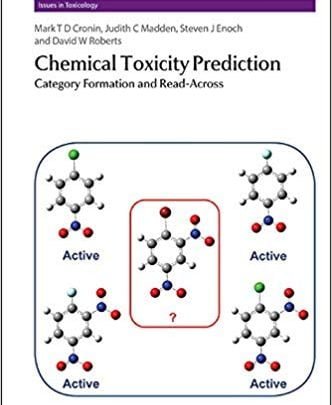
Chemical Toxicity Prediction: Category Formation and Read-Across (Issues in Toxicology) 1st Edition
by Mark Cronin (Author), Judith Madden (Author), Steven Enoch (Author), David Roberts (Author), Diana Anderson (Series Editor)
Series: Issues in Toxicology (Book 17)
Hardcover: 191 pages
Publisher: Royal Society of Chemistry; 1 edition (September 4, 2013)
Language: English
ISBN-10: 1849733848
ISBN-13: 978-1849733847
Price: 20$
The aim of this book is to provide the scientific background to using the formation of chemical categories, or groups, of molecules to allow for read-across i.e. the prediction of toxicity from chemical structure. It covers the scientific basis for this approach to toxicity prediction including the methods to group compounds (structural analogues and / or similarity, mechanism of action) and the tools to achieve this. The approaches to perform read-across within a chemical category are also described. The book will provide concise practical guidance for those wishing to apply these methods (in risk / hazard assessment) and will be illustrated with case studies. Chemical Toxicity Prediction is the first book that addresses the concept of category formation and read-across for toxicity prediction specifically. This topic has really taken off in the past few years due to concerns over dealing with the REACH legislation and also due to the availability of the OECD (Q)SAR Toolbox. Much (lengthy and complex) guidance is available on category formation e.g. from the OECD and, to a lesser extent, the European Chemicals Agency but there is no one single source of information that covers all techniques in a concise user-friendly format. There is a real need for this information as in silico toxicology has come to the fore in recent years, primarily as a result of the EU REACH legislation, but also due to many other drivers e.g. reduction of animal testing, Cosmetics regulation. Category formation is seen as the only practical approach to make rational and transparent predictions for complex (human) toxicological endpoints. The book covers all the areas required to create a robust category and perform read-across.
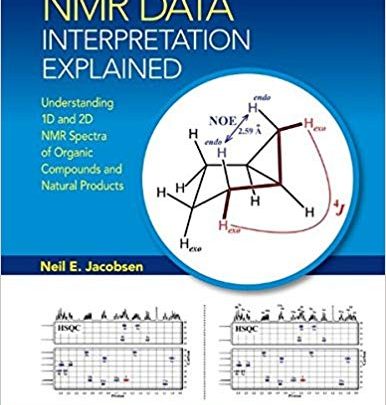
دانلود کتابNMR Data Interpretation Explained: Understanding 1D and 2D NMR Spectra of Organic Compounds and Natural Products 1st Edition
برای خرید کتاب NMR Data Interpretation Explained: Understanding 1D and 2D NMR Spectra of Organic Compounds and Natural Products 1st Edition باگیگاپیپر مکاتبه کنید
خرید کتاب NMR Data Interpretation Explained: Understanding 1D and 2D NMR Spectra of Organic Compounds and Natural Products 1st Edition
NMR Data Interpretation Explained: Understanding 1D and 2D NMR Spectra of Organic Compounds and Natural Products 1st Edition
by Neil E. Jacobsen (Author)
Through numerous examples, the principles of the relationship between chemical structure and the NMR spectrum are developed in a logical, step-by-step fashion
Includes examples and exercises based on real NMR data including full 600 MHz one- and two-dimensional datasets of sugars, peptides, steroids and natural products
Includes detailed solutions and explanations in the text for the numerous examples and problems and also provides large, very detailed and annotated sets of NMR data for use in understanding the material
Describes both simple aspects of solution-state NMR of small molecules as well as more complex topics not usually covered in NMR books such as complex splitting patterns, weak long-range couplings, spreadsheet analysis of strong coupling patterns and resonance structure analysis for prediction of chemical shifts
Advanced topics include all of the common two-dimensional experiments (COSY, ROESY, NOESY, TOCSY, HSQC, HMBC) covered strictly from the point of view of data interpretation, along with tips for parameter settings
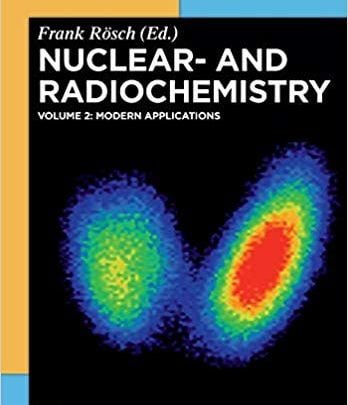
دانلود کتابModern Applications: Volume 2 (De Gruyter Textbook) Kindle Edition
برای خرید کتاب Modern Applications: Volume 2 (De Gruyter Textbook) Kindle Edition باگیگاپیپر مکاتبه کنید
خرید کتاب Modern Applications: Volume 2 (De Gruyter Textbook) Kindle Edition
Modern Applications: Volume 2 (De Gruyter Textbook) Kindle Edition
by Frank Rösch (Editor, Contributor), Daniele Panetta (Contributor), Michael Steppert (Contributor), Tobias L. Ross (Contributor), Sönke Szidat (Contributor), & 14 more
Series: de Gruyter Textbook
Paperback: 595 pages
Publisher: de Gruyter (August 8, 2016)
Language: English
ISBN-10: 3110221853
ISBN-13: 978-3110221855
Price: 20$
This work is conceived to meet the demand of state-of-the-art literature to teach the fundamentals as well as the modern applications of nuclear chemistry. The work will consist of two volumes: the first one covering the basics of nuclear chemistry such as the relevant parameters of instable atomic nuclei, the various modi of radioactive transmutations, the corresponding types of radiation including their detection and dosimetry, and finally the mechanisms of nuclear reactions. The second volume addresses relevant fields of nuclear chemistry, such as the chemistry of radioactive elements, application of radioactive nuclei in life sciences, nuclear energy, waste managements and environmental aspects, radiochemical separations, radioanalytical and spectroscopic methods, etc. Here, leading experts will contribute up-to-date knowledge on the most important application of nuclear chemistry.
Frank Rösch is author of more than 200 peer-reviewed papers and book chapters on fundamental and applied radiochemistry and editor of the 5-volume Handbook of Nuclear Chemistry. In 1996 he was appointed professor of Nuclear Chemistry and Radiopharmaceutical Chemistry at the Institute of Nuclear Chemistry of the Johannes Gutenberg University of Mainz, Germany.
دانلود کتابPoorly Soluble Drugs: Dissolution and Drug Release (Pan Stanford Series on Pharmaceutical Analysis) 1st Edition
برای خرید کتاب Poorly Soluble Drugs: Dissolution and Drug Release (Pan Stanford Series on Pharmaceutical Analysis) 1st Edition باگیگاپیپر مکاتبه کنید
خرید کتاب Poorly Soluble Drugs: Dissolution and Drug Release (Pan Stanford Series on Pharmaceutical Analysis) 1st Edition
Poorly Soluble Drugs: Dissolution and Drug Release (Pan Stanford Series on Pharmaceutical Analysis) 1st Edition
by Gregory K. Webster (Author), Robert G. Bell (Author), J. Derek Jackson (Author)
Series: Pan Stanford Series on Pharmaceutical Analysis (Book 1)
Hardcover: 728 pages
Publisher: Pan Stanford; 1 edition (December 16, 2016)
Language: English
ISBN-10: 9814745456
ISBN-13: 978-9814745451
Price: 20$
This book is the first text to provide a comprehensive assessment of the application of fundamental principles of dissolution and drug release testing to poorly soluble compounds and formulations. Such drug products are, vis-à-vis their physical and chemical properties, inherently incompatible with aqueous dissolution. However, dissolution methods are required for product development and selection, as well as for the fulfillment of regulatory obligations with respect to biopharmaceutical assessment and product quality understanding. The percentage of poorly soluble drugs, defined in classes 2 and 4 of the Biopharmaceutics Classification System (BCS), has significantly increased in the modern pharmaceutical development pipeline. This book provides a thorough exposition of general method development strategies for such drugs, including instrumentation and media selection, the use of compendial and non-compendial techniques in product development, and phase-appropriate approaches to dissolution development.
Emerging topics in the field of dissolution are also discussed, including biorelevant and biphasic dissolution, the use on enzymes in dissolution testing, dissolution of suspensions, and drug release of non-oral products. Of particular interest to the industrial pharmaceutical professional, a brief overview of the formulation and solubilization techniques employed in the development of BCS class 2 and 4 drugs to overcome solubility challenges is provided and is complemented by a collection of chapters that survey the approaches and considerations in developing dissolution methodologies for enabling drug delivery technologies, including nanosuspensions, lipid-based formulations, and stabilized amorphous drug formulations.
دانلود کتابThe Concise Handbook of Analytical Spectroscopy: Theory, Applications, and Reference Materials
برای خرید کتاب The Concise Handbook of Analytical Spectroscopy: Theory, Applications, and Reference Materials باگیگاپیپر مکاتبه کنید
خرید کتاب The Concise Handbook of Analytical Spectroscopy: Theory, Applications, and Reference Materials
The Concise Handbook of Analytical Spectroscopy: Theory, Applications, and Reference Materials
by Jerry Workman (Author)
Hardcover: 1828 pages
Publisher: World Scientific Pub Co Inc (July 31, 2016)
Language: English
ISBN-10: 9814508055
ISBN-13: 978-9814508056
Price: 20$
The concept of improving the use of electromagnetic energy to achieve a variety of qualitative and quantitative spectroscopic measurements on solid and liquid materials has been proliferating at a rapid rate. The use of such technologies to measure chemical composition, appearance, for classification, and to achieve detailed understanding of material interactions has prompted a dramatic expansion in the use and development of spectroscopic techniques over a variety of academic and commercial fields.The Concise Handbook of Analytical Spectroscopy is an integrated whole of the 5 volumes, each covering the theory, instrumentation, sampling methods, experimental design, and data analysis techniques, as well as essential reference tables, figures, and spectra for each spectroscopic region. The detailed practical aspects of applying spectroscopic tools for many of the most exciting and current applications are covered. Featured applications include: medical, biomedical, optical, physics, common commercial analysis methods, spectroscopic quantitative and qualitative techniques, and advanced methods.This multi-volume handbook is designed specifically as a reference tool for students, commercial development and quality scientists, and researchers or technologists in a variety of measurement endeavors.
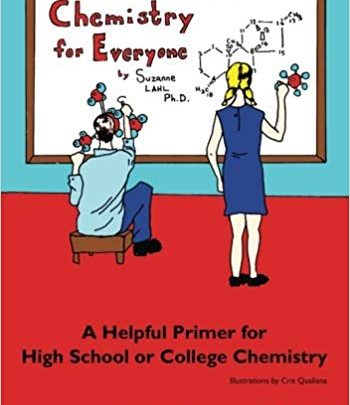
Summer reading for chemistry! This book is for students who need extra help and preparation for the difficult chemistry concepts and tools that will be encountered in a typical high-school level chemistry class. Some students may also benefit from reviewing these basic concepts before starting a college introductory or organic chemistry class. It is a useful supplement to any class textbook and gives a unique perspective on the subject. Whether you are taking chemistry for the first time in high school, have a child who needs help with homework, or just want to find out more about chemistry, this book can help. Topics include The Atom, The Mole, Scientific Notation, Significant Figures, Unit Conversions, Bonding, Chemical Reactions, and Solubility. Problem-solving advice, homework tips, and test taking skills are also included.