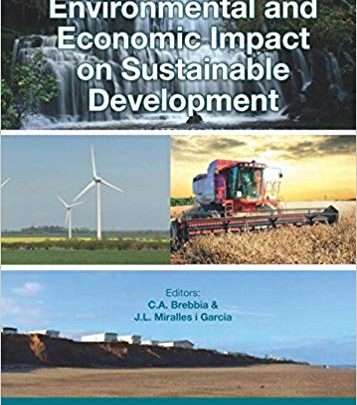
Delegates to the 3rd International Conference on Environmental and Economic Impact on Sustainable Development contributed the peer-reviewed papers contained in this book. The papers discuss the most serious problems affecting sustainable development. They consider the impact of economic constraints on the environment, taking into account the social aspects as well as the over-use of natural resources. Uncontrolled development can also result in damage to the environment in terms of the release of toxic substances and hazardous waste. Thus, attention is paid to issues related to whether some forms of development are compatible with environmental protection, particularly in cases of possible serious contamination and toxicity.
The focus in the book is on more constructive and progressive approaches to the problems discussed, to ensure sustainability. The hope is that through the shared experiences of experts, we can learn from past failure, to avoid repeating similar mistakes, while attempting to prevent emerging threats to the environmental and ecological systems. Fundamental to these concepts are an analysis of the inherent risks and the development of appropriate strategies.
The papers in this book cover such topics as: Environmental assessments; Environmental policies and planning; Water resources management; Natural resources management; Legislation and regulations; Development issues; Economic impact.
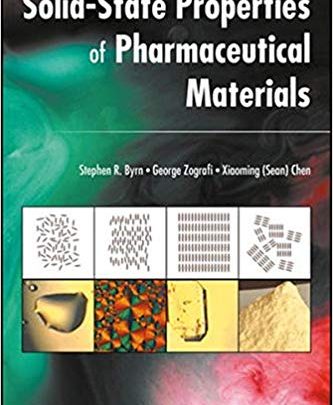
Presents a detailed discussion of important solid-state properties, methods, and applications of solid-state analysis
Illustrates the various phases or forms that solids can assume and discussesvarious issues related to the relative stability of solid forms and tendencies to undergo transformation
Covers key methods of solid state analysis including X-ray powder diffraction, thermal analysis, microscopy, spectroscopy, and solid state NMR
Reviews critical physical attributes of pharmaceutical materials, mainly related to drug substances, including particle size/surface area, hygroscopicity, mechanical properties, solubility, and physical and chemical stability
Showcases the application of solid state material science in rational selection of drug solid forms, analysis of various solid forms within drug substance and the drug product, and pharmaceutical product development
Introduces appropriate manufacturing and control procedures using Quality by Design, and other strategies that lead to safe and effective products with a minimum of resources and time
This second, completely revised edition contains a wealth of information on the properties and use of titanium dioxide pigments. It gives the reader a comprehensive insight into how titanium dioxide works and its possible applications, as well as discussing the current state of development and its use in various forms for UV absorbers, effect pigments and catalytic materials. Practitioners will especially welcome the fact that Chapter 4 now includes information on the scope for, and limitations on, replacing titanium dioxide pigments in formulations.
General Chemistry for Engineers is tailored for a one-semester freshman-level college course for students pursuing engineering degrees. The book offers a balance of conciseness, rigor, and depth needed to prepare students for more advanced coursework and careers in various engineering specialties, such as civil, environmental, electrical, computer, mechanical and industrial engineering, in addition to chemical engineering.
This text leads students through the breadth of a typical two-semester sequence in general chemistry. It elucidates the key concepts and skills important for entering engineering students, including problem solving, qualitative and quantitative thinking, and importance of units. Examples are drawn from problems of interest to modern engineers, including alternative energy, advanced materials, and the environment. The book is the result of the author’s unique experiences teaching approximately 2,500 freshman in chemistry and upper-level students in chemical and biological engineering, in addition to leading research and development teaching in the medical device and specialty pharmaceutical industries. The author received a variety of teaching awards at Northeastern honoring his work in making an intense, fast-pace course manageable and exciting.
Paul A. DiMilla is an Associate Academic Specialist in Chemistry & Chemical Biology and Chemical Engineering at Northeastern University. He received his B.S. from the Massachusetts Institute of Technology and his Ph.D. from the University of Pennsylvania, both in Chemical Engineering. He was a Postdoctoral Fellow in Chemistry at Harvard University prior to beginning his faculty career in Chemical and Biomedical Engineering at Carnegie Mellon University, where he co-founded Automated Cell, Inc.
Paul was a Visiting Professor of Bioengineering at the Franklin W. Olin College of Engineering and a Visiting Scholar in Biomedical Engineering at Boston University. Additionally, he led R&D teams in the private sector, developing tissue-engineered medical products and drug- generating biodegradable polymers. He received an Early Career Development Award from the NSF, a Searle Scholar Award, and the first Whitaker Young Investigator Award. He is also the inventor on seven issued US patents
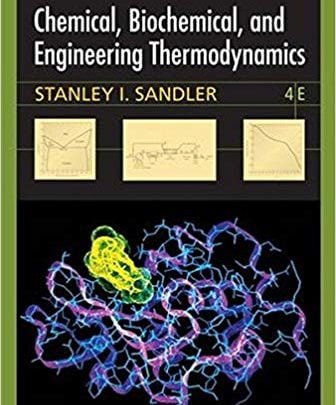
A modern, accessible, and applied approach to chemical thermodynamics
Thermodynamics is central to the practice of chemical engineering, yet students sometimes feel that the discipline is too abstract while they are studying the subject.
By providing an applied and modern approach, Stanley Sandler’s Chemical, Biochemical, and Engineering Thermodynamics, Fourth Edition helps students see the value and relevance of studying thermodynamics to all areas of chemical engineering, and gives them the depth of coverage they need to develop a solid understanding of the key principles in the field.
Key Features
* Highlights applications of thermodynamics to subjects that chemical engineering students will see in later courses.
* Realistic problems introduce students to the types of challenges they will encounter in industry and graduate research.
* The Fourth Edition has been reorganized into 15 chapters, providing shorter chapters that introduce students to the subject in more bite-sized pieces.
* Presents biochemical examples, particularly in Chapters 11 and 12, and in all of Chapter 15 entitled “Biochemical Applications of Thermodynamics.”
* Coverage of environmental and safety applications of thermodynamics provides course material useful for ABET accreditation.
* Includes a brief introduction to the new field of product engineering in Chapter 12.
* Instructional objectives and nomenclature lists at the beginning of each chapter provide useful study tools.
* Students can solve problems using MATHCAD(r), MATLAB(r) and Visual Basic programs that accompany this textbook.
* An accompanying CD features a 120-day trial version of MATHCAD, as well as MATHCAD worksheets, an extensive properties database, and Windows-friendly Visual Basic and MATLAB programs for equation of state and UNIFAC calculations. (These worksheets and programs are also available online at the book website.)
* Also included on the CD are PDF files of important data figures that students can download and print for use in solving homework problems.
www.wiley.com/college/sandler
Your search for the perfect polymers textbook ends here – with Polymer Science and Technology. By incorporating an innovative approach and consolidating in one volume the fundamentals currently covered piecemeal in several books, this efficient text simplifies the learning of polymer science.
The book is divided into three main sections: polymer fundamentals; polymer formation and conversion into useful articles; and polymer properties and applications. Polymer Science and Technology emphasizes the basic, qualitative understanding of the concepts rather than rote memorization or detailed mathematical analysis. Since the book focuses on the ultimate property of the finished product, it minimizes laborious descriptions of experimental procedures used for the characterization of polymers. Instead, the author highlights how the various stages involved in the production of the finished product influence its properties. Well-organized, clear-cut, and user-friendly, Polymer Science and Technology is an outstanding textbook for teaching junior and senior level undergraduates and first year graduate students in an introductory course covering the challenging subject of polymers.
دانلود کتاب Chemistry for Enhancing the Production of Oil and Gas
برای خرید کتاب Chemistry for Enhancing the Production of Oil and Gas باگیگاپیپر مکاتبه کنید
خرید کتاب Chemistry for Enhancing the Production of Oil and Gas
Chemistry for Enhancing the Production of Oil and Gas Paperback – 2014
by Wayne Frenier & Murtaza Ziauddin (Author)
Paperback: 616 pages
Publisher: Society of Petroleum Engineers (2014)
ISBN-10: 161399317X
ISBN-13: 978-1613993170
Price: 20$
Chemistry for Enhancing the Production of Oil and Gas provides an overview of the science and technology of the use of production chemicals to enhance and maintain oil and gas production. This new book emphasizes the technical aspects of the production management from the perspective of the upstream oil and gas industry. The chapters describe the production environment, problems that require chemical intervention, and thus, the need for the thousands of difference chemicals that are in use. They will review the important chemical and physical principles that are common to most, if not all, of the enhancement treatments. They also discuss aspects of the use and mechanisms of the complex chemistries that take place with the application of flow assurance chemicals, during stimulation (reactive chemistry and prop fracturing) and chemically improved oil recovery, including the use of chemical tracers. A final chapter emphasizes the importance of health, safety, and environmental compliance in all aspects of oilfield treatments. Most of the chapters of the book end with a section where successful chemical enhancement or control methods have been used to solve specific production problems.
برای خرید کتاب از انتشارات BRE کافیست، مشخصات کتاب درخواستی را برای ما ارسال کنید. کتاب BRE تهیه و پس از واریز هزینه ایبوک ارسال می شود. برای جستجوی ایبوک می توانید از ادرس http://www.brebookshop.com استفاده کنید.
خرید گزارش از انتشارات BRE
برای دانلود گزارشات IHS BRE Press کافیست مشخصات گزارش BRE درخواستی را ایمیل کنید.پس از دانلود گزارش BRE به شما برای واریز هزینه اطلاع داده می شود.
درباره انتشارات
BRE publications provide a wealth of knowledge, experience, practical advice and information on new developments, regulations, standards and good practice on all aspects of the built environment.
BRE publications are produced into five main categories:
Reports and Books
Leading edge research, innovation and good practice in design, specification, construction and management
Digests
BRE Digests are authoritative summaries on specific topics in construction design and technology
Information Papers
These papers summarise recent BRE research findings and give advice on how to apply this information in practice
Good Building Guides
Provide construction professionals with concise guidance on the principles and practicalities for achieving good-quality building
Good Repair Guides
Deal with the defects most commonly encountered in buildings and offer sound advice on putting them right
درباره کتب انتشارات BRE
BRE Publications, Digests, Information Papers and BRE Reports
Available from the BRE Bookshop http://www.brebookshop.com/
BRE has a long-established reputation for the technical and information papers produced by the Building Research Establishment (now known just as BRE) and its predecessor, the Building Research Station (BRS). We also produce a number of longer textbooks and reference books, including The Green Guide to Specification.
Our popular series of BRE Digests, BRE Information Papers, BRE Good Building Guides and BRE Good Repair Guides, along with longer text books such as the recently-published Non Traditional Housing Handbook are all available from our online bookstore:
Buy BRE publications now from the BRE bookshop http://www.brebookshop.com/
جدیدترین کتابها و گزارشهای BRE
در زیر برخی از جدیدترین کتاب و گزارشات انتشارات BRE را مشاهده می کنید. برای خرید این گزارشات با ما مکاتبه کنید.
Achieving Whole Life Value in Infrastructure and Buildings: (BR 476) (Bre Press)
http://www.ihsti.com/CIS/document/273839
https://www.brebookshop.com/details.jsp?id=146429
BRE documents within the Construction Information Service
5M steel-framed houses
A technical guide to district heating
AAC ‘aircrete’ blocks and masonry
Accelerated carbonation testing of concrete
Access to domestic underground drainage systems
Accidents involving glass in domestic doors and windows: some implications for design
Achieving airtightness: general principles
Achieving airtightness: practical guidance on techniques – floors, walls and roofs
Achieving airtightness: practical guidance on techniques – windows and doors, sealing methods and materials
Achieving cost effective responsive maintenance
Achieving durable repaired concrete structures: adopting a performance-based intervention strategy
Achieving whole life value in infrastructure and buildings
Advanced polymer composites in construction
Advanced technologies for 21st Century building services
Advanced thermal insulation technologies in the built environment
Advances in timber grading
Ageing of wood adhesives – loss in strength with time
Air as a refrigerant in air conditioning systems in buildings
Air conditioning systems in buildings using air cycle technology – design and application guide
Air quality, radon and airtightness – a collection of BRE expert guidance on the design and construction of new and existing buildings
Aircrete tongue and groove block masonry: performance evaluation and guidance
Aircrete: thin joint mortar systems
Airey houses: technical information and guidance
Airtightness in commercial and public buildings. 3rd edition
Airtightness in UK dwellings
Airtightness in UK dwellings: BRE’s test results and their significance
Airtightness of ceilings. Energy loss and condensation risk
Alkali-activated binder concretes in construction – an introduction to their benefits and properties and barriers to their use
Alkali-activated binders for precast and ready-mixed concrete products – a route map to standardisation, certification and guidance
Alkali-activated binders for precast and ready-mixed concrete products. New supply chains, business models and environmental benefits
Alkaline ash binders. Reduced environmental impacts for precast concrete products
Alkali-silica reaction in concrete (2004 edition) – Background to the guidance notes
Alkali-silica reaction in concrete (2004 edition) – Detailed guidance for new construction
Alkali-silica reaction in concrete (2004 edition) – Simplified guidance for new construction using normal reactivity aggregates
Alkali-silica reaction in concrete (2004 edition) – Worked examples
Alternating tread stairs
American plywood in roof construction: a design guide
Ammonia refrigerant in buildings: minimising the hazards
An introduction to building with structural insulated panels (SIPs)
An introduction to structural dynamic comfort criteria
Application of subsurface radar as an investigative technique
Applications, performance characteristics and environmental benefits of alkali-activated binder concretes
Applying fabric first principles. Complying with UK energy efficiency requirements
Applying facilities expertise in building design
Applying flood resilience technologies
Applying the Code for sustainable homes on the BRE Innovation Park. Lessons learnt about architecture, construction and material sourcing
Applying the Code for sustainable homes on the BRE Innovation Park. Lessons learnt about building fabric
Applying the Code for sustainable homes on the BRE Innovation Park. Lessons learnt about energy sources, overheating and ventilation
Applying the Code for sustainable homes on the BRE Innovation Park. Lessons learnt about water use, harvesting, recycling and drainage
Approaches to the design of reinforced concrete flat slabs
Arcal steel-framed houses
Architectural use of polymer composites
Arrowhead steel-framed houses
Aspects of fire precautions in buildings
Assessing carbonation depth in ageing high alumina cement concrete
Assessing condensation risk and heat loss at thermal bridges around openings
Assessing external rendering for replacement or repair
Assessing moisture in building materials: Interpreting moisture data
Assessing moisture in building materials: Measuring moisture content
Assessing moisture in building materials: Sources of moisture
Assessing the effects of thermal bridging at junctions and around openings
Assessing the fire performance of existing reinforced concrete flooring systems
Assessing the fire performance of external cladding systems: a test method
Assessing the life hazard from burning sandwich panels
Assessing the performance of phase change materials in buildings
Assessing the performance of timber frame wall panels subject to racking loads
Assessing the risk of sulphate attack on concrete in the ground
Assessing the sustainability of office refurbishment with BREEAM: A case study
Assessing traditional housing for rehabilitation
Assessment of damage in low-rise buildings
Assessment of exterior medium density fibreboard (MDF)
Assessment of fire damaged structures
Assessment of hard body impact resistance of external walls
Assessment of the cost-effectiveness and potential of heat pumps for domestic hot water heating
Assessment of timber structures
Assessment of wind loads: assessment of wind speed over topography
Assessment of wind loads: background and method
Assessment of wind loads: classification of structures
Assessment of wind loads: internal pressures
Assessment of wind loads: loading coefficients for typical buildings
Assessment of wind loads: Terrain and building factors and gust peak factors
Assessment of wind loads: wind climate in the United Kingdom
Assessment of wind loads: wind speeds for serviceability and fatigue assessments
Asset management and service life of concrete structures and components: Potential benefits of emerging data capture and management technology
Asset management for environmental conditions – retrofitting strategies for simple buildings
Assisted means of escape of disabled people from fires in tall buildings
Atholl steel-framed, steel clad houses
Audit of UK social housing innovation
Automatic fire detection and alarm systems – an introductory guide to components and systems
Automatic fire sprinkler systems. A good practice guide
Average daylight factor: a simple basis for daylight design
Avoiding deterioration of cement-based building materials and components. Lessons from case studies: 3
Avoiding deterioration of cement-based building materials and components. Lessons from case studies: 4
Avoiding deterioration of cement-based building materials and components. Lessons from case studies: 5
Avoiding deterioration of cement-based building materials. Lessons from case studies: 1
Avoiding deterioration of cement-based building materials. Lessons from case studies: 2
Avoiding latent mortar defects in masonry
Avoiding the thaumasite form of sulfate attack: two-year report
Background ventilation of dwellings: a review