دانلود کتابBenzene and Its Derivatives: New Uses and Impacts on Environment and Human Health (Materials Science and Technologies: Environmental Remediation Technologies, Regulations and Safety)
برای خرید کتاب Benzene and Its Derivatives: New Uses and Impacts on Environment and Human Health (Materials Science and Technologies: Environmental Remediation Technologies, Regulations and Safety) باگیگاپیپر مکاتبه کنید
خرید کتاب Benzene and Its Derivatives: New Uses and Impacts on Environment and Human Health (Materials Science and Technologies: Environmental Remediation Technologies, Regulations and Safety)
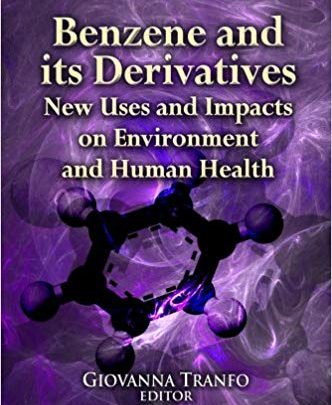
Benzene and Its Derivatives: New Uses and Impacts on Environment and Human Health (Materials Science and Technologies: Environmental Remediation Technologies, Regulations and Safety)
by Giovanna Tranfo (Editor)
Series: Materials Science and Technologies: Environmental Remediation Technologies, Regulations and Safety
Hardcover: 321 pages
Publisher: Nova Science Pub Inc (November 30, 2012)
Language: English
ISBN-10: 1621000265
ISBN-13: 978-1621000266
دانلود کتابAdvances in Chemistry Research UK ed. Edition
برای خرید کتاب Advances in Chemistry Research UK ed. Edition باگیگاپیپر مکاتبه کنید
خرید کتاب Advances in Chemistry Research UK ed. Edition
Advances in Chemistry Research UK ed. Edition
by James C. Taylor (Editor)
Series: Advances in Chemistry Research
Hardcover: 236 pages
Publisher: Nova Science Pub Inc; UK ed. edition (September 30, 2012)
Language: English
ISBN-10: 1620813629
ISBN-13: 978-1620813621
Price: 20$
‘Advances in Chemistry Research’ presents original research results on the leading edge of chemistry research. Each article has been carefully selected in an attempt to present substantial research results across a broad spectrum.
دانلود کتابNew Developments in Aldehydes Research (Chemical Engineering Methods and Technology) UK ed. Edition
برای خرید کتاب New Developments in Aldehydes Research (Chemical Engineering Methods and Technology) UK ed. Edition باگیگاپیپر مکاتبه کنید
خرید کتاب New Developments in Aldehydes Research (Chemical Engineering Methods and Technology) UK ed. Edition
New Developments in Aldehydes Research (Chemical Engineering Methods and Technology) UK ed. Edition
by Luca Torrioni (Editor), Emilia Pescasseroli (Editor)
Series: Chemical Engineering Methods and Technology
Hardcover: 151 pages
Publisher: Nova Science Pub Inc; UK ed. edition (March 31, 2013)
Language: English
ISBN-10: 1624170900
ISBN-13: 978-1624170904
Price: 20$
In this book, the authors present topical research in the study of aldehydes. Topics discussed in this compilation include the synthesis and properties of intermediates in reactions of aldehydes with P(III) chlorides; synthesis of heterocyclic compounds by interaction of aldehydes with monoterpenoids; and an update on aliphatic aldehydes in lipid foods.
دانلود کتابEncyclopedia of Electrochemical Power Sources 1st Edition
برای خرید کتاب Encyclopedia of Electrochemical Power Sources 1st Edition باگیگاپیپر مکاتبه کنید
خرید کتاب Encyclopedia of Electrochemical Power Sources 1st Edition
Encyclopedia of Electrochemical Power Sources 1st Edition
by Jürgen Garche (Editor), Chris K. Dyer (Editor), Patrick T. Moseley (Editor), Zempachi Ogumi (Editor), David A. J. Rand (Editor), Bruno Scrosati (Editor)
The Encyclopedia of Electrochemical Power Sources is a truly interdisciplinary reference for those working with batteries, fuel cells, electrolyzers, supercapacitors, and photo-electrochemical cells. With a focus on the environmental and economic impact of electrochemical power sources, this five-volume work consolidates coverage of the field and serves as an entry point to the literature for professionals and students alike.Covers the main types of power sources, including their operating principles, systems, materials, and applications
Serves as a primary source of information for electrochemists, materials scientists, energy technologists, and engineers
Incorporates nearly 350 articles, with timely coverage of such topics as environmental and sustainability considerations
Meeting the need for an up-to-date and detailed primer on all aspects of the topic, this ready reference reflects the incredible expansion in the application of FRET and its derivative techniques over the past decade, especially in the biological sciences. This wide diversity is equally mirrored in the range of expert contributors.
The book itself is clearly subdivided into four major sections. The first provides some background, theory, and key concepts, while the second section focuses on some common FRET techniques and applications, such as in vitro sensing and diagnostics, the determination of protein, peptide and other biological structures, as well as cellular biosensing with genetically encoded fluorescent indicators. The third section looks at recent developments, beginning with the use of fluorescent proteins, followed by a review of FRET usage with semiconductor quantum dots, along with an overview of multistep FRET. The text concludes with a detailed and greatly updated series of supporting tables on FRET pairs and Förster distances, together with some outlook and perspectives on FRET.
Written for both the FRET novice and for the seasoned user, this is a must-have resource
for office and laboratory shelves.
PROMOTION: For limited time only, a free electronic copy of this book will be available to you, if you send a request to yu.processdesign@gmail.com. Note (Jan. 25, 2015): 1. This book was proofread and updated. 2. This book is now available at Amazon Kindle Direct Publishing (KDP): [a better formatted version is provided. 1/25/2015] http://www.amazon.com/dp/B00CDX0DU4 Anyone who bought a hard copy of this book can have an e-book thru KDP at $2.99. This book is written for any chemical engineers interested in process design. It is author’s hope that this book will help chemical engineering students to learn the basics of process design, and will serve as a reference for experience process engineers. This book has eight chapters. A brief summary of each chapter is listed below: Chapter 1 Process Design: It provides an overview of process design and tasks during each phase of a project. Chapter 2 Pump: Discuss three different types of pump – centrifugal, reciprocating, and rotary pump; their characteristics, and calculations. Chapter 3 Compressor: Discuss four different types of compressor – centrifugal, axial, reciprocating, and rotary compressor; their characteristics, and calculations. Chapter 4 Heat Exchanger: Discuss three different types of heat exchanger – double pipe, shell and tube, and air cooler; their characteristics, and calculations. Chapter 5 Vessel: Discuss basic features of vessel, how to size liquid surge drum, liquid/vapor separator, and liquid/liquid separator. Chapter 6 Line Sizing: Discuss single phase, two-phase, gravity, and slurry flow in a line; how to size a line and calculate line pressure drop. Chapter 7 Control Valve: Discuss two types of control valve – globe and rotary; their basic features and how to size them for vapor or liquid service. Chapter 8 Pressure Relief Device (PRD): Discuss four types of PRD: spring-loaded pressure relief valve (PRV), pilot-operated PRV, rupture disk, and rupture pin PRV; their characteristics, and PRD and its inlet/outlet header sizing (for single/two phase relief). Information in this book is based on current practice, author’s experience, author’s research, new development, and website information. Readers should gain following skills after reading this book. 1. Know what tasks should be done at different phases of an engineering project. 2. Able to select new centrifugal or reciprocating pump, rate existing one’s process capability, or operate it properly. 3. Able to select new centrifugal or reciprocating compressor, rate existing one’s process capability, or operate it properly. 4. Able to select a heat exchanger for a process application among double pipe heat exchanger, shell and tube exchanger, or air cooler. 5. Able to size new surge drum, vapor/liquid separator or rate existing one’s process capacity. 6. Able to size a line or rate existing line’s process capacity for single phase, two phase flow, or gravity flow application. Do line hydraulic analysis. 7. Able to select or size new control valve and rate existing ones’ process capacity. 8. Able to select or size new pressure relief device and rate existing ones’ process capacity. Notes: 1. A supplement to this book is available now. It has more comments, exercises, and examples for each of the eight chapters. Website links for this supplement are: In USA : https://www.createspace.com/4123527; http://www.amazon.com/dp/1481928325; In Europe: United Kingdom – http://www.amazon.co.uk/dp/1481928325; Germany -http://www.amazon.de/dp/1481928325; Spain – http://www.amazon.es/dp/1481928325; France – http://www.amazon.fr/dp/1481928325; Italy – http://www.amazon.it/dp/1481928325 2. This book is updated, since Jan. 2013. An update list for previous version is available. 3. A demonstrative file of this book is available. 4. Request of item 2 and 3, please write an e-mail to frankyu44@gmail.com.
Demonstrates the advantages of catalytic cascade reactionsfor synthesizing natural products and pharmaceuticals
Riding the wave of green chemistry, catalytic cascade reactionshave become one of the most active research areas in organicsynthesis. During a cascade reaction, just one reaction solvent,one workup procedure, and one purification step are needed, thussignificantly increasing synthetic efficiency.
Featuring contributions from an international team of pioneersin the field, Catalytic Cascade Reactions demonstrates theversatility and application of these reactions for synthesizingvaluable compounds. The book examines both organocatalysis andtransition-metal catalysis reactions, bringing readers up to datewith the latest discoveries and activities in all major areas ofcatalytic cascade reaction research.
Catalytic Cascade Reactions begins with three chaptersdedicated to organocatalytic cascade reactions, exploring amines,Brønsted acids, and the application of organocatalytic cascadereactions in natural product synthesis and drug discovery. Next,the book covers:
Gold-catalyzed cascade reactions
Cascade reactions catalyzed by ruthenium, iron, iridium,rhodium, and copper
Palladium-catalyzed cascade reactions of alkenes, alkynes, andallenes
Application of transition-metal catalyzed cascade reactions innatural product synthesis and drug discovery
Engineering mono- and multifunctional nanocatalysts for cascadereactions
Multiple-catalyst-promoted cascade reactions
All chapters are thoroughly referenced, providing quick accessto important original research findings and reviews so that readerscan explore individual topics in greater depth.
Drawing together and analyzing published findings scatteredacross the literature, this book provides a single source thatencapsulates our current understanding of catalytic cascadeprocesses. Moreover, it sets the stage for the development of newcatalytic cascade reactions and their applications.
Over the last three decades the importance of organosiliconchemistry has greatly increased because it has opened a number ofnew synthetic strategies. Silicon reagents are usually low-cost,versatile and allow a wide range of reactions. This is the firstHandbook to compile essential Silicon containing reagents and makesuse of the leading reagent database e-EROS. Another hotvolume in the series Handbooks of Reagents for OrganicSynthesis, this is a must-have resource for all syntheticchemists working in drug development and medicinal chemistry.For the selection the Editor focussed on three key syntheticapproaches with the greatest impact:
1. Use of silicon as a ‘temporary tether’ by unifying a reactivepair of functional groups and taking advantage of theirtemplate-biased intramolecular cyclization.
2. The specific use of the silane functionality as a heterot-butyl group, often colloquially referred to as the use ofsilicon as a ‘fat proton’.
3. The use of the Brook rearrangement as an ‘anion relaystratagem’.
A new feature in this Handbook is the reagent finder, analphabetically organized lookup table arranged by organicfunctionality and specific structure of the silicon atom to whichit is bound.
In the process industry, shutdown and turnaround costs are responsible for an excessive amount of maintenance expenses. Process Plants: Shutdown and Turnaround Management explores various types of shutdowns, presents recommendations for better management, and offers feasible solutions to help reduce overheads. Because turnaround management is the largest maintenance activity, plant turnaround is the focal point of this text. The book details a plan to lengthen the interval between turnarounds, and curtail costs in process production management by at least 30 percent.
This practical guidebook provides a thorough study of shutdown management, discusses different types of shutdown and managing events (emergency, unplanned, planned, and turnaround), and covers all aspects of plant turnaround management including startup, shutdown, and maintenance. It describes the five phases of shutdown management―initiating, planning, executing, controlling, and closing. It contains specific principles and precautions for successful shutdown planning, and highlights many aspects including turnaround philosophy, planning and scheduling, estimation, contractor management, execution, safety management, managing human resources, and post shut down review.
Process Plants: Shutdown and Turnaround Management also includes topical information that readers can successfully apply to future shutdown projects. It is suitable for industry professionals and graduate students.